
Smuggled Circuits: DeepSeek’s Defiant Push in the Global AI Arms Race
In the high-stakes world of artificial intelligence development, where technological supremacy hinges on access to cutting-edge hardware, a Chinese startup has reportedly found a way to circumvent U.S. export restrictions. DeepSeek, an emerging player in China’s AI sector, is said to have utilized Nvidia’s advanced Blackwell chips—banned from sale in China—to train its next-generation AI model. This revelation, detailed in a report by Yahoo Finance, underscores the lengths to which companies are going to secure vital technology amid escalating geopolitical tensions. The chips, smuggled through intermediary countries, highlight the porous nature of international trade barriers in the semiconductor industry.
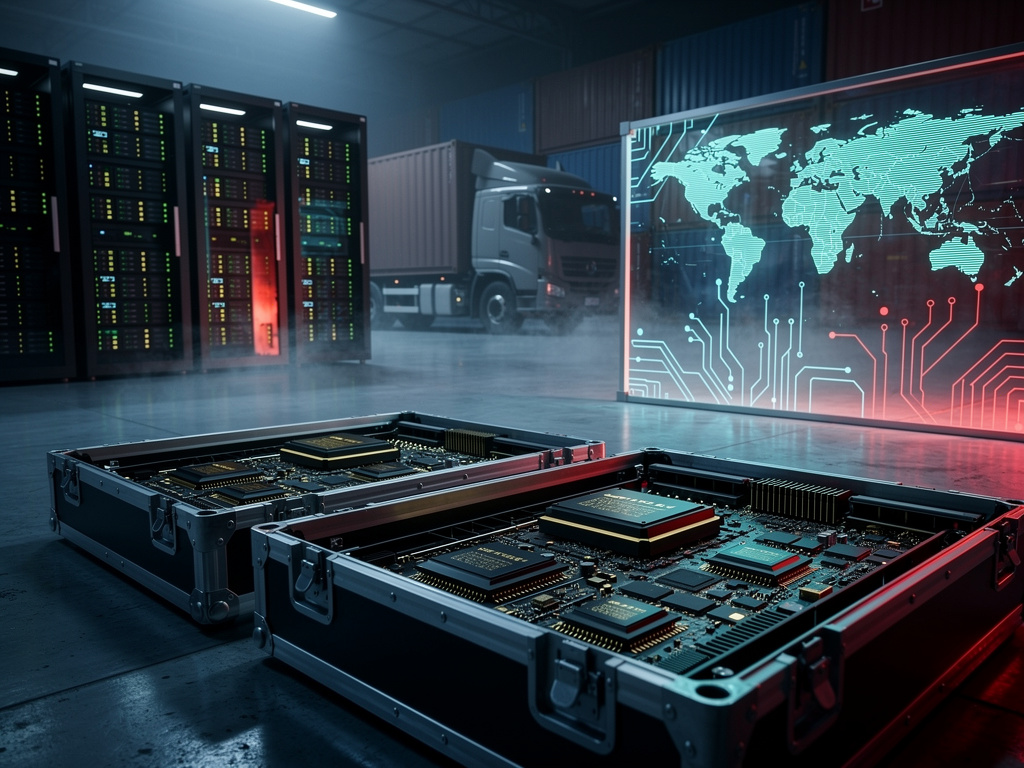
The smuggling operation, as described in the report, involved installing the Blackwell chips in data centers located in nations where their sale is permitted. These components were then dismantled, inspected by server equipment developers to ensure compliance with export rules, and surreptitiously shipped to China. This method allows Chinese firms to access hardware that the U.S. government has deemed too sensitive for export, fearing it could bolster military or surveillance capabilities. DeepSeek’s move comes at a time when China’s AI ambitions are increasingly viewed as a national priority, with the government pouring resources into domestic alternatives to Western tech.
Nvidia, the dominant force in AI chip manufacturing, has been at the center of these restrictions since the U.S. imposed bans in 2022, expanded under the Biden administration to include the latest Blackwell series. The company’s response to the allegations has been swift but measured. In a statement covered by CNBC, Nvidia denied knowledge of any such usage, emphasizing its commitment to complying with export controls and pursuing violations aggressively. Yet, the incident raises questions about the effectiveness of these bans in curbing China’s progress.
Escalating Tensions in Tech Sanctions: The Broader Implications for Global Supply Chains
Industry insiders point out that smuggling advanced chips isn’t a new phenomenon, but the scale and sophistication here are noteworthy. According to sources cited in Bloomberg, DeepSeek has leveraged several thousand of these Blackwell chips, which are prized for their superior performance in training large language models. This isn’t just about one company; it’s indicative of a broader trend where Chinese AI developers turn to black-market channels or overseas data centers to bypass restrictions. Posts on X, formerly Twitter, reflect growing sentiment among tech observers that such workarounds are inevitable, with users noting how China’s domestic chip industry is accelerating in response.
The U.S. rationale for the bans is rooted in national security concerns. Officials worry that chips like Nvidia’s Blackwell could enhance China’s capabilities in areas such as autonomous weapons or advanced surveillance systems. However, critics argue that these measures may inadvertently accelerate China’s self-reliance. For instance, reports from The Information detail how DeepSeek’s strategy involves not just smuggling but also integrating these chips into secretive development pipelines, potentially giving the company an edge in releasing competitive AI models faster than anticipated.
Nvidia’s market position adds another layer of complexity. The company, which once held a near-monopoly in China’s AI chip market, saw its share plummet from 95% to virtually zero due to the bans, as highlighted in posts on X quoting Nvidia CEO Jensen Huang. This shift has forced Chinese firms like DeepSeek to explore alternatives, including Huawei’s Ascend chips or other homegrown solutions. Yet, the allure of Nvidia’s ecosystem, particularly its CUDA software platform, remains strong, making smuggled hardware a tempting shortcut.
Innovation Under Constraints: DeepSeek’s Rise Amid Hardware Hurdles
DeepSeek’s backstory is one of rapid ascent in a competitive field. Founded as part of China’s push to rival Western AI giants like OpenAI, the startup has gained attention for its cost-effective models. A post on X from earlier this year praised DeepSeek for training a model on a shoestring budget of under $6 million, a fraction of what U.S. counterparts spend. This efficiency is partly due to innovative training techniques, but access to high-end chips like Blackwell could supercharge their efforts, allowing for more complex neural networks and faster iteration cycles.
The smuggling report has sparked debate over enforcement. Nvidia, in a response detailed by The Times of India, reiterated that it has no evidence of DeepSeek using its chips and vowed to investigate any leads. This denial contrasts with anonymous sources in the original reporting, creating a fog of uncertainty. Industry analysts suggest that tracking smuggled chips is notoriously difficult, given the global nature of supply chains and the involvement of third-party intermediaries.
Moreover, the timing aligns with shifts in U.S. policy. Recent news from The Guardian indicates that the incoming Trump administration may relax some restrictions, potentially allowing sales of certain Nvidia chips like the H200 to China. This could render smuggling less necessary, but for now, companies like DeepSeek appear willing to navigate the gray areas to maintain momentum.
Geopolitical Ripples: How Chip Bans Are Reshaping AI Development Worldwide
The broader impact on the AI sector is profound. Chinese firms, facing hardware shortages, are investing heavily in domestic semiconductor production. Posts on X highlight rumors of DeepSeek planning to pivot entirely to China-made GPUs to avoid reliance on Nvidia’s CUDA, as reported in Taiwanese media. This shift could democratize AI development by reducing costs and barriers, but it also risks fragmenting the global tech ecosystem into competing silos.
Critics of the U.S. bans argue they may backfire. By denying access to advanced chips, Washington is pushing China to innovate faster in areas like chip design and alternative architectures. For example, DeepSeek’s reported use of smuggled Blackwell chips, as per sources in Liga.net, demonstrates resilience and adaptability. If confirmed, it could embolden other Chinese startups to follow suit, eroding the intended technological lead.
Nvidia’s stock has felt the tremors. While the company dismissed the claims in statements to various outlets, market reactions have been mixed, with premarket dips noted in X posts. Investors are weighing the risks of enforcement actions against the potential for policy changes under new U.S. leadership, which might reopen lucrative markets.
Strategic Maneuvers: The Future of AI Hardware Access in a Divided World
Looking ahead, DeepSeek’s alleged tactics point to a future where AI advancement is as much about supply chain ingenuity as raw innovation. The startup’s next model, trained on these contentious chips, could challenge Western dominance if it delivers on performance promises. Industry watchers on X speculate that this could trigger a race to build even more efficient, sanction-proof systems, with China potentially leading in scalable, low-cost AI.
Enforcement challenges remain a sticking point. U.S. authorities have ramped up scrutiny, but as Bloomberg’s coverage notes, the sheer volume of global chip trade makes complete oversight impossible. DeepSeek, for its part, has not publicly commented, leaving room for speculation about the veracity of the reports.
The episode also underscores ethical dilemmas in tech. While smuggling circumvents laws, it fuels debates on whether such restrictions hinder global progress or protect vital interests. As one X post put it, China’s AI labs are inevitably rising, bans or no bans, forcing a reevaluation of international tech policies.
Balancing Act: Policy Responses and Industry Adaptations
Policymakers in Washington are grappling with these developments. The Commerce Department’s efforts to tighten controls, as referenced in Guardian reports, contrast with calls for relaxation to boost U.S. companies like Nvidia. This balancing act is crucial, as overly stringent measures could stifle American innovation while failing to contain China’s growth.
For DeepSeek, the focus is on output. If their upcoming model impresses, it could validate the risky strategy, attracting more investment and talent to China’s AI scene. References in The Information to thousands of smuggled chips suggest a well-orchestrated operation, possibly involving state support, though unconfirmed.
Ultimately, this saga illustrates the intertwined fates of technology and geopolitics. As Nvidia pursues any violations, per its statements, the industry watches closely. The outcome could redefine how nations compete in AI, with smuggled silicon serving as a symbol of defiance and determination.
Evolving Dynamics: Long-Term Shifts in Global Tech Power
The narrative extends beyond one company. Broader trends, as seen in X discussions, show China’s desert-based supercomputers allegedly running on banned Nvidia chips, per earlier Bloomberg claims. Such facilities highlight the scale of Beijing’s commitment, potentially housing tens of thousands of restricted components.
Nvidia’s denial, echoed across outlets like Economy Watch, emphasizes proactive compliance, but skepticism persists. If DeepSeek succeeds, it might inspire a wave of similar ventures, pressuring Western firms to innovate faster.
In this environment, collaboration and competition coexist uneasily. While bans aim to safeguard advantages, they may accelerate a multipolar tech world where no single player dominates hardware or software.
Pathways Forward: Navigating Uncertainty in AI’s Next Chapter
As the story unfolds, stakeholders from Silicon Valley to Shenzhen are adapting. DeepSeek’s approach, if proven, could set precedents for evading sanctions, prompting stronger international cooperation on enforcement.
Yet, optimism lingers for de-escalation. With potential policy shifts, as noted in Times of India coverage, avenues for legitimate access might emerge, reducing the need for subterfuge.
In the end, the pursuit of AI excellence transcends borders, driven by human ingenuity that often outpaces regulatory frameworks. DeepSeek’s gambit, whether confirmed or contested, signals a new era where access to forbidden tech becomes a battleground for supremacy.


 WebProNews is an iEntry Publication