
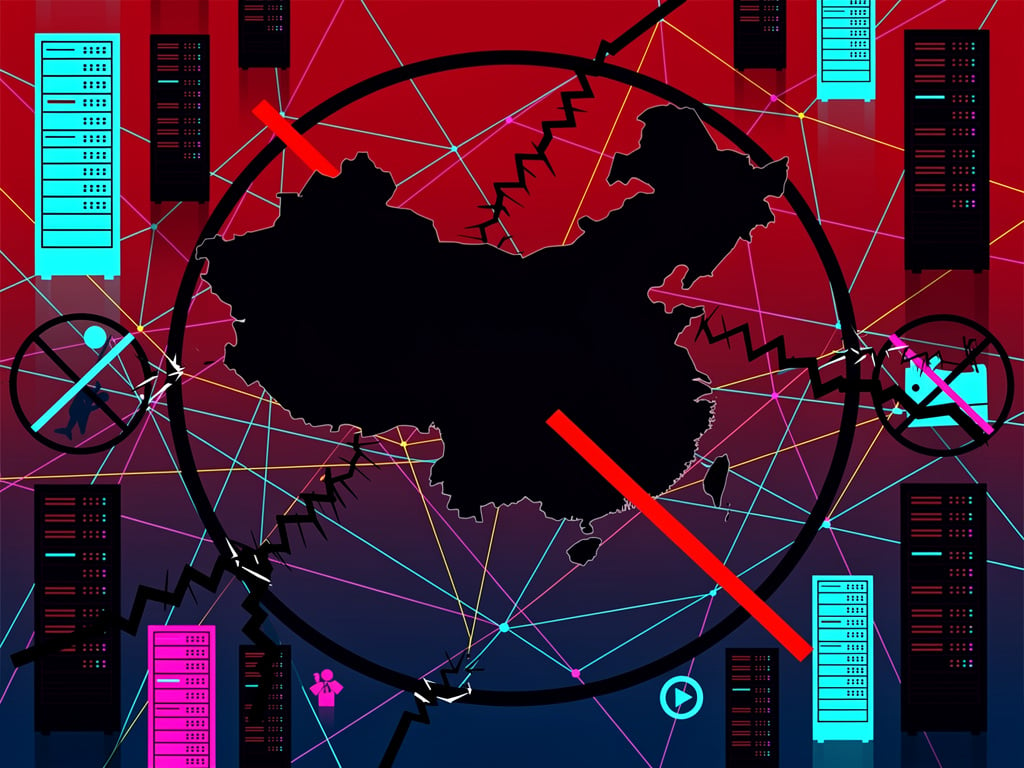
Stable connections grow scarce inside China. Providers that once delivered reliable access to the outside world now falter under fresh pressure from authorities. The pattern has sharpened since early April. Telecom carriers received urgent orders. Data centers began severing links flagged for unauthorized overseas traffic. Ordinary citizens and foreign businesses alike feel the pinch.
TechRadar first flagged the trend in recent coverage. (TechRadar) Reports of widespread disruption followed notices sent to regional providers. One document shared online instructed an upstream telecom partner to terminate all international connections for business clients. The language left little room for doubt. Every IP address under control must block traffic beyond mainland China. Signs of VPNs, proxies or similar tools had to vanish. Noncompliance meant immediate disconnection, data loss and no refunds.
But this isn’t an isolated push. ABC News reported just days ago that users across China find it harder to reach the open internet. (ABC News) A new round of enforcement hit in April. US-based censorship analyst Eric Liu noted telecom carriers were told to scan networks and block all VPN services. “China recently is very active on banning VPN services,” one observer told the outlet. People adapt. They switch providers. They test new protocols. Yet reliability slips.
Bitter Winter detailed fears of even stricter measures. (Bitter Winter) Leaked documents collected by China Digital Times pointed to coordinated action. A technology company in Suzhou received notice of a special crackdown on cross-border access. Similar warnings reached firms in Shaanxi. Blanket bans on overseas traffic, including to Hong Kong, Macau and Taiwan, appeared in some directives. VPN and proxy services faced outright prohibition. Speeds throttled in certain areas. Detection improved. Individuals caught sharing overseas content at home risked fines or detention.
The legal backdrop adds uncertainty. VPN rules have long sat in a gray zone. Approved services exist for select enterprises. Unauthorized tools for personal use drew inconsistent penalties, often limited to fines. A draft Cybercrime Law now under discussion could close that space. Article 44 targets tools used to reach illegal foreign content. Penalties may stiffen. Enforcement already shows new teeth.
April 1 marked a turning point. RelyVPN described how authorities unplugged thousands of relay servers overnight. (RelyVPN) Shadowsocks, V2Ray, Trojan — popular among technically adept users — went dark in many domestic data centers. The move followed enforcement orders to disconnect servers handling unauthorized cross-border traffic. Providers scrambled. Users reported sudden outages. Some turned to overseas servers with mixed success. Connection speeds dropped. Latency climbed. Daily work for researchers, journalists and executives suffered.
Foreign companies operating in China watch developments closely. Past crackdowns already raised costs. The Wall Street Journal noted years ago that businesses depend on these tools to communicate with global partners. (The Wall Street Journal) Approved VPNs run by state-linked firms offer one route. Yet they invite greater oversight. Data flows become easier to monitor. Security analysts warned that such concentration aids surveillance.
Leaked documents examined by ChinaFile reveal the crackdown’s quiet success. (ChinaFile) Fewer average users obtain circumvention tools. Wall-jumpers, once able to grab VPNs with relative ease, now face barriers. State-approved options remain available but allow easier tracking. The exact number of people bypassing controls stays opaque. Beijing invests heavily in detection. Its internal estimates likely exceed public knowledge.
Chosun Biz captured the human side. (Chosun Biz) Wider blocks and fines since March left users with choppy links to global apps. Access to overseas sites turned unstable. Frustration mounted. Some reported police visits tied to VPN use. Raids, though not widespread, signaled rising stakes. One case involved illegal registration and use of a VPN. Another tied to viewing foreign platforms.
The Epoch Times tied the escalation to broader efforts. (The Epoch Times) New measures, leaked notices and user accounts suggest a deliberate campaign. Technical upgrades to the firewall likely play a role. Deep packet inspection grows more sophisticated. AI-assisted detection appears in some reports. A military data breach involving a compromised VPN reportedly accelerated action. Ten petabytes of data allegedly exposed. The incident, referenced in analysis, underscored risks authorities cite.
Users on the ground describe a cat-and-mouse game that favors the house. They test multiple services. They rotate servers. They adopt obfuscated protocols designed to hide VPN signatures. Success varies by carrier and location. China Mobile reportedly poses greater challenges than others. Home broadband with modems sometimes fares better, though slower. Decentralized alternatives draw interest. Projects built on peer-to-peer networks and cryptocurrency incentives promise resistance to centralized blocks. Early tests show promise. Scale remains unproven.
Beijing frames these steps as necessary for national security and social stability. Circumventing controls risks exposure to harmful content. It threatens data sovereignty. Officials point to past incidents where unfiltered access fueled unrest. Yet the measures also limit economic activity. Researchers lose quick access to global journals. Businesses face delays in coordination. Talent recruitment suffers when prospects cannot easily verify information from abroad.
History offers context. Crackdowns intensified around major political events. The 2017 campaign targeted app stores and vendors. Apple removed dozens of VPN applications from its China store. Alibaba and others pulled listings. Regulations required government approval for services. Enforcement waxed and waned. Usage still climbed at times. A 2024 Voice of America report found VPN adoption nearly doubled amid tighter censorship. (Voice of America) Demand persists. Supply adapts.
Today’s pressure feels different. Notices target infrastructure directly. Telecoms must police their networks. Data centers face disconnection for violations. The draft law looms. Ordinary users who once paid occasional fines may encounter harsher treatment. Sharing overseas content domestically draws extra scrutiny. The space for gray-area activity shrinks.
Experts hesitate to call it total closure. China cannot isolate itself completely without economic harm. Trade, investment and technology transfer require some openness. Approved channels exist. Select universities and firms receive exemptions. The goal appears control rather than elimination. Make unsanctioned access difficult, detectable and risky enough to deter most citizens.
That calculation leaves a smaller group undeterred. Tech-savvy individuals. Dedicated activists. Foreign correspondents. They innovate. They combine tools. They accept slower speeds and higher costs. Their persistence keeps a narrow window open. How long that lasts depends on enforcement creativity and technical countermeasures.
Recent X discussions echo the uncertainty. Posts mention sudden outages. Others tout decentralized options. Rumors of further tightening circulate. One analyst suggested the latest push followed a significant data breach via VPN. Confirmation remains limited. The pattern, however, holds. Pressure builds. Adaptation follows. Stability stays elusive.
Business leaders weigh options. Some relocate sensitive work outside China. Others invest in compliant systems that satisfy regulators while minimizing exposure. Compliance carries its own risks. Government visibility into traffic increases. Data privacy concerns grow for multinational teams.
For average users the impact hits daily life. Access to international news. Family connections abroad. Educational resources. Entertainment. Each becomes less certain. Workarounds exist. None deliver the frictionless experience once possible. The internet inside China fragments further from the global version.
Observers will track enforcement through summer. New notices could surface. App stores may see fresh removals. Detection algorithms will evolve. Users will test boundaries. The contest continues. One side commands the infrastructure. The other relies on ingenuity and persistence. For now the balance tilts toward tighter control. Yet complete victory remains distant. The demand for open access endures.


 WebProNews is an iEntry Publication