
Shadows Over the Stars: China’s Shadowy Campaign Against Starlink
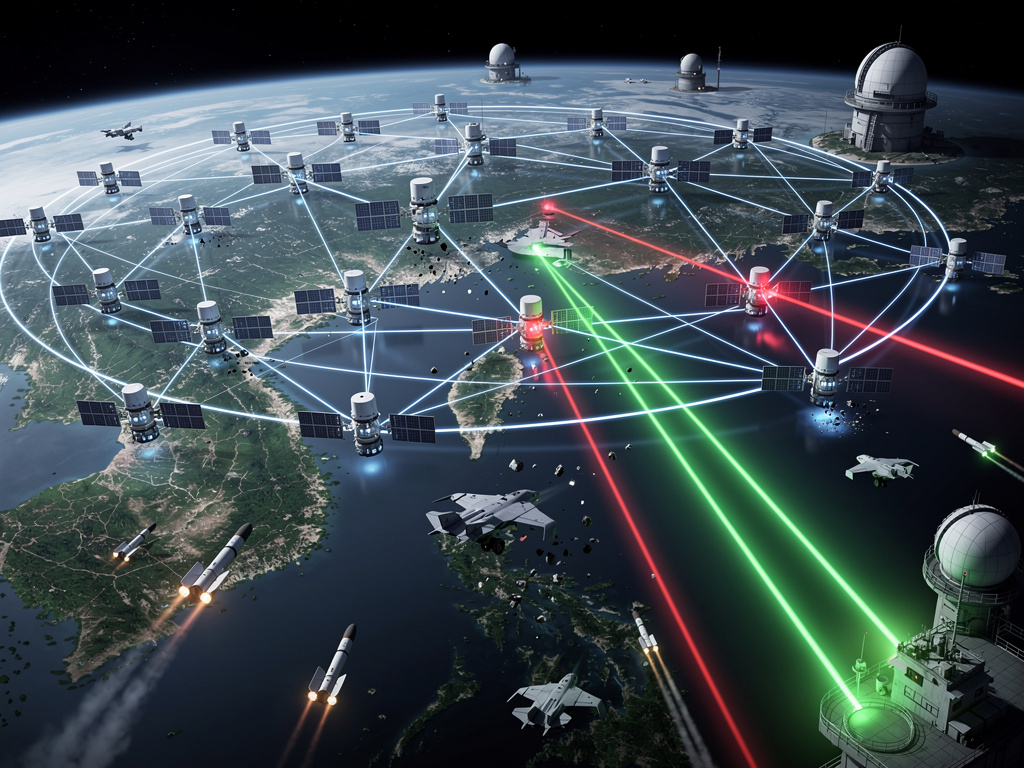
In the vast expanse of low-Earth orbit, where thousands of satellites hum with data streams connecting the globe, a new front in geopolitical tension is emerging. Recent reports indicate that China is actively researching methods to disrupt SpaceX’s Starlink network, a constellation that has revolutionized broadband access and military communications. This development, shrouded in secrecy, underscores Beijing’s strategic anxieties over U.S. technological dominance in space. Drawing from a variety of sources, including academic papers and intelligence assessments, it’s clear that these efforts are not mere theoretical exercises but part of a broader preparation for potential conflicts, particularly in sensitive regions like Taiwan.
The Starlink system, with over 6,000 satellites operational as of late 2025, provides resilient internet connectivity that bypasses traditional infrastructure. This resilience makes it a vital asset for military operations, as seen in Ukraine where it supported Ukrainian forces against Russian aggression. Chinese military researchers, however, view this as a direct threat. A study published in a Chinese defense journal, as reported by Dark Reading, suggests that deploying around 2,000 drones could effectively sever communications over an area the size of Taiwan. These drones would jam signals or physically interfere with satellite operations, highlighting a tactical approach to countering orbital networks.
Beyond drones, China is exploring more sophisticated means, including lasers and anti-satellite weapons. Posts on X from defense analysts point to Beijing’s interest in space-based lasers that could blind or damage satellites. One such post from a defense intelligence account noted China’s exploration of lasers and surveillance satellites to counter Starlink, reflecting a multi-pronged strategy. This aligns with broader concerns about space militarization, where nations are racing to develop capabilities that could neutralize adversaries’ orbital assets without necessarily destroying them outright.
Escalating Orbital Tensions
The timing of these revelations coincides with recent incidents that have heightened scrutiny. In mid-December 2025, SpaceX reported a near-miss between one of its Starlink satellites and a Chinese spacecraft launched from the mainland. According to Space.com, the Chinese satellite passed within 200 meters of Starlink-6079, traveling at speeds exceeding 17,000 mph. This “dangerously close” encounter, as described by SpaceX executives, underscores the risks of crowded orbits and poor international coordination. SpaceX has criticized the lack of data sharing from Chinese launch operators, which could prevent such hazardous situations.
Further fueling concerns, a Newsweek article detailed simulations where Chinese forces practiced jamming Starlink signals over Taiwan-sized regions. The report, accessible via Newsweek, indicates that nearly 1,000 drones might suffice to block access, a figure that demonstrates the scalability of such disruptions. These simulations are part of China’s military exercises, which increasingly incorporate space domain awareness, preparing for scenarios where satellite internet could tip the balance in a conflict.
Industry insiders note that Starlink’s design, with its redundant satellites and autonomous maneuvering capabilities, offers some protection against jamming. However, persistent efforts from state actors like China could exploit vulnerabilities. A post on X from a cybersecurity enthusiast highlighted Russia’s parallel development of pellet-based weapons to create debris fields, potentially disrupting entire constellations. While focused on Russia, this mirrors tactics China might adopt, emphasizing the shared adversarial stance against U.S. space assets.
Technological Arms Race in Space
China’s push extends beyond disruption to building its own competing networks. Reports from Telecoms Tech News reveal Beijing’s preparations for a low-orbit satellite internet system, with licenses expected soon. This initiative aims to rival Starlink’s coverage, though experts believe full deployment is years away. By investing in domestic capabilities, China seeks to reduce reliance on foreign technology while enhancing its ability to interfere with rivals.
Historical context adds depth to these developments. A 2024 X post referenced China’s warnings to Elon Musk about potential destruction of Starlink using submarine-based directed energy weapons. Such threats, while not new, gain urgency amid escalating U.S.-China tensions. The Wall Street Journal-style analysis reveals how these actions fit into China’s anti-access/area denial (A2/AD) strategy, designed to complicate U.S. military interventions in the Asia-Pacific.
Moreover, intelligence reports assessed in a Space.com piece from earlier in 2025 warn that both Russia and China are targeting Starlink as a prime counterspace objective. The assessment, detailed in this Space.com report, evaluates capabilities across a dozen countries, placing China at the forefront of anti-satellite research. This includes ground-based lasers and co-orbital satellites that could rendezvous with and disable targets.
Implications for Global Connectivity
The broader implications for civilian users are profound. Starlink has democratized internet access in remote areas, but disruptions could isolate regions during crises. In Taiwan, where Beijing claims sovereignty, jamming Starlink could sever external communications, aiding an invasion. Dark Reading’s coverage emphasizes how even resilient networks like Starlink face challenges from mass drone deployments, potentially blacking out areas for hours or days.
Regulatory and diplomatic responses are lagging. The International Telecommunication Union (ITU) standards are being flouted, as evidenced by X posts about unauthorized frequency use by SpaceX’s Starshield satellites. While not directly related to Chinese tests, this highlights the chaotic regulatory environment in space, where enforcement is weak. Calls for better international agreements on orbital traffic management are growing, but geopolitical rivalries hinder progress.
Industry experts, speaking anonymously, suggest that SpaceX is bolstering defenses, including laser communication links between satellites to evade jamming. Yet, the cat-and-mouse game continues. A recent Reuters report on a Starlink satellite anomaly, found at Reuters, describes a venting incident that created debris, illustrating the fragility of these systems even without adversarial interference.
Strategic Calculations and Future Risks
Beijing’s motivations are rooted in national security perceptions. Starlink’s ties to the U.S. military, through the Starshield program, amplify Chinese concerns. As noted in X posts from current affairs accounts, China views the network as an extension of American power projection, especially in potential flashpoints like the South China Sea. Simulations reported in Gizmodo, referenced in defense intelligence tweets, show jamming capabilities that could neutralize these advantages.
Countermeasures are evolving on both sides. Chinese startups like LandSpace are developing reusable rockets to challenge SpaceX, as per WebProNews. This technological competition could accelerate innovations but also heighten risks of escalation. Analysts predict that by 2030, low-Earth orbit will host tens of thousands more satellites, making disruptions more consequential and harder to attribute.
The human element cannot be overlooked. Elon Musk’s public persona and SpaceX’s rapid deployment have made Starlink a symbol of U.S. ingenuity, but also a target. Chinese state media often portrays it as a tool of hegemony, justifying countermeasures. In this context, quiet tests—such as those simulated over Taiwan—serve as deterrents, signaling capability without overt aggression.
Navigating the Orbital Minefield
Looking ahead, the international community must address these challenges through diplomacy. Forums like the United Nations Committee on the Peaceful Uses of Outer Space could foster norms against destructive testing. However, with China’s expanding space program, including its own megaconstellation plans, cooperation seems elusive.
Recent X sentiment reflects growing alarm among space enthusiasts and policymakers. Posts warn of Kessler syndrome, where debris cascades could render orbits unusable. Russia’s pellet weapon development, as reported in WebProNews, exemplifies this risk, and China may follow suit.
For industry insiders, the takeaway is clear: space is no longer a sanctuary but a contested domain. Companies like SpaceX must innovate defensively, while governments negotiate guardrails. The quiet tests by China against Starlink are harbingers of a new era where orbital superiority could determine terrestrial outcomes.
Echoes of a Space Cold War
Delving deeper, economic ramifications loom large. Disruptions to Starlink could affect global markets reliant on real-time data, from finance to logistics. In Africa and Asia, where Starlink is expanding, such vulnerabilities might deter adoption, benefiting Chinese alternatives.
Case studies from past incidents, like the 2007 Chinese anti-satellite test that created thousands of debris pieces, remind us of the long-term hazards. Today’s efforts are more subtle, focusing on electronic warfare rather than kinetic kills, but the intent remains disruptive.
Ultimately, this saga reflects the intertwining of commercial innovation and military strategy. As China refines its tactics, the world watches, hoping that competition in space yields progress rather than peril. The Register’s roundup of Asian tech news, including the near-miss incident at The Register, captures the ongoing drama, where each launch and simulation edges us closer to a tipping point.
Pathways to Resilience
To mitigate these threats, experts advocate for diversified networks, incorporating geostationary satellites and undersea cables. SpaceX’s ongoing launches aim to thicken the constellation, making total disruption improbable.
Collaborative efforts, such as shared orbital data platforms, could prevent accidents like the December close call detailed in Tom’s Hardware at Tom’s Hardware.
In the end, the orbital arena demands vigilance. China’s tests, while concerning, spur innovation that could safeguard the stars for all.


 WebProNews is an iEntry Publication