
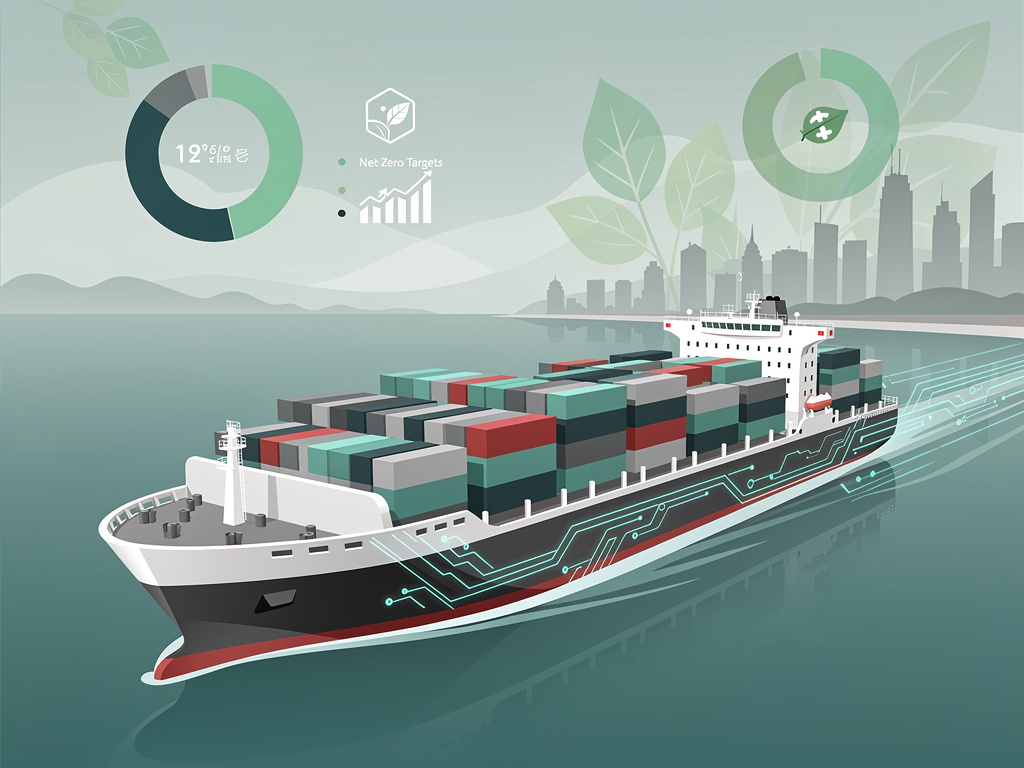
The Ning Yuan Dian Kun glided out of Ningbo-Zhoushan Port on April 15, 2026. No diesel rumble. No exhaust plumes. Just silent electric propulsion hauling 742 standard containers along Zhejiang’s coast.
This 10,000-ton vessel—127.8 meters long, 21.6 meters wide—claims the title of world’s largest pure-electric intelligent containership. Built for Ningbo Ocean Shipping Co., it runs a short-hop route to Jiaxing Port, about 70 nautical miles away. Operators expect it to slash 1,462 tons of CO2 yearly, plus wipe out sulfur oxides, nitrogen oxides, and particulates entirely. China Daily covered the delivery, quoting senior engineer Ma Hongmeng of the Shanghai Merchant Ship Design and Research Institute: “From the initial project approval to the final delivery, the vessel showcased the full life-cycle development of zero carbon ships, characterized by pure electric propulsion, autonomous navigation and high operational efficiency.”
Ten container-shaped battery packs deliver 19,600 kWh—equivalent to 250 Tesla Model 3s or 300 household EVs. Two permanent magnet synchronous motors, each 875 kW, provide instant torque. Captain Wang Ting noted the difference. “Compared with traditional fuel-powered vessels, the most noticeable change… is the lack of noise,” he told China Daily. “Voyages nowadays are almost silent. This creates a more relaxed working environment.” Acceleration feels linear. No lag. But crews must master energy management, plotting speeds to stretch each charge.
And it’s no lab toy. The ship completed sea trials, earned certification from China Classification Society, then entered commercial service. Global Times reported it saves 580 tons of fuel annually while hitting 11.5 knots top speed. Jiangxi Jiangxin Shipbuilding handled construction; Shanghai Marine Equipment Research Institute supplied the propulsion. Both fall under China State Shipbuilding Corp.
Such feats don’t happen in isolation. China’s shipping sector pushes hard for carbon neutrality by 2060. Inland waterways already host over 1,000 alternative-fuel vessels, including 485 pure electrics—40% of the global fleet. Coastal routes follow suit now. The 15th Five-Year Plan (2026-2030) eyes smart ports, AI highways, and 10,000 km of zero-carbon corridors. Transport Minister Liu Wei pledged a 17% drop in transport carbon intensity per GDP unit.
From Batteries to Blue Water: Scaling the Challenge
But scale matters. Prior electrics topped out at 700 TEU, like the Greenwater 01. Ning Yuan Dian Kun jumps to 742. Battery swaps at port mimic EV fast-charging stations. Shore power recharges overnight. Yet limits persist. Range suits feeders, not transoceanic hauls. Developers admit as much; it’s tailored for Zhejiang’s busy lanes, where Ningbo Ocean Shipping runs 32 green ships—57% of its fleet.
Chairman Chen Xiaofeng envisions more. “We hope to achieve breakthroughs in key areas through Ning Yuan Dian Kun,” he said. “We aim to build the country’s first demonstration model of a fully electric seagoing vessel, promoting the expansion of pure electric technology from inland waterways to maritime transport.” China Daily. Ningbo Maritime Safety Administration formed a dedicated team for risk monitoring, from design to docking.
Global eyes watch closely. Bloomberg noted the ship’s battery bank matches 380 Model 3s, signaling trade’s electric pivot. Bloomberg Opinion. TechRadar called it longer than a football field, weighing 10,000 tons. TechRadar. Maritime Executive hailed it as China’s first large all-electric containership. The Maritime Executive.
Competition brews. CATL, top battery maker, plans ocean-going electrics in three years. South China Morning Post. China pledges 15% carbon intensity cuts for international ships by 2030 versus 2025. Inland, partnerships build charging networks. Fujian leads with 34.5% of the electric fleet.
Challenges loom, though. Battery weight eats cargo space. High upfront costs deter fleets. Supply chains for megawatt-hour packs strain. Regulations lag; IMO eyes carbon pricing. Still, China’s EV dominance—40% global electric ship batteries—gives edge. Lithium-ion penetration hits 18.5% this year, per white papers.
Operators adapt fast. Wang Ting stressed rational speed planning. Ma Hongmeng touted zero pollution from navigation to unloading. Wu Guodong, from the propulsion institute, affirmed reliability post-tests: “The technological breakthrough… highlighted China’s leading position in pure electric ship power system integration worldwide.” China Daily.
So what next? More tonnage. Longer ranges. Hybrids bridge gaps till solid-state batteries mature. China’s waterways decarbonize quickest; coasts accelerate. Global shipping, 3% of emissions, faces mandates. This ship proves electrics work at scale. Quietly reshaping freight, one silent voyage at a time.


 WebProNews is an iEntry Publication