
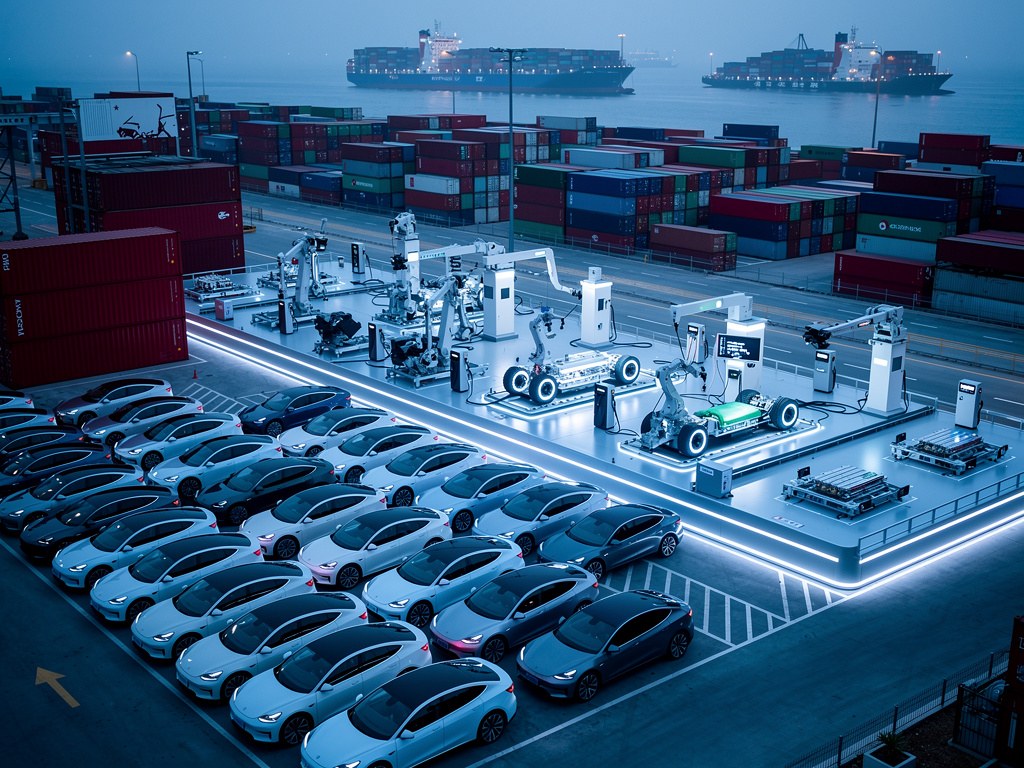
China’s Electric Ascendancy: How Policy, Innovation, and Scale Propelled EVs to Global Supremacy
In the bustling factories of Shenzhen and Shanghai, a quiet revolution has been unfolding, one that has positioned China as the undisputed leader in the electric vehicle sector. What began as a government-driven initiative to combat urban pollution has evolved into a juggernaut that commands over 70% of global EV production and a significant chunk of sales worldwide. Recent data from Wikipedia’s entry on the Electric vehicle industry in China highlights that in 2024 alone, China sold 12.87 million passenger electric vehicles, with exports exceeding 1.28 million units. This dominance isn’t accidental; it’s the result of strategic policies, massive investments, and a relentless focus on technological advancement.
At the heart of this success lies a combination of generous subsidies and regulatory mandates that have accelerated adoption. Back in the early 2010s, the Chinese government introduced incentives like purchase rebates and tax exemptions, effectively lowering the cost barrier for consumers. According to an analysis by MIT Technology Review in their piece How did China come to dominate the world of electric cars?, these measures were complemented by investments in lithium battery technology, creating a self-sustaining ecosystem. Unlike Western markets, where EV adoption has been hampered by inconsistent policies, China’s approach has been holistic, integrating supply chain control from raw materials to finished vehicles.
This ecosystem extends beyond borders, influencing global trade dynamics. Chinese manufacturers like BYD and NIO have not only captured domestic market share but are increasingly exporting to Europe, Asia, and even Latin America. A report from the International Energy Agency’s Global EV Outlook 2025 notes that while global EV sales growth slowed in late 2024 due to policy shifts in the U.S., China’s plateauing domestic market has pushed exporters to seek new frontiers, maintaining overall momentum.
The Battery Backbone: Mastering Supply Chains and Innovation
Control over critical components, particularly batteries, has been a cornerstone of China’s EV strategy. Companies such as CATL and BYD dominate the global battery market, with China holding 69% of installations as per a recent update from Carbon Credits. This isn’t just about volume; it’s about innovation in high-density cells and fast-charging tech that outpaces competitors. For instance, BYD’s vertical integration allows it to produce nearly everything in-house, reducing costs and improving efficiency, a point emphasized in an X post by analyst S.L. Kanthan, who highlighted how this goes beyond mere subsidies.
Government support has fueled research and development, leading to breakthroughs like solid-state batteries and advanced recycling methods. In contrast, Western automakers often rely on imported components, facing vulnerabilities in supply chains. The MSN video The Real Reason China’s EVs Are Taking Over the World attributes this edge to China’s early bets on electrification, dating back to the 2008 Olympics when air quality concerns prompted a pivot from fossil fuels.
Moreover, China’s dominance in rare earth minerals and processing gives it a near-monopoly on key inputs. This has allowed firms to scale production rapidly, driving down prices to levels that make EVs competitive with traditional cars. As noted in a BBVA Research report from 2023, The rise of China’s EV sector and its implications for the world, China’s market share in global EV sales jumped from under 30% in 2019 to 41.5% by 2022, a trend that has only accelerated.
Market Penetration: From Domestic Boom to International Expansion
Domestically, the shift has been dramatic. In 2024, plug-in electric vehicles accounted for 47.9% of overall automotive sales in China, up from just 6.3% in 2020, according to the Wikipedia data. This surge is driven by urban consumers embracing affordable, tech-laden models that offer features like autonomous driving and over-the-air updates. Brands like Xiaomi have even entered the fray, blending consumer electronics with automotive design to appeal to younger buyers.
On the global stage, Chinese EVs are making inroads despite trade barriers. In Europe, where tariffs have been imposed, sales continue to grow, with models from SAIC and Geely gaining traction for their value proposition. Al Jazeera’s explainer China’s EVs dominate the world — why not in the US and Canada? points out that while North America remains a tough nut to crack due to protectionism, China’s vehicles are ubiquitous elsewhere, holding 76% of global EV sales as reported by Carscoops in Chinese Brands Now Dominate 76% Of Global EV Sales.
Social media sentiment on X underscores this momentum. Posts from influencers like Mario Nawfal celebrate China’s projection to sell more EVs than gas cars in 2025, with over 12 million units anticipated, signaling a tipping point where electric outperforms internal combustion. Erik Solheim’s updates hail China as the “world green leader,” reflecting widespread optimism about its role in sustainable transport.
Challenges on the Horizon: Trade Tensions and Saturation
Yet, this ascendancy isn’t without hurdles. Recent Reuters coverage in Global EV sales growth slowest since Feb 2024 on China plateau, US policy changes indicates that domestic sales in China have plateaued, prompting a push for exports amid U.S. policy shifts like the end of EV tax credits. This could lead to oversupply and price wars, potentially eroding margins for manufacturers.
Trade tensions add another layer of complexity. The U.S. and EU have levied tariffs on Chinese EVs, accusing them of unfair subsidies. However, as detailed in CleanTechnica’s analysis The China EV Flywheel And Why Exports Will Keep Rising, China’s “flywheel” of scale, batteries, and exports is reshaping competition, forcing global players to adapt or risk obsolescence.
Emerging markets are becoming battlegrounds, with Ember’s report The EV leapfrog – how emerging markets are driving a global EV boom noting that over a quarter of new cars sold in these regions are electric, largely thanks to affordable Chinese imports. This “leapfrog” effect allows developing nations to bypass traditional automotive infrastructure, accelerating global electrification.
Strategic Implications: Lessons for Global Automakers
For industry insiders, China’s model offers valuable lessons in integration and agility. By controlling the entire value chain, Chinese firms mitigate risks and innovate faster. Western giants like Tesla have benefited from manufacturing in China, but others lag, as evidenced by slower adoption rates in the U.S., where policy reversals threaten progress, per The Invading Sea’s piece The rest of the world is lapping the US in the EV race.
Innovation extends to software and user experience, with Chinese EVs featuring advanced infotainment systems that rival smartphones. The Business Times article To win the global car market, China needs more than EVs argues that building automotive culture—beyond just transport—will be key to long-term success, incorporating lifestyle elements to foster brand loyalty.
Looking ahead, collaborations could bridge gaps. Joint ventures with foreign firms have already transferred knowledge, but as China’s tech advances, the flow might reverse. The Center on Global Energy Policy’s commentary What the Global Electric Vehicle Market Signals for US Automakers and Policymakers warns that ignoring these signals could sideline U.S. players, urging investments in domestic capabilities.
The Green Horizon: Sustainability and Future Trajectories
Sustainability remains a core driver. China’s push for EVs aligns with global climate goals, reducing emissions in the world’s largest auto market. X posts from users like Justin Guay emphasize that for the first time, China will sell more EVs than internal combustion vehicles in 2025, marking a pivotal shift toward an electric future.
However, environmental concerns persist, such as the impact of battery mining. Chinese firms are addressing this through recycling initiatives and greener extraction methods, setting standards that could influence international norms.
Ultimately, China’s EV dominance is reshaping industries, from mining to urban planning. As Financial Times reported in a post on X, EVs are set to outsell gas cars in China this year, years ahead of the West. For insiders, the message is clear: adapt to this new reality or get left behind in the race to electrification. With ongoing innovations like megawatt charging—adding 400km range in minutes, as noted in X discussions—China’s lead seems poised to endure, driving the world toward a cleaner, more efficient mobility era.


 WebProNews is an iEntry Publication