
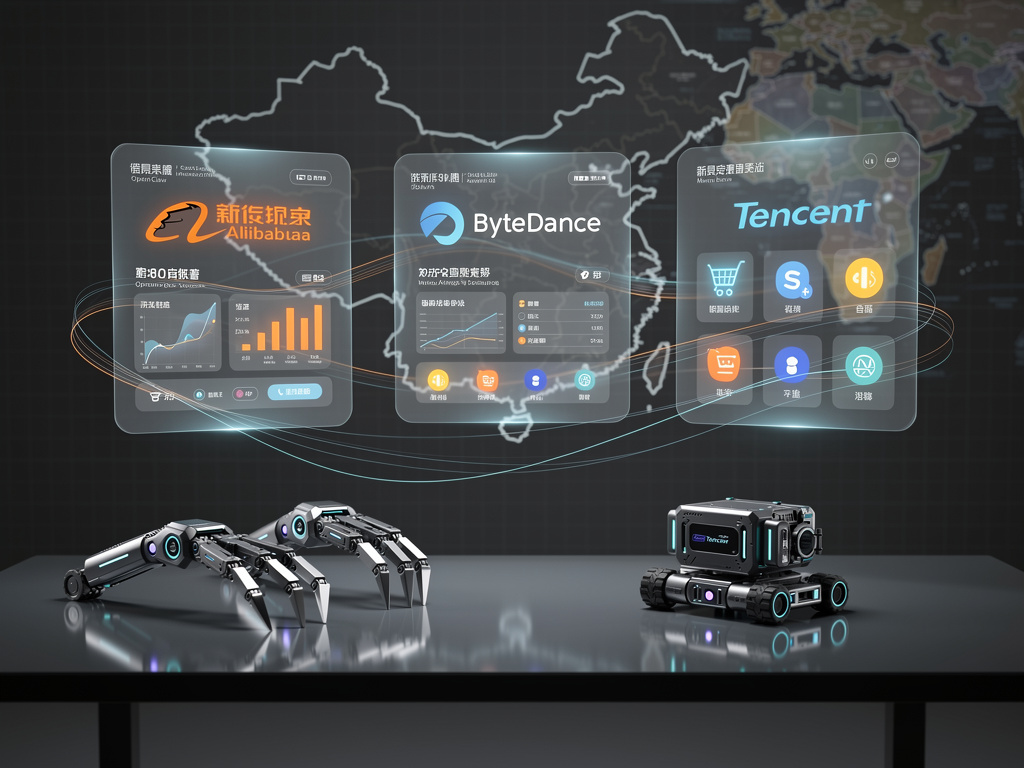
China’s technology sector is experiencing a fundamental transformation as artificial intelligence agents move from experimental novelty to commercial necessity. At the forefront of this shift are OpenClaw and MoltBot, two AI agent platforms that represent a distinctly Chinese approach to autonomous digital assistants—one that prioritizes integration across fragmented platforms rather than the closed-ecosystem model favored by Western tech giants.
According to Business Insider, these platforms are emerging as critical infrastructure in China’s digital economy, enabling users to navigate the complex web of applications dominated by Alibaba, ByteDance, and Tencent. Unlike Western AI assistants that operate primarily within single ecosystems, Chinese AI agents must bridge multiple platforms that jealously guard their user data and resist interoperability—a technical challenge that has spawned innovative architectural solutions.
The emergence of these platforms reflects broader structural differences in how Chinese and American technology markets have evolved. Where Apple’s ecosystem or Google’s services provide relatively seamless integration, China’s internet remains balkanized across competing super-apps, each with its own payment systems, social graphs, and content libraries. This fragmentation has created both opportunity and necessity for AI agents capable of operating across these digital fiefdoms.
The Technical Architecture Behind Cross-Platform Intelligence
OpenClaw’s approach centers on what developers describe as “platform-agnostic orchestration,” allowing the AI agent to maintain context and execute tasks across applications that were never designed to communicate with each other. The technical complexity of this undertaking cannot be overstated. Each major Chinese platform employs proprietary APIs, authentication protocols, and data structures that actively resist external access—a deliberate design choice intended to maintain competitive moats.
MoltBot has taken a different architectural path, focusing on what industry observers call “behavioral mimicry” rather than direct API integration. By observing and replicating human interaction patterns, MoltBot can navigate interfaces designed for human users rather than programmatic access. This approach trades some efficiency for broader compatibility, enabling the agent to work with platforms that provide no official developer access whatsoever.
The distinction between these approaches highlights a fundamental question facing AI agent development globally: whether to pursue deep integration with cooperative platforms or broad compatibility through interface-level interaction. Chinese developers, operating in an environment where platform cooperation cannot be assumed, have been forced to innovate in the latter category, potentially leapfrogging Western development that has relied heavily on official API partnerships.
Commercial Imperatives Driving Adoption
The commercial motivation for AI agents in China extends beyond mere convenience. For businesses operating across multiple platforms—a necessity in China’s fragmented digital commerce environment—AI agents represent potential cost savings measured in millions of dollars annually. A mid-sized e-commerce operation might maintain separate teams for Alibaba’s Tmall, JD.com, Pinduoduo, and emerging platforms like RedNote, each requiring specialized knowledge and manual coordination.
AI agents promise to consolidate these operations, enabling a single operator to manage inventory, pricing, customer service, and marketing across all platforms simultaneously. Early adopters report efficiency gains of 60-70% in routine operational tasks, though these figures remain difficult to verify independently. More significantly, agents can respond to market conditions—competitor pricing changes, inventory fluctuations, trending topics—with speed impossible for human operators.
The financial implications extend to consumer applications as well. Chinese consumers routinely comparison shop across multiple platforms for identical products, a time-consuming process that AI agents can execute in seconds. For high-consideration purchases like electronics or luxury goods, where price differences of 5-10% are common across platforms, the potential savings justify the friction of adopting new technology.
Regulatory Challenges and Data Sovereignty
The rise of cross-platform AI agents has not escaped regulatory scrutiny. Chinese authorities, already concerned about data security and platform power, face novel questions about AI agents that aggregate user data across multiple services. Current regulations governing data protection and user privacy were written for a world where each platform maintained discrete user relationships—a model that AI agents fundamentally disrupt.
Platform operators themselves have responded with mixed reactions. Some, recognizing the inevitability of AI agent adoption, have begun developing official interfaces and partnerships. Others have actively worked to block or limit agent access, viewing these tools as parasitic technologies that extract value from their platforms while contributing nothing to their ecosystems. This tension has created a cat-and-mouse dynamic reminiscent of early web scraping battles, with agents evolving to circumvent blocks while platforms develop more sophisticated detection mechanisms.
The regulatory uncertainty extends to questions of liability and accountability. When an AI agent executes a transaction on behalf of a user, who bears responsibility for errors or fraudulent activity? Current legal frameworks provide limited guidance, creating risk for both users and platform operators. Industry groups have called for clarification, but regulators appear hesitant to intervene before the technology’s trajectory becomes clearer.
The RedNote Factor and Social Commerce Integration
The explosive growth of RedNote (Xiaohongshu) has added urgency to AI agent development. The platform’s unique blend of social content and commerce—users discover products through authentic-seeming posts rather than traditional advertising—creates opportunities for AI agents that can analyze trends, identify emerging products, and execute purchases before items sell out or prices increase. This capability has proven particularly valuable in categories like fashion and cosmetics, where trends emerge and fade within days.
AI agents designed for RedNote must navigate challenges beyond simple transaction execution. The platform’s algorithm prioritizes authentic engagement, making it difficult for automated systems to operate without detection and potential banning. Successful agents employ sophisticated natural language generation to create comments and interactions that pass as human, raising ethical questions about authenticity and disclosure that the industry has yet to address systematically.
The integration of AI agents with social commerce also enables new forms of group buying and collective bargaining. Agents can identify other users interested in the same products and coordinate bulk purchases to trigger volume discounts—a capability that transforms individual consumers into ad-hoc buying cooperatives. This emergent behavior was not anticipated by platform designers and represents the kind of second-order effect that makes AI agent impact difficult to predict.
Competitive Dynamics and Market Consolidation
The AI agent market in China is experiencing rapid consolidation as early leaders establish network effects and data advantages. Each transaction executed by an agent generates training data that improves future performance, creating a virtuous cycle that benefits platforms with the largest user bases. OpenClaw and MoltBot have emerged as early leaders, but dozens of competitors continue to vie for market share, each emphasizing different technical approaches or platform specializations.
Investment in the sector has accelerated dramatically, with venture capital funding for AI agent startups increasing more than 300% year-over-year according to industry estimates. Major technology companies are also entering the space, either through acquisitions or internal development. Alibaba, ByteDance, and Tencent—the platforms that agents are designed to bridge—are developing their own agent technologies, potentially creating conflicts of interest as they simultaneously enable and compete with independent agents.
The competitive dynamics raise questions about the long-term viability of independent agent platforms. If major technology companies decide to block third-party agents while promoting their own, independent platforms could find themselves unable to deliver value to users. This scenario would mirror patterns seen in other technology sectors where platform operators eventually vertically integrate into adjacent markets, eliminating independent intermediaries.
Global Implications and Technology Transfer
The Chinese experience with AI agents operating across fragmented platforms offers lessons for global technology development. As concerns about platform power and data monopolies intensify in Western markets, regulators are considering interventions that would fragment currently integrated ecosystems. The European Union’s Digital Markets Act, for instance, requires major platforms to open their systems to competitors—a mandate that could create conditions similar to China’s current environment.
If Western platforms become less integrated through regulatory intervention, the technical solutions developed by Chinese AI agent companies could prove valuable in markets beyond China. Some observers predict a wave of technology transfer as Chinese companies license their cross-platform orchestration capabilities to Western developers facing newly fragmented markets. This would represent a reversal of typical technology flow patterns and signal China’s emergence as an innovator rather than imitator in specific technical domains.
The geopolitical dimensions of AI agent development cannot be ignored. As artificial intelligence becomes increasingly central to economic competitiveness, the ability to deploy agents effectively across digital infrastructure represents a strategic capability. Chinese advances in this area, driven by unique market conditions, may provide advantages that extend beyond commercial applications into areas of national interest.
User Experience and Adoption Barriers
Despite technical progress and commercial potential, AI agent adoption faces significant user experience challenges. Current interfaces require users to grant extensive permissions across multiple platforms—a request that triggers reasonable security concerns. The setup process can take 30 minutes or more, a barrier that limits adoption to users with strong motivation and technical comfort.
Trust represents perhaps the most significant adoption barrier. Users must believe that AI agents will execute transactions correctly, maintain security of payment credentials, and not exploit access for unauthorized purposes. Early incidents of agent malfunctions—duplicate purchases, incorrect price comparisons, privacy breaches—have received outsized attention in Chinese social media, creating reputational challenges for the entire category. Building trust will require not just technical reliability but also clear accountability mechanisms and insurance against agent errors.
The user experience challenge extends to transparency and control. Current AI agents operate largely as black boxes, providing users with results but limited visibility into decision-making processes. As agents become more sophisticated and autonomous, users may find themselves unable to understand or predict agent behavior—a dynamic that could limit adoption among users who value control over convenience. Striking the right balance between automation and transparency represents an ongoing design challenge for the industry.


 WebProNews is an iEntry Publication