
China’s Power Surge: Unleashing Ultra-High Voltage Lines to Fuel a Green Future
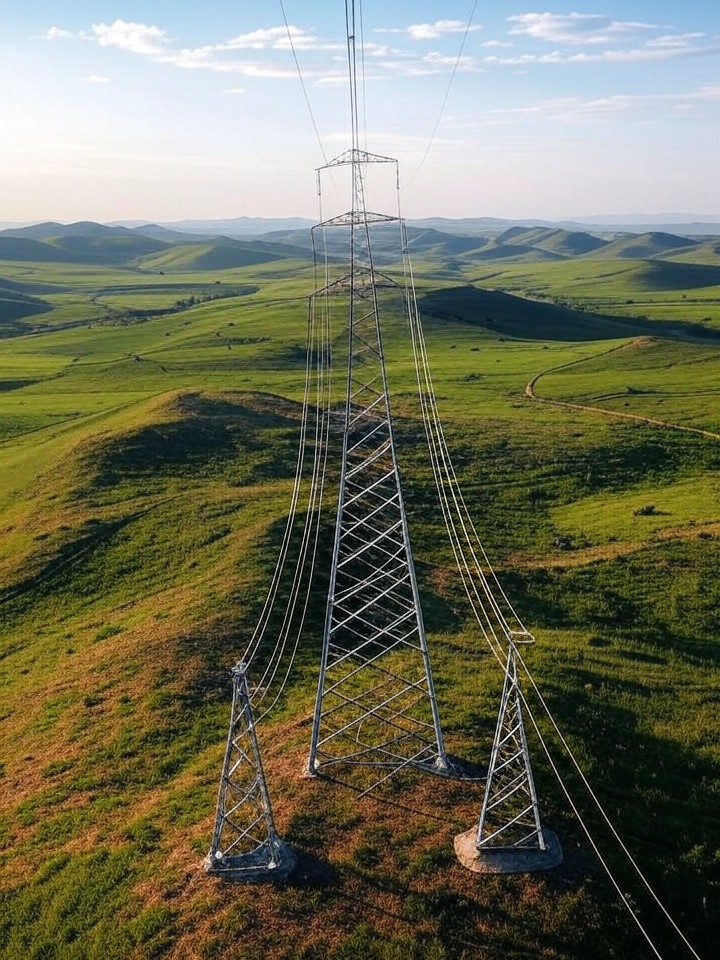
China has embarked on one of its most ambitious energy infrastructure projects yet, launching construction on a new ultra-high voltage (UHV) power line that promises to reshape how renewable energy is distributed across the nation. This 700-kilometer line, stretching from Inner Mongolia to the bustling regions of Beijing, Tianjin, and Hebei, is designed to transmit a staggering 8 million kilowatts of clean power by 2027. The initiative underscores Beijing’s commitment to bolstering its renewable energy capabilities amid growing demands for sustainable electricity sources. As reported in Switchgear Magazine, the project kicked off recently, marking a pivotal step in China’s strategy to integrate vast renewable resources from remote areas into urban power grids.
This development comes at a time when China is aggressively expanding its UHV network, which serves as the backbone for long-distance electricity transmission with minimal losses. UHV technology, operating at voltages above 800 kilovolts for direct current and 1,000 kilovolts for alternating current, allows for efficient power delivery over thousands of kilometers. The Inner Mongolia line is part of a broader push to harness wind and solar energy from the country’s northern and western provinces, where resources are abundant but far from population centers. Industry experts note that such projects are crucial for meeting China’s carbon neutrality goals by 2060, as they enable the replacement of coal-fired power with renewables.
Beyond the immediate benefits, this UHV line represents a technological feat that could set global standards. Engineers are employing advanced materials and designs to ensure reliability in harsh terrains, including deserts and mountainous regions. The project’s scale is immense, involving thousands of workers and cutting-edge equipment to erect towers that can withstand extreme weather. As China continues to lead in UHV deployments, with over 40,000 kilometers of lines already operational, this new addition will further solidify its position as a pioneer in high-voltage transmission.
Engineering Marvels in Transmission Technology
Recent advancements in UHV systems have included innovations like flexible DC transformers, which enhance stability and efficiency. For instance, a record-breaking smart transformer developed in China is now powering a 1,472-mile energy line, incorporating real-time monitoring to prevent disruptions from renewable energy fluctuations. This technology addresses past challenges, such as the near-blackout incident last year, where variable wind output strained the grid. According to reports from the South China Morning Post, these breakthroughs are vital for maintaining grid integrity as intermittent sources like solar and wind become dominant.
On social media platforms like X, discussions highlight the rapid pace of these developments. Posts from energy analysts emphasize how UHV lines are acting as “electricity highways,” swiftly delivering clean power from remote bases to industrial hubs. One notable example is the Hami-Chongqing line, which spans 2,260 kilometers and transmits 36 billion kilowatt-hours annually, cutting CO2 emissions by 16 million tonnes. Such feats are celebrated for their speed—power travels in mere milliseconds—showcasing China’s engineering prowess in renewable integration.
Comparisons with historical UHV efforts reveal China’s evolution. The first UHV project commissioned in 2009 has since expanded into a network of 19 alternating current and 20 direct current lines. This growth, detailed in Our China Story, positions UHV as a “golden brand” of Chinese manufacturing, enabling west-to-east power transfers that balance regional disparities in energy production and consumption.
Strategic Expansions Across Regions
Another significant undertaking is the ultra-high voltage line from Xizang (Tibet) to the Greater Bay Area, which began construction in late 2025. This project aims to deliver hydropower from the Tibetan plateau to southern economic powerhouses, with an expected output of 43 terawatt-hours per year by 2029. X posts from infrastructure enthusiasts describe it as a “bullet train for power,” highlighting its role in supporting high-speed rail and electric vehicle charging networks in densely populated areas.
In parallel, the Ngawa-Chengdu East 1,000 kV AC transmission project, initiated in July 2024, is set for completion by 2026 with an investment exceeding 14.5 billion yuan. This line strengthens the Sichuan-Chongqing grid, underscoring the strategic importance of the Tibetan plateau for national energy security. As noted in various X updates, these initiatives are part of a national plan to develop clean energy corridors, integrating wind, solar, and hydro resources seamlessly.
The push for UHV also aligns with China’s dominance in renewable energy production. The country produces more clean energy than any other nation, and its grid expansions are designed to match this output. A BBC Future article explores whether this “going big” strategy will pay off, pointing to the minimal public resistance that allows for swift project execution compared to Western counterparts.
Global Implications and Challenges
Internationally, China’s UHV advancements are drawing attention, with experimental lines in countries like the former USSR and Japan paving the way, but none match China’s scale. Wikipedia’s entry on ultra-high-voltage electricity transmission in China traces this history, noting how the Twelfth Five-Year Plan accelerated deployments to integrate renewables. Today, these lines carry power from vast solar and wind farms in Inner Mongolia to eastern metropolises, reducing reliance on fossil fuels.
However, challenges persist, including high construction costs and the need for sophisticated grid management. The New York Times reports that while few citizens protest these megaprojects, environmental concerns over land use and biodiversity remain. Engineers are countering this with eco-friendly designs, such as elevated towers that minimize habitat disruption.
Moreover, the integration of smart technologies is transforming UHV operations. The world’s largest flexible DC transformer, as covered in Interesting Engineering, uses advanced magnetic management to handle long-distance transmission efficiently. This innovation is particularly relevant for projects like the Ningxia-Hunan line, which started in 2023 and focuses on clean energy delivery.
Economic and Environmental Payoffs
Economically, these UHV lines are boosting regional development by creating jobs and stimulating industries. The Inner Mongolia project alone will transmit renewable energy sufficient to power millions of households, fostering growth in Beijing’s tech sector and Hebei’s manufacturing. X posts from industry observers note the potential for exporting UHV technology, positioning China as a leader in global energy solutions.
Environmentally, the shift to UHV-supported renewables is slashing emissions. For example, the Shandong energy base, connected via a 926-kilometer 800 kV line, delivers 36 terawatt-hours annually with over 50% from clean sources. This reduces coal dependency and aligns with international climate accords.
Looking ahead, China’s UHV network is poised for further expansion, including offshore wind integrations. A recent project off Shandong’s coast, grid-connected by PowerChina, features 504 megawatts from deep-water turbines, generating 1.7 terawatt-hours yearly. Such ventures, discussed on X, exemplify how UHV is enabling diverse renewable portfolios.
Innovation Driving Sustainability
Nuclear power is also benefiting from UHV enhancements. New reactors like the Bailong-1 and Lufeng-2, under construction since December 2025, will add 2.5 gigawatts of capacity, with UHV lines ensuring efficient distribution. X updates from nuclear advocates highlight this synergy, as clean nuclear energy complements variable renewables.
In solar, China’s largest high-altitude PV project has come online, further feeding into UHV grids. Reddit discussions in infrastructure communities marvel at the 1,000 kV lines, underscoring public fascination with these engineering wonders.
The Yulin Hongling nuclear plant, with plans for six Hualong One units, represents another layer of China’s multifaceted energy strategy. Preparations are underway, as per X posts, integrating nuclear with UHV for a resilient grid.
Future Horizons in Energy Infrastructure
As China continues to innovate, the global energy sector watches closely. The ultra-high voltage grid not only powers electric cars and high-speed trains but also supports emerging technologies like AI data centers. The rapid deployment of these lines, often completed in record time, contrasts with delays elsewhere, offering lessons in efficient infrastructure building.
Collaborations and exports are on the rise, with South Korean firms like Taihan Cable securing UHV-related contracts in the US, as reported in The Korea Herald. This indicates a ripple effect, where Chinese advancements influence international projects.
Ultimately, China’s UHV endeavors are forging a path toward a sustainable energy future, balancing ambitious goals with practical innovations. With projects like the Inner Mongolia line leading the charge, the nation is electrifying its economy while setting benchmarks for the world.


 WebProNews is an iEntry Publication