
China’s Shadow Semiconductor Surge: Breaching the EUV Barrier in Secrecy
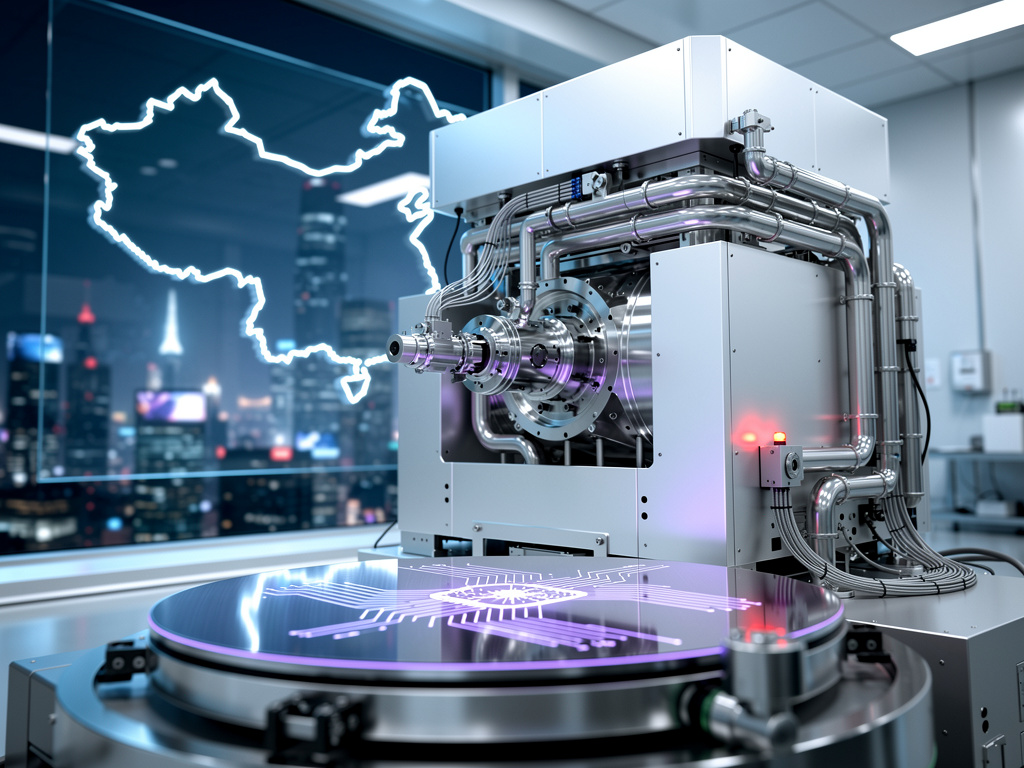
In the high-stakes world of global technology rivalry, a secretive laboratory in Shenzhen has become the epicenter of what could be China’s most audacious technological leap yet. According to reports emerging from multiple sources, Chinese engineers have successfully prototyped an extreme ultraviolet (EUV) lithography machine, a device long considered the holy grail of advanced chip manufacturing. This breakthrough, if verified, shatters previous assumptions about China’s capabilities in semiconductor production, potentially reshaping the balance of power in the industry.
The machine, housed in a fortified facility, reportedly mirrors the sophisticated technology pioneered by Dutch firm ASML, the sole global provider of functioning EUV systems. Insiders describe it as occupying an entire factory floor, generating light at a precise 13.5nm wavelength using laser-produced plasma methods akin to ASML’s designs. This development comes amid escalating U.S. export controls aimed at curbing China’s access to cutting-edge chipmaking tools, forcing Beijing to pursue self-reliance through innovative—and sometimes controversial—means.
Details of the project reveal a cloak-and-dagger operation: engineers worked under fake identities, and the initiative drew on expertise from former ASML employees. Such tactics underscore the lengths to which China is going to circumvent restrictions, highlighting a broader push toward technological autonomy in a sector vital for everything from smartphones to military hardware.
The Covert Operation Unveiled
Reuters first broke the story in a detailed exclusive, painting a picture of a “Manhattan Project”-style endeavor in Shenzhen. As reported in Reuters, the prototype was completed in early 2025, with scientists achieving the production of chips that rival those powering Western AI and defense systems. The article draws parallels to America’s atomic bomb program, emphasizing the scale and secrecy involved.
Complementing this, Interesting Engineering delved into the technical feats, noting that China has “cracked the EUV barrier” despite ASML’s monopoly and ongoing lawsuits against Chinese engineers for alleged trade secret theft. In their coverage at Interesting Engineering, experts highlight how this machine could enable mass production of sub-7nm chips by 2028, a timeline far more aggressive than Western predictions.
The Times of India added a layer of irony, quoting ASML’s CEO who once dismissed China’s progress as “way behind.” Their article at The Times of India suggests that ex-ASML engineers may have played a pivotal role, effectively proving the executive wrong through hands-on reverse engineering.
Technical Intricacies and Reverse Engineering Tactics
At the heart of this achievement is the EUV lithography process, which uses extreme ultraviolet light to etch intricate patterns on silicon wafers, enabling the creation of transistors at nanoscale precision. Unlike earlier deep ultraviolet (DUV) systems, EUV allows for denser chip designs essential for advanced AI and quantum computing. The Chinese prototype reportedly employs laser-produced plasma (LPP) to generate the necessary light, diverging from domestic alternatives like particle accelerator-based methods from Tsinghua University.
Tom’s Hardware provided in-depth analysis, reporting that the system was built in a highly secured Shenzhen lab with employees using pseudonyms to evade detection. As detailed in Tom’s Hardware, this approach not only mimics ASML’s technology but also incorporates elements that suggest substantial intellectual property borrowing, raising questions about espionage and innovation boundaries.
Asia Times echoed these sentiments, projecting AI chip output by 2028 from this made-in-China EUV machine. Their piece at Asia Times notes the machine’s potential to disrupt global supply chains, especially as U.S. sanctions tighten. This aligns with earlier incidents, such as a TrendForce report from October 2025 about China damaging a DUV machine during reverse engineering and seeking ASML’s help, as covered in TrendForce.
Geopolitical Ripples and Industry Reactions
The implications extend far beyond technical specs, touching on international relations and economic strategies. Washington’s export controls, intensified under multiple administrations, aimed to maintain a technological edge in semiconductors. Yet, this breakthrough indicates that such measures may be accelerating China’s domestic innovation, a phenomenon often dubbed the “sanctions boomerang.”
PC Gamer explored the human element, focusing on ex-ASML workers who allegedly contributed to the project. In their article at PC Gamer, it’s suggested that China is now “on the heels of the West,” challenging the narrative of a decade-long lag. This sentiment is mirrored in TechSpot’s coverage, which labels the development a “major step toward chip self-sufficiency” at TechSpot.
Social media buzz on X amplifies these reports, with users like cybersecurity expert Lukasz Olejnik posting about the secret facility and 2030 production targets, reflecting widespread astonishment. Posts on X also reference earlier attempts, such as Huawei’s work on EUV alternatives, indicating a sustained national effort dating back years.
Historical Context and Precedent Attempts
This isn’t China’s first foray into lithography independence. As far back as 2024, companies like SMEE and Naura were advancing DUV equipment, but EUV remained elusive. An MSN article, aggregating reports, claims China has now reverse-engineered the world’s top chipmaking tool, as detailed at MSN. This piece underscores the irony: while ASML sues over stolen secrets, China presses forward.
X posts from users like S.L. Kanthan in 2024 highlighted China’s mastery of the semiconductor supply chain, predicting EUV advancements. More recent tweets, such as those from Global Insight Journal, confirm the Shenzhen prototype’s completion, tying it to broader autonomy goals.
Industry insiders point to past incidents, like the 2025 TrendForce story of a damaged DUV machine, as evidence of China’s trial-and-error path. Reuters further elaborates on the “Manhattan Project” scale, involving billions in funding and top talent, which has now yielded tangible results.
Challenges Ahead and Global Responses
Despite the hype, hurdles remain. Prototyping is one thing; scaling to commercial production is another. Experts in The Times of India note that while the machine exists, refining it for high-yield manufacturing could take years, with 2028 as an optimistic target for AI chips.
Tom’s Hardware discusses alternative technologies, like Tsinghua’s particle accelerator method, which were sidelined in favor of LPP—further fueling reverse-engineering suspicions. Asia Times warns of potential international backlash, including tighter sanctions or legal actions from ASML.
On X, sentiments range from alarm—Homey BroDude tweeting about self-sufficiency threats—to admiration, with Belal Anjum calling it “something big.” These reactions underscore the topic’s volatility, as Western firms like Intel and TSMC monitor developments closely.
Economic Stakes and Future Trajectories
The economic ramifications are profound. Semiconductors underpin a $500 billion industry, with EUV enabling next-gen chips for AI, 5G, and autonomous vehicles. China’s progress could reduce dependence on Taiwan and South Korea, altering trade dynamics.
Interesting Engineering highlights the legal battles, with ASML’s lawsuits against Chinese entities for IP theft. PC Gamer adds that this could accelerate a bifurcation of global tech standards, with parallel ecosystems emerging.
Looking ahead, insiders speculate on iterations. If the prototype succeeds, China might export its own EUV tools, undercutting ASML’s dominance. Reuters projects this as part of a larger AI chip rivalry, where Beijing aims to match or exceed Western prowess by decade’s end.
Innovation Versus Espionage Debate
The line between innovation and espionage blurs here. While some view this as legitimate R&D, others see it as state-sponsored theft. TechSpot reports on the secretive aspects, like fake IDs, which echo Cold War-era tactics.
X users like Rohan Paul recount unverified stories of damaged equipment, illustrating the risks. Yet, as William Huo posted multiple times, China is rewriting chip fundamentals, from transistors to patterning.
Ultimately, this development signals a shift in technological power. As global players recalibrate strategies, the Shenzhen lab stands as a testament to determination amid adversity, potentially heralding a new era in semiconductor sovereignty.


 WebProNews is an iEntry Publication