
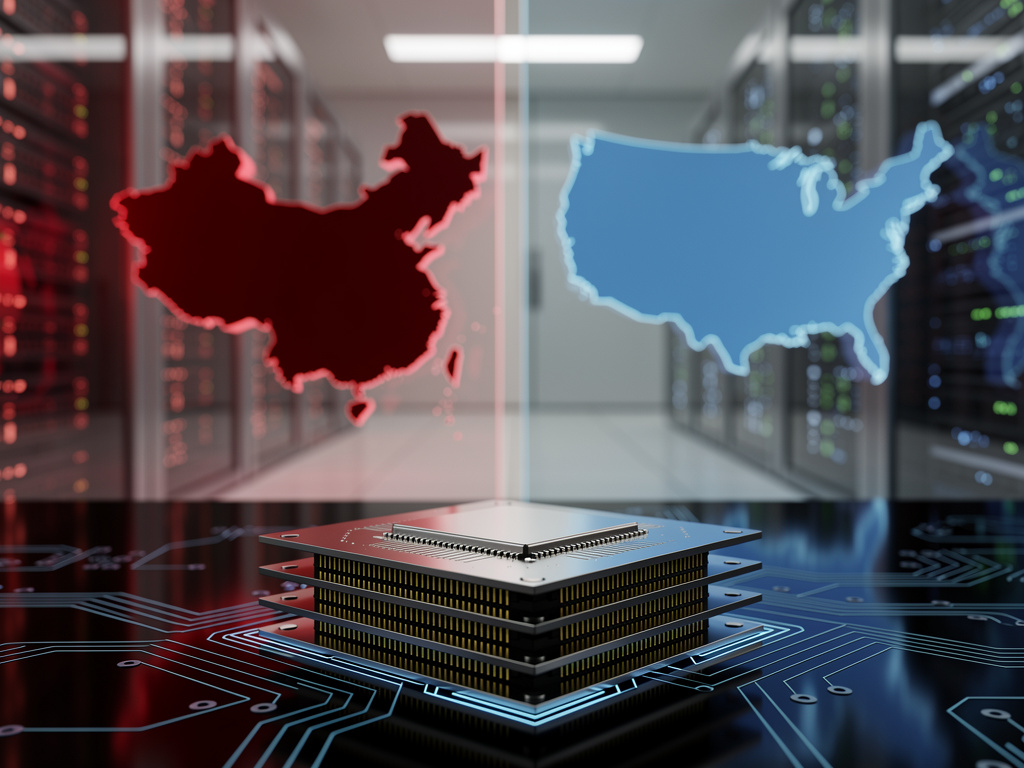
Beijing’s Chip Freeze: Unpacking the Halt on Nvidia H200 Orders Amid Geopolitical Tensions
In a move that has sent ripples through the global semiconductor industry, the Chinese government has instructed several major tech companies to temporarily suspend their plans to purchase Nvidia Corp.’s advanced H200 artificial intelligence chips. This directive, issued this week, comes at a pivotal moment when U.S. export policies toward China are undergoing significant shifts under the new administration. According to reporting from The Information, two individuals directly involved in the communications confirmed that Beijing’s order aims to prevent potential stockpiling while officials deliberate on the terms for allowing such imports.
The H200 chips represent Nvidia’s cutting-edge technology, designed to power the most demanding AI workloads with enhanced memory and processing capabilities. These components have become emblematic of the broader U.S.-China rivalry in advanced computing, where access to superior hardware can dictate leadership in fields like machine learning and data analytics. The halt order underscores Beijing’s strategy to bolster domestic alternatives, even as it navigates the complexities of international trade dependencies.
This development follows President Donald Trump’s announcement last month to relax export restrictions on the H200, allowing sales to China with a 25% fee directed to the U.S. government. That policy reversal, detailed in a Reuters report, was seen as a boon for Nvidia, which has faced revenue hits from prior bans imposed during the Biden era. Yet, China’s response suggests a calculated pushback, prioritizing self-reliance over immediate access to foreign tech.
Strategic Calculations in Beijing
Industry insiders view this pause as more than a bureaucratic hiccup; it’s a deliberate signal in the ongoing tech decoupling between the world’s two largest economies. Chinese officials are reportedly weighing conditions for H200 imports, including mandates to purchase equivalent volumes of locally produced AI chips. This approach aligns with Beijing’s long-term goal of reducing reliance on U.S. suppliers, a theme echoed in state media and policy documents over the past few years.
The timing is particularly noteworthy. Nvidia’s CEO Jensen Huang recently expressed optimism about resuming sales in China, noting in a Reuters interview that purchase orders would serve as the real indicator of approval, rather than formal declarations. However, the current halt disrupts that narrative, potentially delaying Nvidia’s anticipated revenue surge from what was once its largest market.
Posts on social platform X reflect a mix of skepticism and concern among investors and tech observers. Several users highlighted the irony of China restricting access shortly after U.S. approvals, with sentiments suggesting Beijing holds significant leverage in dictating terms. While these online discussions aren’t definitive, they capture the uncertainty permeating financial circles, where Nvidia’s stock has shown volatility in response to such news.
Nvidia’s Precarious Position
For Nvidia, the H200 halt compounds existing challenges. The company has invested heavily in developing chips that comply with varying export controls, but China’s directive could force a reevaluation of its supply chain strategies. Analysts estimate that prior restrictions cost Nvidia billions in lost sales, and this new wrinkle might extend that pain, even if temporarily.
Broader market data from sources like Yahoo Finance indicate that Beijing’s move is part of a pattern: encouraging domestic procurement to nurture homegrown champions like Huawei and SMIC. These firms have made strides in AI chip development, though they still lag behind Nvidia’s offerings in raw performance.
The U.S. side isn’t idle either. Trump’s policy includes safeguards, such as limiting sales to approved customers and imposing that 25% tariff, as outlined in a Council on Foreign Relations analysis. Bipartisan concerns in Congress persist, with fears that easing exports could inadvertently strengthen China’s military capabilities through dual-use technologies.
Echoes of Past Trade Skirmishes
This isn’t the first time chip exports have become a flashpoint. Historical precedents, such as the 2018 ZTE sanctions and subsequent Huawei blacklisting, illustrate how semiconductors serve as leverage in geopolitical negotiations. China’s current stance may be a preemptive measure to avoid over-dependence, especially as global supply chains remain vulnerable to disruptions.
Recent web searches reveal additional context: reports from The Economic Times note that the halt was communicated directly to select companies, with expectations of a forthcoming mandate for domestic AI chip buys. This could accelerate investment in China’s semiconductor sector, which has received billions in state subsidies.
Moreover, the directive arrives amid heightened U.S.-China tensions over technology transfers. Nvidia has been navigating these waters carefully, developing China-specific versions of its chips to comply with export rules, but the H200’s advanced specs place it squarely in the crosshairs of regulatory scrutiny.
Industry Ripples and Investor Sentiment
The fallout extends beyond Nvidia. Suppliers and partners in the AI ecosystem, from data center operators to software developers, now face uncertainty in planning deployments. Chinese tech giants like Alibaba and Tencent, which rely on high-performance GPUs for cloud services, may pivot faster to alternatives, potentially reshaping global market shares.
Investor reactions, as gauged from X posts, show a blend of frustration and strategic analysis. Some users speculate that this could be a negotiating tactic by Beijing to extract concessions, such as lower prices or technology sharing, while others warn of prolonged decoupling that diminishes U.S. tech dominance.
Financial analyses, including those from Investing.com, highlight the stock implications: Nvidia shares dipped following the news, reflecting broader concerns about sustained access to the Chinese market, which accounted for a significant portion of its revenue before restrictions tightened.
Domestic Push and Global Implications
Beijing’s emphasis on local innovation is evident in initiatives like the “Made in China 2025” plan, which prioritizes semiconductors as a core competency. The H200 halt could funnel more resources into firms developing competitive AI hardware, narrowing the gap with Western leaders.
On the international stage, this move might influence allies’ policies. European nations and Japan, key players in the chip supply chain, are watching closely, as any escalation could prompt coordinated export controls or trade alliances.
Nvidia’s response has been measured; company spokespeople have reiterated confidence in eventual market access, but internal sources suggest contingency planning for prolonged restrictions. As Huang mentioned in recent statements, the firm is ramping up production to meet global demand, yet China’s pause tests that resilience.
Navigating Uncertain Waters
Looking ahead, the resolution of this halt could hinge on bilateral talks. U.S. officials are reportedly working on license approvals, but China’s deliberations introduce variables that could extend timelines.
For industry insiders, this episode highlights the fragility of cross-border tech flows. Companies must diversify suppliers and invest in resilient architectures to mitigate such risks.
Ultimately, the H200 saga encapsulates the high-stakes interplay of innovation, policy, and power. As Beijing weighs its options, the global AI race hangs in the balance, with outcomes that could redefine technological leadership for years to come.
Broader Economic Ramifications
The economic stakes are immense. China’s tech sector, a driver of its GDP growth, seeks to insulate itself from external shocks. By pausing H200 orders, officials may be signaling to domestic firms to accelerate R&D, potentially leading to breakthroughs that challenge Nvidia’s monopoly.
Comparisons to other sectors, like electric vehicles or renewable energy, show China’s pattern of using import controls to foster local industries. This could result in a more fragmented global market, where regional standards diverge.
Analysts from Seeking Alpha predict that if the halt persists, Nvidia might see a 10-15% hit to projected revenues, prompting shifts in investment toward competitors like AMD or Intel.
Voices from the Ground
Interviews with supply chain experts reveal a consensus: this is a temporary measure, but one that underscores Beijing’s leverage. One anonymous executive noted that while U.S. approvals opened doors, China’s internal policies can swiftly close them.
Social media buzz on X amplifies these views, with traders debating the long-term viability of U.S.-China tech trade. Sentiments range from bearish outlooks on Nvidia to optimistic takes on domestic Chinese innovation.
In parallel, reports from Tom’s Hardware emphasize the deliberative nature of China’s approach, balancing foreign access with homegrown growth.
Pathways Forward
Possible scenarios include a conditional approval where imports are tied to domestic purchases, creating a quota system. This would allow China to maintain technological progress without full dependence.
For Nvidia, adapting might involve further localization, such as partnerships with Chinese firms, though that carries risks of intellectual property leakage.
As the situation evolves, stakeholders will monitor for signals from both capitals, knowing that each decision ripples through boardrooms and innovation labs worldwide.
Enduring Tensions in Tech Rivalry
This halt isn’t isolated; it’s part of a continuum where chips are proxies for broader strategic ambitions. U.S. efforts to curb China’s advancements clash with Beijing’s drive for autonomy, creating a dynamic of constant adaptation.
Industry forums buzz with discussions on hedging strategies, from stockpiling to alternative sourcing. The H200 case may set precedents for future tech exports, influencing everything from quantum computing to biotech.
In the end, while the immediate focus is on Nvidia’s chips, the deeper story is one of enduring rivalry, where control over silicon shapes the future of global power.


 WebProNews is an iEntry Publication