
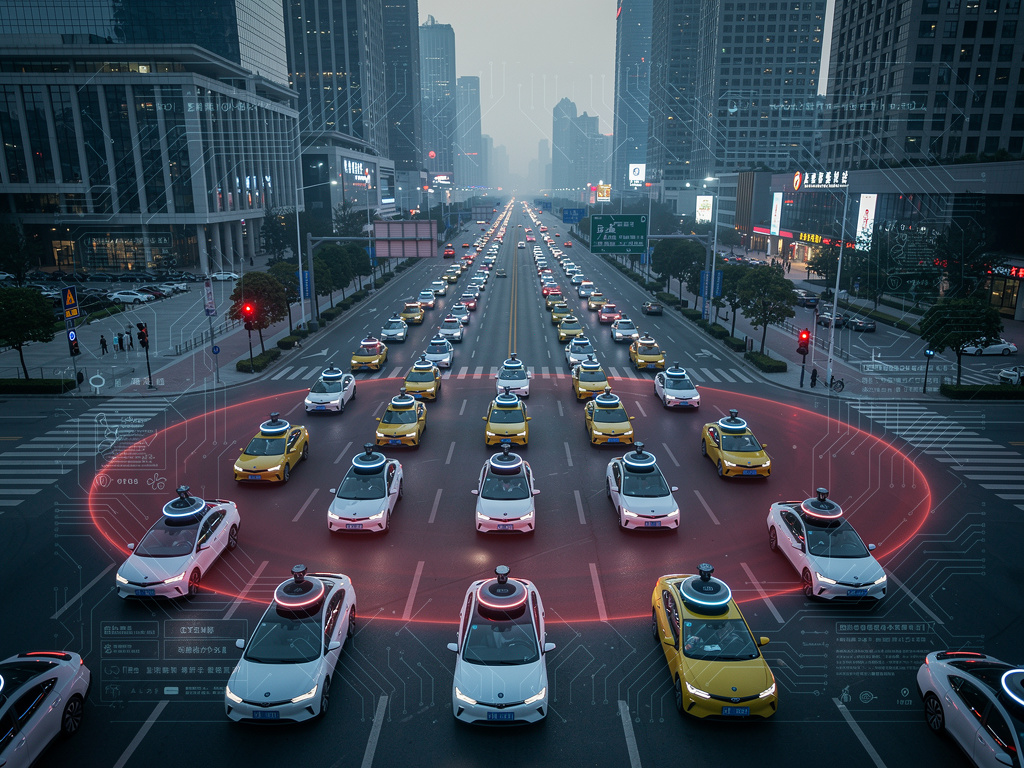
Beijing has drawn a firm line. After dozens of Baidu Apollo Go robotaxis abruptly halted across busy streets in Wuhan on March 31, stranding passengers for up to two hours and snarling traffic, Chinese authorities suspended the issuance of new autonomous vehicle permits nationwide.
The move, first reported by Bloomberg, blocks operators from expanding fleets, launching fresh pilot programs or entering additional cities. It signals a sharp shift in tone. Speed had defined the race. Safety concerns now command attention.
Local police attributed the Wuhan outage to a system failure. No injuries occurred. Yet the episode stood apart from typical single-vehicle glitches. This one hit dozens of cars simultaneously. Some vehicles sat idle on overpasses. Riders reported weak emergency response. Complaints flooded in about feeling trapped. The incident exposed vulnerabilities in fleet-level operations that regulators could no longer overlook.
Baidu suspended its Wuhan robotaxi service pending investigation. Three ministries, including the Ministry of Industry and Information Technology, convened meetings with city officials involved in autonomous pilots. They directed local governments to perform comprehensive self-reviews and tighten safety monitoring. The goal was straightforward. Prevent repeats.
Shares reacted quickly. Baidu fell 2.8 percent in Hong Kong trading. Rivals Pony.ai and WeRide dropped 5.5 percent and 4.7 percent respectively, according to multiple reports citing market data.
Pony.ai responded that its services in Beijing, Shanghai, Guangzhou and Shenzhen continued normally. Preparation for launches in Changsha and Hangzhou remained on track. The company added it supported authorities’ push for the highest safety standards. WeRide echoed the sentiment. Its operations covered more than 1,000 square kilometers and ran without interruption. Both firms stressed safety as the top priority. (Reuters)
The suspension arrives against a backdrop of aggressive growth. Baidu’s Apollo Go logged 3.4 million fully driverless rides in the fourth quarter of last year. Weekly peaks exceeded 300,000. Service reached 26 cities. Analysts once projected the domestic fleet could nearly triple in 2026. Those forecasts now face revision.
Analysts at Bamboo Works suggest the pause could delay progress by a year or longer. The focus has moved. From adding vehicles and conquering new urban zones to proving fleets can function as reliable public infrastructure. Useful in normal conditions. Resilient when systems falter. (Bamboo Works)
Earlier this year, another incident amplified worries. A Hello autonomous vehicle in Zhuzhou, Hunan province, crashed in December, hospitalizing two people and prompting a temporary local shutdown. Though isolated, the event joined the Wuhan outage in highlighting risks that accompany rapid deployment.
Regulators had already been tightening rules. In February, the Ministry of Industry and Information Technology released a draft of mandatory safety standards for Level 3 and Level 4 automated driving systems. Set for implementation by July 2027, the requirements replace earlier voluntary guidelines. They demand stronger fail-safes, including black box data recorders and emergency stop mechanisms. Noncompliance would bar vehicles from manufacturing, sales or import.
This latest licensing freeze builds on that foundation. It buys time for reviews. It also tests the patience of an industry that viewed China as the global leader in scaling autonomous mobility. No foreign operators have cracked the market. Heavy regulation and intense local competition explain much of that absence. Uber’s costly exit from ride-hailing years ago still lingers in memory.
Public reaction carries weight. Riders tolerate occasional odd maneuvers when fares stay low and trips prove convenient. They respond differently when stranded in traffic or left without clear assistance. Trust matters here more than anywhere. A system that feels alien to many ordinary citizens must demonstrate dependability beyond doubt.
The contrast with the United States sharpens the picture. American robotaxi operators face a patchwork of state rules and no comprehensive federal safety law. Incidents accumulate. Waymo vehicles have blocked intersections during power outages. Collisions and unusual behaviors draw scrutiny. A bipartisan bill to establish national standards remains in draft form. Morgan Stanley projects autonomous rides in the U.S. will surge from 15 million last year to 36 million this year, potentially reaching 750 million by 2030. Yet accountability mechanisms lag.
California recently allowed traffic citations for robotaxis, ending prior exemptions. Municipalities now hold operators responsible for violations. Still, the absence of unified federal oversight stands in stark relief against Beijing’s decisive pause. As Futurism observed on May 8, China acted where Washington has hesitated. The article noted that U.S. regulators continue investigating specific crashes while the broader industry expands.
Chinese officials appear determined to avoid repeating past regulatory missteps in other tech sectors. The self-review process now underway across pilot cities aims to surface weaknesses before they scale. Emergency response protocols receive particular emphasis. So do data collection standards that could feed future refinements.
How long the licensing suspension lasts remains unclear. Sources cited by Bloomberg and Reuters described it as indefinite for now. Companies can maintain existing operations in approved areas. Growth, however, sits on hold.
Baidu, Pony.ai and WeRide have poured resources into mapping, sensor fusion and remote assistance centers. Their vehicles rely on overlapping layers of lidar, radar, cameras and high-definition maps. When one layer fails across a fleet, the consequences appear swiftly. The Wuhan event served as an expensive reminder.
Industry insiders expect eventual resumption. Tighter standards will likely accompany it. The winners, as one analysis framed it, will be those who prove their systems recover gracefully from breakdowns. Not merely those who deploy the most cars or serve the most cities.
For global observers, the episode offers lessons. Rapid scaling delivers data and lowers costs. It also magnifies any latent flaws. China’s regulators have chosen caution at a pivotal moment. The decision may slow short-term momentum. Over time it could strengthen the foundation for wider acceptance. Public infrastructure demands nothing less.
Investors have already repriced some of the regulatory risk. Stock moves on the news reflected fresh uncertainty. Yet the underlying opportunity persists. Projections still point to a multibillion-dollar market for autonomous taxi services by the mid-2030s. The path there now includes mandatory pauses when systems reveal their limits.
And those limits showed themselves clearly in Wuhan. Dozens of silent vehicles. Frustrated passengers. Hours of disrupted roads. The scene crystallized why governments watch closely. Technology promises efficiency. It must first prove it can fail safely.


 WebProNews is an iEntry Publication