
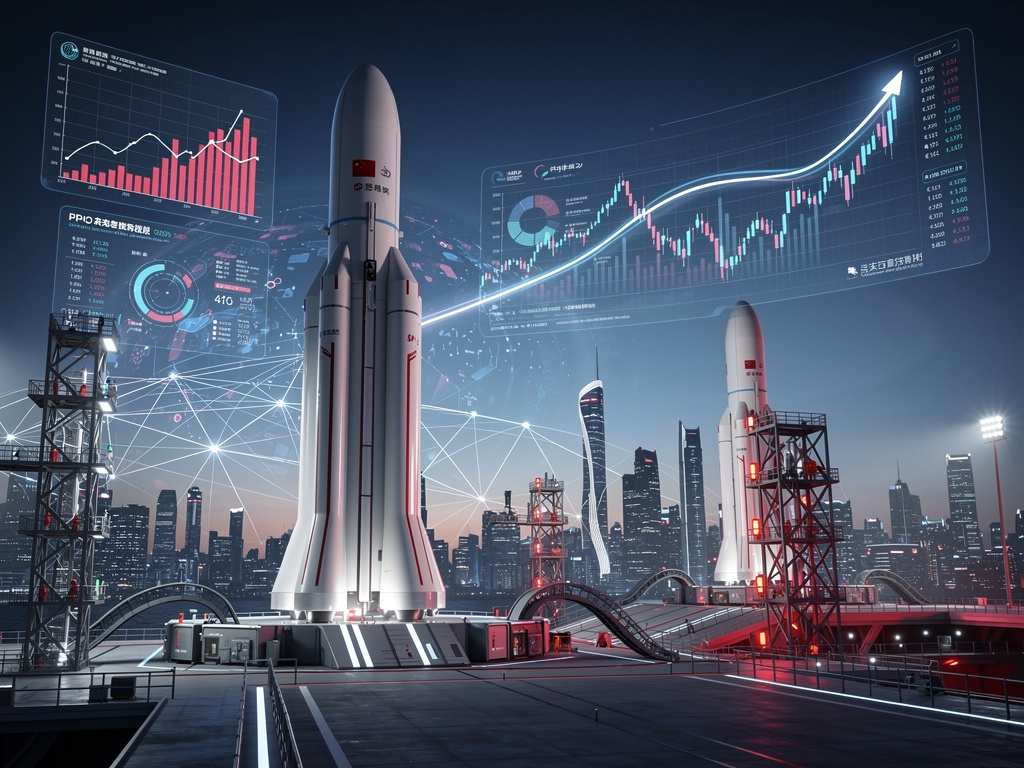
China’s Launchpad for Innovation: Fast-Tracking IPOs to Propel Reusable Rocket Ambitions
In a bold move to accelerate its space industry, China has relaxed initial public offering rules specifically for companies working on reusable rocket technology. This policy shift, announced by the Shanghai Stock Exchange, aims to provide these firms with easier access to capital through the tech-focused STAR Market. By exempting them from certain financial prerequisites, the exchange is creating a “fast lane” for IPOs, allowing startups to raise funds even while their technologies are still in development.
This development comes at a time when China’s private space sector is rapidly expanding, driven by ambitions to rival global leaders like SpaceX. Reusable rockets, which can significantly reduce launch costs by allowing boosters to be recovered and reflown, are seen as key to building a competitive edge in satellite deployment and space exploration. The new rules are part of a broader strategy to foster innovation in high-tech fields, reflecting Beijing’s push to dominate emerging industries.
According to reports from Reuters, the eased regulations exempt qualifying companies from profitability requirements and other stringent financial metrics typically demanded for listings on the STAR Market. This is expected to benefit firms like LandSpace, which is actively developing its Zhuque-3 rocket with plans for booster recovery by mid-2026.
Strategic Push in the Space Race
LandSpace’s efforts highlight China’s determination to catch up in reusable technology, where SpaceX currently holds a dominant position with its Falcon 9. The Beijing-based company aims to become China’s equivalent to Elon Musk’s enterprise, focusing on recoverable boosters to enable frequent and cost-effective launches. This aligns with national goals to establish massive satellite constellations, essential for telecommunications, navigation, and earth observation.
Beyond LandSpace, other players such as Galactic Energy with its Pallas series and i-Space’s Hyperbola are also advancing reusable designs. Posts on X, formerly Twitter, indicate growing excitement around these developments, with users noting China’s rapid progress in fielding multiple reusable rocket models. For instance, discussions emphasize how these technologies are strategically designed to support large-scale satellite networks, underscoring a shift from one-time-use rockets to sustainable, repeatable systems.
The policy change is not isolated; it builds on earlier guidelines from June that outlined support for hard-tech innovations. As detailed in coverage from CNBC, this fast-tracking mechanism allows companies to go public based on technological milestones, such as successful orbital launches with reusable vehicles, rather than immediate revenue generation.
Capital Infusion Amid Economic Challenges
China’s decision to ease IPO rules arrives against a backdrop of economic pressures, including efforts to stimulate growth in strategic sectors. The STAR Market, launched in 2019, has been a venue for tech startups, but traditional listing barriers have hindered early-stage firms in capital-intensive fields like aerospace. By lowering these hurdles, regulators are signaling strong support for the commercial space segment, which is projected to contribute significantly to China’s high-tech economy.
Recent news from Cryptopolitan highlights how this move enables rocket developers to tap public investors while products are still maturing. This is crucial for funding the high costs associated with research, testing, and iteration in rocket technology. For example, achieving reusability involves complex engineering challenges, from precise landing systems to durable heat shields, all of which require substantial investment.
Moreover, this policy dovetails with other initiatives, such as the launch of venture capital funds dedicated to “hard technology” areas, as reported by Reuters in a separate article. These funds, backed by state media announcements, aim to inject billions into sectors like aerospace, semiconductors, and advanced manufacturing, creating a supportive ecosystem for reusable rocket firms.
Competitive Dynamics and Global Implications
The global space race is intensifying, with China’s advancements prompting reactions from international players. SpaceX’s near-monopoly on reusable launches has spurred competitors worldwide, but China’s state-supported approach offers a unique model. By facilitating easier IPOs, Beijing is encouraging private enterprises to scale quickly, potentially closing the gap with Western counterparts.
Insights from MarketScreener suggest that this regulatory easing could lead to a wave of listings, attracting both domestic and international investors interested in Asia’s burgeoning space market. However, challenges remain, including technological hurdles and the need for successful test flights. LandSpace’s mid-2026 target for booster recovery is ambitious, but delays could impact investor confidence.
On X, sentiment reflects optimism mixed with realism; users point out China’s history of rapid iteration in space tech, from methane-liquid oxygen propulsion tests to concepts mirroring SpaceX’s Starship. These discussions often credit private firms like i-Space for breakthroughs, such as vertical takeoff and landing demonstrations, which have outpaced some global efforts.
Regulatory Oversight and Financial Stability
While the IPO fast lane promises growth, it comes with caveats. New rules from China’s regulators, as covered in Reuters, require domestic firms to repatriate funds raised overseas, aiming to manage financial risks and maintain stability. This applies broadly but could affect space companies seeking international capital, ensuring that investments bolster the domestic economy.
The Shanghai Stock Exchange’s guidelines specify that companies must demonstrate core competencies in reusable rocket development, such as successful orbital missions, to qualify. This merit-based approach, detailed in reports from The News International, is designed to prevent speculative listings while channeling resources to genuine innovators.
Broader economic policies, including oversight of cross-border financing, underscore Beijing’s cautious stance. Even as it eases rules for strategic tech, the government is tightening controls elsewhere to mitigate risks, creating a balanced framework for high-stakes industries like space.
Innovation Ecosystem and Future Prospects
China’s space ambitions extend beyond reusability to comprehensive ecosystem building. The Jiuquan Satellite Launch Center is preparing multiple reusable rockets for testing, including the Long March 12A, which promises high payload capacities. X posts buzz about this “fantastic four” lineup, signaling a fleet ready to challenge global standards in launch frequency and reliability.
Support from state-backed venture funds, as noted in Reuters coverage, will likely accelerate prototypes to production. This influx of capital could enable firms to iterate faster, addressing issues like engine reliability and autonomous landing systems that have plagued early tests.
Looking ahead, successful IPOs could democratize access to space tech investments, drawing parallels to how tech booms in Silicon Valley fueled innovation. For industry insiders, this represents a pivotal shift, positioning China as a hub for next-generation aerospace ventures.
Challenges on the Horizon
Despite the enthusiasm, hurdles loom. Technological risks are inherent; reusable rockets demand precision engineering, and failures could deter investors. Geopolitical tensions, including export controls on advanced tech, might limit collaborations or component sourcing.
Regulatory scrutiny remains intense. While easing IPO rules, Beijing’s emphasis on lawful solutions in tech deals, as seen in comments on TikTok-related matters from Reuters, suggests a focus on compliance and balanced interests. Space firms must navigate this while innovating.
Public sentiment on X often highlights China’s “copying” of Western tech, but insiders recognize the indigenous advancements, such as unique fuel combinations that even SpaceX hasn’t mastered commercially.
Broader Economic Ripple Effects
The policy’s impact could ripple through related sectors, from materials science to AI-driven flight controls. By fostering a vibrant space industry, China aims to create jobs, spur technological spillovers, and enhance national security through advanced satellite capabilities.
Comparisons to SpaceX are inevitable, but China’s model leverages state guidance with private agility. As MSN reports, this easing is a direct response to the need for capital in pre-revenue stages, potentially leading to more listings and increased market valuation for the sector.
For global observers, this signals China’s commitment to long-term dominance in space, with reusable tech as the cornerstone. As firms like LandSpace push boundaries, the world watches how these regulatory changes translate into orbital successes.
Path Forward for Aspiring Space Giants
In the coming years, milestones like LandSpace’s 2026 recovery will test the efficacy of these rules. Success could inspire similar policies in other tech domains, amplifying China’s innovation drive.
Industry experts anticipate a surge in partnerships, with venture funds playing a pivotal role. X discussions speculate on international implications, from competitive pricing in satellite launches to advancements in sustainable space travel.
Ultimately, this IPO easing positions reusable rocket firms at the forefront of China’s tech agenda, blending regulatory support with entrepreneurial zeal to reach new heights in the global space arena.


 WebProNews is an iEntry Publication