
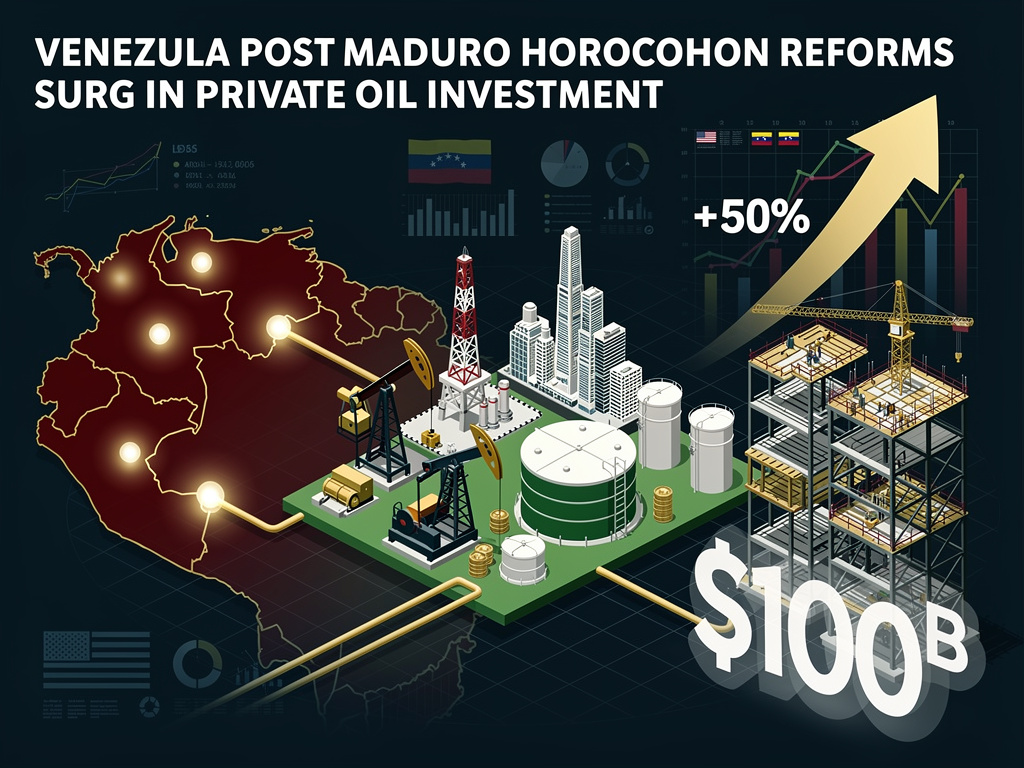
Chevron Corp. CEO Mike Wirth declared Friday that Venezuela is making encouraging moves to safeguard private oil investments, spotlighting fresh hydrocarbon law reforms that loosen state dominance and empower private operators with greater independence. Speaking on CNBC’s “Squawk on the Street,” Wirth emphasized that contract security, commercial stability, and regulatory predictability remain vital for drawing capital. “We see Venezuela taking steps in a positive direction to address those issues, which will encourage investment, not only from a company like ours, but from others that I think are also considering the opportunities there,” he said.
These comments arrive amid seismic shifts following the Trump administration’s capture of former President Nicolás Maduro, paving the way for U.S. oversight of the nation’s vast reserves—the world’s largest. Chevron, operating solo among U.S. majors via a Treasury Department license, pumps about 250,000 barrels per day through joint ventures with Petróleos de Venezuela SA, or PDVSA. Wirth revealed potential output growth of up to 50% within 18 to 24 months, pending U.S. approvals, underscoring the firm’s entrenched position after rivals exited years ago.
Reforms Ease Path for Capital Inflow
Venezuela enacted the hydrocarbon law changes Thursday, a direct response to post-Maduro stabilization efforts. Chevron is scrutinizing the details, but Wirth views them as progress toward investor-friendly policies. The company reported fourth-quarter 2025 earnings surpassing forecasts Friday, with global production up 12% and U.S. output rising 16% to records, bolstering its financial muscle for expansion. Shares climbed 1.4% that day, up nearly 14% year-to-date, outrunning broader markets, as per CNBC.
President Donald Trump has urged oil firms to commit at least $100 billion for energy sector revival, framing it as a U.S. priority. Chevron’s persistence—”We’ve stayed when others didn’t,” Wirth noted—has yielded debt repayments from PDVSA and a head start in the Orinoco Belt. Operations persist uninterrupted, backed by robust safety measures, despite pockets of insecurity elsewhere.
Strategic Endurance Pays Off
Chevron’s century-plus footprint traces to pre-nationalization eras under Hugo Chávez, when it accepted minority stakes to retain assets, unlike ExxonMobil and ConocoPhillips, whose properties were seized, sparking arbitration claims exceeding $13 billion combined, according to Reuters. “We’ve been a part of Venezuela’s past for more than a century. We remain committed to its present. And we stand ready to help it build a better future while strengthening U.S. energy and regional security,” Wirth stated in earnings remarks.
CFO Eimear Bonner echoed readiness, noting a venture model funding operations via local cash flows without capex spikes. Chevron projects 7% to 10% production growth in 2026, excluding sales, fueled partly by Venezuela alongside Guyana. Wall Street pegs Chevron as prime beneficiary of U.S. intervention, with OilPrice.com highlighting its PDVSA ties.
Rivals Hesitate Amid Past Scars
ExxonMobil CEO Darren Woods remains skeptical, deeming Venezuela “uninvestable” post twice-seized assets and insisting on democratic transition, as told to CNBC Friday. ConocoPhillips monitors closely but offers no commitments, per spokespeople. Early estimates peg total investment needs at $500 billion to $750 billion over five years, dwarfing Trump’s $100 billion call, noted NewsNation.
Trump hosted oil executives January 9, where Chevron Vice Chairman Mark Nelson outlined 50% growth via infrastructure tweaks and 100% liftings surge at PDVSA ventures. Energy Secretary Chris Wright predicted swift ramps from 800,000 barrels daily to over 1 million, per Fox Business. Yet experts like Rice University’s Francisco Monaldi caution no rapid surges absent legal overhauls reversing 1970s nationalizations.
Geopolitical Leverage Shapes Plays
Wirth’s diplomacy shines: Oval Office talks with Trump, meetings with Secretary of State Marco Rubio and Treasury’s Scott Bessent, plus U.S.-Saudi forum remarks on playing “a long game.” Post-capture, Trump axed then reinstated Chevron’s license, ensuring U.S. foothold against China and Russia. A January White House push demanded quick capital for expropriation compensation, reports Reuters.
Financial Times detailed Chevron’s capex discipline, with Bonner vowing no hikes despite urgings, via FT. Ex-Chevron execs eye private funds for assets, per another FT exclusive. On X, sentiment mirrors optimism, with posts citing Wirth’s CNBC clip and production potentials.
Production Ramp Hurdles Ahead
Current Venezuelan output hovers near 900,000 barrels daily, up from 2020 lows but far from 3.75 million peak. Chevron’s 250,000 contribution—17% nationally—targets 375,000 swiftly. Challenges persist: PDVSA restructuring, heavy crude logistics for U.S. Gulf refineries, and sanction nuances. SLB and Halliburton, service giants, signal readiness, with SLB as sole active international firm there.
Chevron’s Q4 adjusted earnings hit $3.0 billion, or $1.52 per share, topping $1.42 estimates from The Wall Street Journal poll, driven by records offsetting price dips. As reforms bed in and licenses expand, Chevron’s bet positions it to lead revival, blending endurance with policy alignment in this high-stakes energy pivot.


 WebProNews is an iEntry Publication