
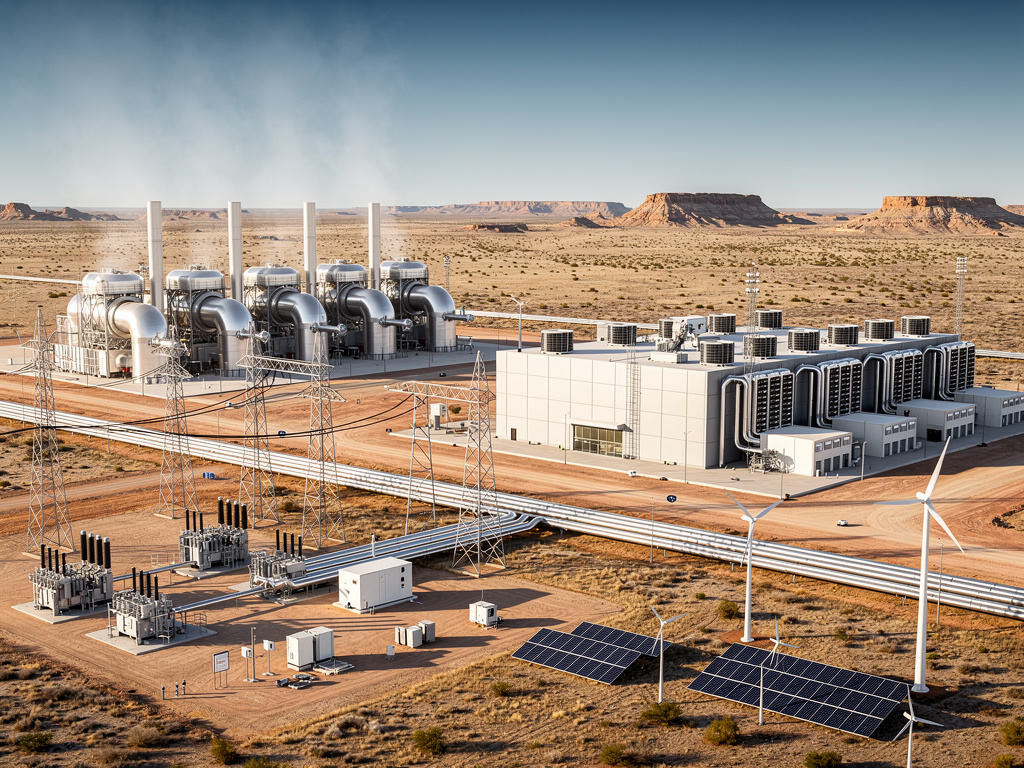
Chevron has entered into a 20-year agreement to supply Microsoft with electricity from a natural gas-fired power plant in West Texas. The deal, announced on July 15, 2025, will support the technology company’s growing data center operations in the region. Under the terms, Chevron will develop and operate a 600-megawatt combined-cycle natural gas facility near Midland, with power delivery scheduled to begin in 2028.
The arrangement reflects the accelerating electricity demand created by artificial intelligence and cloud computing. Microsoft has committed to substantial expansion of its data center footprint across the United States, and reliable, round-the-clock power remains one of the biggest constraints on that growth. By securing a dedicated generation source, the company gains greater control over both the volume and the timing of its electricity supply.
Chevron will build the plant on land it already controls in the Permian Basin. The facility will run primarily on natural gas produced in the same basin, creating a direct link between the company’s upstream operations and the power needs of digital infrastructure. According to the Chevron newsroom release, the project will incorporate advanced emissions-control technology and is designed to achieve a carbon intensity lower than the regional grid average.
The agreement includes provisions for Chevron to supply Microsoft with renewable energy credits and carbon offsets to help the software giant meet its own climate commitments. Microsoft has set a target of becoming carbon-negative by 2030, and pairing natural gas generation with offsets allows both parties to balance reliability with environmental targets. Industry analysts observe that this hybrid approach has become common as hyperscale operators seek firm power while maintaining public sustainability goals.
Construction is expected to create several hundred jobs during the build-out phase and approximately 50 permanent positions once the plant begins commercial operation. Local officials in Midland and Ector counties have welcomed the investment, citing the economic boost and the signal it sends about continued private-sector confidence in the Permian Basin. The region already hosts a dense network of oil and gas infrastructure, which should help shorten permitting timelines and reduce the cost of connecting the new plant to existing pipelines and transmission lines.
From Chevron’s perspective, the contract represents a strategic move into the power sector. The company has steadily increased its focus on lower-carbon energy products, including renewable natural gas and hydrogen, but this project marks one of its largest direct commitments to electricity generation for a single customer. By selling power directly to Microsoft under a long-term power purchase agreement, Chevron locks in revenue visibility that can help justify the capital investment required for the plant.
The 20-year term provides both parties with stability. Data centers represent some of the most capital-intensive infrastructure in the economy, often operating for decades once built. Microsoft gains price certainty and protection against volatile wholesale power markets, while Chevron secures a long-duration offtake that reduces project risk. Financial terms were not disclosed, but similar agreements in other markets have ranged from $40 to $70 per megawatt-hour depending on local gas prices and transmission costs.
The project also highlights the growing convergence between the energy and technology industries. Oil and gas companies possess both the fuel supply and the engineering expertise needed to build large thermal power plants quickly. Technology firms, meanwhile, bring enormous balance sheets and a willingness to sign long-term contracts that traditional utilities sometimes avoid. This alignment has led to a wave of similar deals across the country. In recent months, other operators have announced gas-fired projects tied to data center load in Virginia, Georgia, and Nebraska.
West Texas offers several advantages for this type of development. Natural gas is abundant and relatively inexpensive. The region already maintains substantial transmission capacity originally built to serve oilfield operations. Land is available, and the regulatory environment tends to favor energy infrastructure. At the same time, the Permian Basin continues to produce associated gas that would otherwise be flared or reinjected. Converting that gas into electricity for data centers creates an additional revenue stream while reducing routine flaring.
Environmental groups have raised concerns about the long-term reliance on fossil fuels for data center power. Some argue that Microsoft should prioritize new wind and solar projects backed by battery storage rather than signing contracts for gas-fired generation. Others point out that intermittent renewables alone cannot meet the constant, high-load requirements of hyperscale computing without massive overbuild and storage capacity that remains economically impractical at current prices. The Chevron-Microsoft agreement attempts to thread this needle by combining firm gas power with offsets and a commitment to explore future carbon capture retrofits.
Both companies emphasized that the project forms part of a broader portfolio of energy solutions. Microsoft continues to contract for wind and solar farms across Texas and has invested in geothermal and advanced nuclear technologies. Chevron, for its part, maintains a large portfolio of renewable energy projects and has stated that it will evaluate opportunities to integrate solar or battery storage at the Midland site in later phases.
The timing of the announcement coincides with heightened national attention on electricity supply. Multiple forecasts from the Electric Reliability Council of Texas and national laboratories project that data centers could account for as much as 10 percent of national electricity consumption by 2030. That growth has prompted grid operators, regulators, and lawmakers to reconsider how new generation is planned and financed. Traditional utility planning cycles often stretch ten years or longer, while data center operators frequently need power within three to five years. Direct private contracts such as the Chevron-Microsoft deal can accelerate deployment.
Technical details released so far indicate the plant will feature two gas turbines and one steam turbine in a 2×1 configuration. This setup typically achieves thermal efficiencies above 60 percent, meaning more electricity is generated per unit of fuel compared with older simple-cycle or less-efficient combined-cycle plants. Higher efficiency translates into lower fuel costs and reduced emissions intensity. The facility will connect to the regional transmission grid through a new substation that Chevron will also construct.
Water use has emerged as another consideration in arid West Texas. The project will employ air-cooled condensers to minimize water consumption, a technology that slightly reduces efficiency but significantly lowers the amount of groundwater required. Company representatives stated that the plant’s water demand will represent a small fraction of local aquifer capacity and will be sourced from permitted brackish water wells.
Workforce development forms an additional element of the project. Chevron and Microsoft plan to collaborate with local community colleges and technical schools to create training programs focused on power plant operations, instrumentation, and data center infrastructure. The goal is to prepare residents of the Permian Basin for roles in the expanding digital energy economy rather than relying solely on transient construction labor.
As the project moves forward, both organizations will face familiar challenges associated with large energy infrastructure. Supply chain constraints for turbines and transformers remain tight. Skilled labor shortages in welding, electrical work, and control systems continue across the energy sector. Regulatory approvals, while expected to be straightforward given the location and sponsor, will still require environmental impact assessments and air permits. The companies have indicated they will work closely with state and federal agencies to maintain the 2028 commercial operation date.
The agreement also carries implications for the competitive dynamics of the power market in Texas. By removing 600 megawatts of load from the open market and serving it through a dedicated plant, the deal reduces pressure on the broader ERCOT grid during peak periods. At the same time, it adds new generation capacity that can potentially serve other customers if Microsoft’s demand profile changes or if the companies decide to sell excess power into the market.
Industry observers expect additional deals of this nature. Several other oil and gas producers are reportedly in discussions with data center operators about similar arrangements. Technology companies have signaled openness to contracting directly with energy developers rather than depending exclusively on utilities or wholesale markets. The model offers speed, customization, and the ability to match specific sustainability attributes to corporate goals.
For the communities near the project site, the plant represents both opportunity and change. Tax revenue from the facility will support local schools and roads. The presence of a large, modern power plant may encourage other technology-related investments in the area. Yet residents will also experience increased industrial activity, including more heavy truck traffic during construction and the visual impact of new transmission lines. Chevron has pledged to maintain open communication with neighbors and to implement noise and dust mitigation measures.
Looking further ahead, the companies left open the possibility of expanding the project. The initial 600-megawatt capacity could be doubled if Microsoft’s data center build-out in the region exceeds current projections. Additional phases might incorporate carbon capture and storage technology if policy incentives and cost curves align. Such optionality gives both parties flexibility as market conditions and regulatory frameworks evolve.
The Chevron-Microsoft power agreement illustrates how traditional energy companies and digital infrastructure providers are finding common ground. It demonstrates that meeting the explosive growth in computing demand will require pragmatic combinations of existing fuel sources, modern engineering, and creative commercial structures. While debates about the ideal energy mix for data centers will continue, this project delivers concrete progress toward keeping the servers online and the lights on in West Texas. Both organizations have expressed confidence that the partnership will serve as a template for future collaborations that balance reliability, economic development, and environmental performance.


 WebProNews is an iEntry Publication