
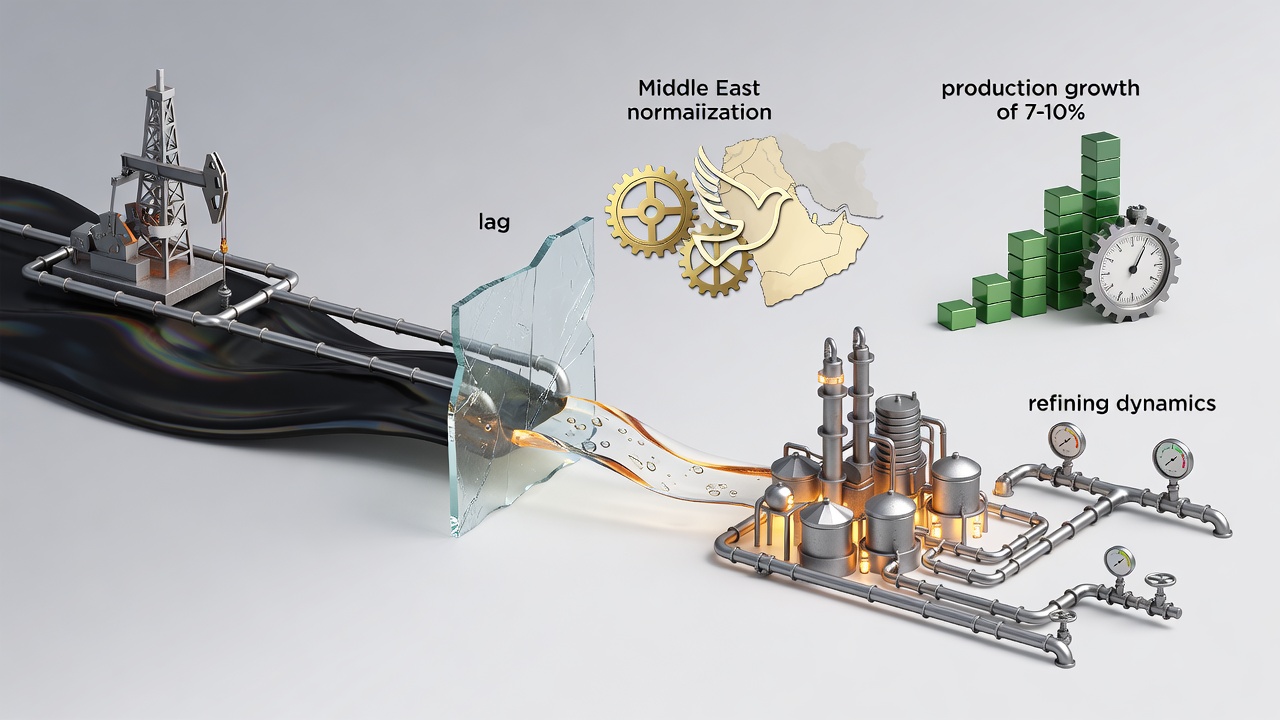
Gasoline prices refused to fall in lockstep with declining crude oil this spring. Consumers watched Brent hover near pre-conflict levels. Yet pump prices remained elevated. That disconnect quickly became political ammunition.
President Trump accused Big Oil of gouging. He directed the Department of Justice to investigate. Chevron Chief Financial Officer Eimear Bonner pushed back in measured terms. The industry, she said, is “doing everything that we can.”
Bonner spoke with CNBC on June 25, 2026. She pointed to ongoing normalization in the Middle East after recent tensions around the Strait of Hormuz. “It’s going to take time though,” Bonner explained. “There is a lag between, you know, oil prices and reductions in oil prices and when that shows up at the pump, but we expect that prices will come down as things continue to normalize.”
The lag is real. Refiners buy crude weeks or months ahead. They hold inventory. They hedge. They face fixed costs that do not vanish when benchmark prices drop. Add tight global refining capacity after years of underinvestment and the picture clarifies. Prices at the pump catch up slowly. Sometimes they don’t catch up at all until inventories rebuild and crack spreads normalize.
Chevron itself grew production. The company targeted 7 percent to 10 percent higher output for the year. Bonner noted that Chevron had “optimized through the conflict and continue to optimize the levers that we have to deliver the energy the world needs.” Those levers include running its complex U.S. refineries at record throughput.
Yet even record runs cannot erase the fundamental mismatch. First-quarter 2026 results from Chevron showed the tension. Adjusted earnings came in at $2.8 billion, or $1.41 per share. Unfavorable timing effects totaling roughly $3 billion weighed on downstream results. Those effects split evenly between inventory valuation and mark-to-market accounting on paper derivatives tied to physical cargoes after a sharp March commodity price rise. About $1 billion of those paper positions were expected to unwind in the second quarter.
The earnings transcript, available on Chevron’s investor site, reveals how integration across the portfolio helped offset some pressure. Upstream production rose roughly 500,000 barrels of oil equivalent per day year over year thanks to the Hess assets and organic growth. Middle East conflict impacts stayed below 5 percent of the portfolio. Downstream benefited from higher refining margins in certain quarters even as timing distortions hit reported figures.
Refining complexity sits at the heart of Chevron’s advantage. Its facilities can process heavy, sour crudes from Tengiz, Guyana, the Permian, Venezuela and Argentina. That flexibility captured value when markets tightened. In Asia, Chevron expected refinery utilization above 80 percent in the second quarter. Equity crude throughput more than doubled year over year to over 40 percent in some systems, compared with normal levels. U.S. refineries ran above 50 percent equity crude. These moves maximized margins when products were scarce.
But capacity remains constrained. No major new U.S. refinery has been built in decades. Existing plants push utilization rates near mechanical limits during peak demand. Maintenance turnarounds, even optimized ones, remove volume from the market. Geopolitical shocks, whether in the Middle East or elsewhere, ripple through crude quality and freight rates, further complicating the math.
Bonner displayed empathy. “We’re all concerned about prices, so there is a lot of empathy, whether it’s in the U.S. or here in the U.K. or in Europe for consumers,” she told the network. Still, the message was clear. Majors cannot wave a wand and slash prices overnight. Supply chains, logistics, taxes, distribution margins and local market dynamics all factor in.
Recent reporting reinforced the complexity. A June 28 Yahoo Finance article summarized Bonner’s comments and noted that gasoline prices “aren’t priced off today’s oil market alone.” It cited the American Petroleum Institute on how major disruptions affecting supply, refining and inventories create sticky pricing. Crude prices had fallen more than 3 percent in late June on improved Hormuz traffic, with Brent around $72 and WTI near $69. Yet fresh tensions, including reported U.S.-Iran strikes, threatened to reverse those gains. Yahoo Finance captured the consumer frustration well.
Chevron’s longer-term numbers tell a different story. The company outlined plans for sustained cash flow growth at its 2025 investor day. It expects earnings-per-share growth above 10 percent at $70 Brent. Capital spending guidance sits between $18 billion and $21 billion annually. Share repurchases of $10 billion to $20 billion per year through 2030 remain on track at current oil prices. Structural cost reductions target $3 billion to $4 billion by the end of 2026. Return on capital employed should improve more than 3 percentage points by 2030 at $70 Brent.
Those figures matter to investors. They signal confidence that current refining margins, while volatile, sit within a manageable range for an integrated major. Downstream earnings in 2025 benefited from improved margins and higher volumes in several quarters. U.S. refinery throughput reached levels not seen in decades. The portfolio’s balance between upstream growth and downstream integration provides buffers when one segment falters.
Critics focus on the short term. When crude falls fast, they expect instant relief. The reality involves layered contracts, regional product specifications, seasonal demand swings and competition among refiners. In California, for instance, unique fuel standards and limited import options create chronically higher prices. Similar pockets exist elsewhere. National averages mask those variations.
Trump’s call for $2.25 gasoline sounded simple on the campaign trail. Current levels, even after some recent softening, sit higher. Bonner avoided direct confrontation. She simply laid out the mechanics. Production growth helps over time. Optimization helps. Normalization in supply corridors helps. None delivers overnight transformation.
Look at Venezuela as an example of Chevron’s patient approach. The company expanded its position through an asset swap with PDVSA. It increased equity in Petroindependencia to 49 percent and gained deeper resources in the Orinoco belt. Operations run smoothly. Debt recovery continues. The move adds integration upside for U.S. Gulf Coast refineries that can process that specific crude. Such steps compound. They do not move quarterly gasoline prices.
Analysts tracking the sector note that refining margins have normalized from post-pandemic peaks. Some quarters showed losses, the first in years. Yet Chevron’s complex assets and equity crude advantage kept it ahead of peers in many periods. Second-quarter 2025 downstream earnings rose on improved margins and volumes despite timing effects. The pattern repeated in later quarters as utilization climbed.
So what should policymakers and consumers take away? The lag is structural. It reflects genuine market frictions rather than coordinated restraint. Refinery utilization data from the Energy Information Administration consistently shows U.S. plants operating above 85 percent when demand peaks. Spare capacity is scarce. New builds face regulatory, environmental and economic barriers that deter investment.
Chevron continues to return capital. First-quarter 2026 share repurchases reached $2.5 billion, in line with guidance. Adjusted free cash flow hit $4.1 billion despite working-capital swings. The balance sheet carries low net debt. These metrics allow the company to weather volatility while funding growth in the Permian, Guyana and other key basins.
Bonner’s comments reflect a consistent corporate stance. Deliver energy. Optimize operations. Communicate realistic timelines. Avoid promising what the physical system cannot deliver. As Middle East flows stabilize and inventories rebuild, prices should ease. The pace will disappoint those seeking immediate relief. It will match the operational reality of a global industry still recovering from supply shocks, pandemic-induced closures and chronic underinvestment in downstream infrastructure.
Investors appear to understand. Chevron shares have held relatively steady through the political noise. Production growth remains on target. Integration margins provide a floor. The downstream business, for all its quarterly swings, contributes meaningfully to overall returns when run efficiently. And efficiency, Bonner and CEO Mike Wirth have repeatedly stressed, defines Chevron’s edge.
The next several months will test that message. If crude stays range-bound near $70 and product inventories rise, gasoline prices should follow lower. If fresh disruptions emerge, the lag could lengthen again. Either way, the explanation offered by Chevron’s finance chief will face scrutiny from Washington and from drivers filling up at the pump. The data, the quotes and the operational record all point in the same direction. Time, not rhetoric, determines when relief arrives.


 WebProNews is an iEntry Publication