
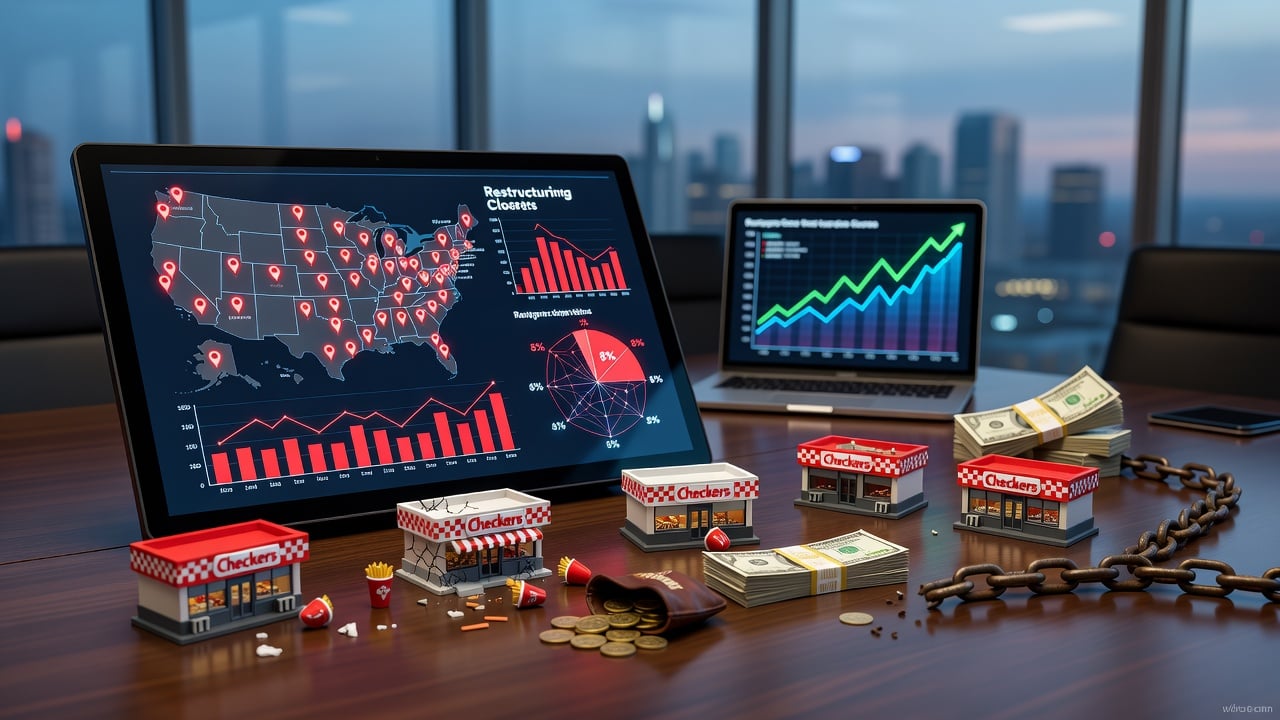
Yahoo Finance reported that a popular fast-food chain has decided to shut down 70 of its locations across the United States as part of a larger effort to stabilize operations and address ongoing financial pressures. The closures affect stores operated under the Checkers and Rally’s brands, two names that have long served budget-conscious customers seeking quick burgers, fries, and shakes without high prices. This move comes amid broader challenges facing the quick-service restaurant sector, where rising costs, shifting consumer habits, and intense competition have forced many brands to rethink their footprints.
Checkers Drive-In Restaurants Inc., the parent company behind both Checkers and Rally’s, confirmed the decision to close the underperforming sites after careful evaluation of sales data, local market conditions, and lease obligations. Many of the affected restaurants had struggled with consistent traffic for years, particularly in regions where new competitors opened nearby or where economic conditions reduced discretionary spending among lower-income households. By removing these locations from the portfolio, the company hopes to concentrate resources on higher-performing stores and invest in improvements that can drive better results over time.
The closures represent roughly 8 percent of the combined Checkers and Rally’s network, which still operates more than 800 locations nationwide. Most of the shuttered sites were company-owned rather than franchised, meaning the parent company bore the full financial burden of their losses. According to statements shared with investors, the decision followed months of analysis that showed these particular restaurants generated insufficient revenue to cover escalating labor costs, food inflation, and rent increases. Several locations also faced costly repairs related to aging infrastructure, further eroding their viability.
Industry observers point to several factors that contributed to the decline of these specific outlets. Labor shortages have driven up wages across the sector, with many entry-level positions now paying significantly more than they did five years ago. At the same time, commodity prices for beef, chicken, and cooking oil have climbed steadily, squeezing margins on the value-oriented menu items that define the Checkers and Rally’s experience. Customers who once visited several times a week for dollar menus and combo deals have grown more selective, often choosing to cook at home or opt for even cheaper alternatives when budgets tighten.
Consumer behavior has also changed in ways that disadvantage traditional drive-thru concepts in certain markets. Delivery apps now account for a growing share of fast-food orders, yet many older Checkers locations were not designed with efficient packaging or dedicated pickup areas for third-party drivers. This limitation reduced their ability to capture the delivery boom that helped other chains offset declining in-person traffic. Additionally, some of the closed stores sat in neighborhoods that experienced population decline or shifts in commercial development, leaving them isolated from their traditional customer base.
The company has pledged to support affected employees through the transition by offering severance packages, job placement assistance within the remaining network, and extended health benefits for a limited period. Still, the loss of work at 70 sites will impact hundreds of team members, many of whom relied on flexible scheduling and steady hours to manage family obligations. Local communities near the closing restaurants will also feel the absence, particularly in areas where these outlets served as convenient late-night options or gathering spots for young people.
Franchisees operating under the Checkers and Rally’s banners expressed mixed reactions to the news. Some viewed the corporate-led closures as a positive step that could strengthen the overall brand by eliminating weak links that might drag down national marketing efforts and supplier negotiations. Others worried that the move signals deeper problems within the system and could make it harder to attract new franchise partners in the future. The company has maintained that the reductions are strategic rather than a sign of systemic failure, pointing to several recently remodeled locations that have shown double-digit sales growth after upgrades.
Those upgrades include modernized drive-thru technology, brighter interior designs, and updated menu boards that highlight limited-time offers more effectively. The chain has also experimented with new items aimed at broadening appeal beyond its traditional value focus. Spicy chicken sandwiches, plant-based options, and shareable sides have tested well in select markets, suggesting that a refreshed approach could help stabilize the business. Leadership has indicated that future capital spending will prioritize stores with strong real estate fundamentals and proven demand rather than attempting to rescue every marginal location.
Financial analysts following the quick-service industry suggest that Checkers and Rally’s are not alone in making difficult decisions. Several other value-oriented chains have undertaken similar pruning exercises in recent years, closing older stores while opening fewer but higher-quality replacements in better locations. This approach allows companies to maintain or even grow overall sales volume with a smaller physical presence, improving efficiency and reducing exposure to volatile commercial real estate markets. The strategy also frees up resources for digital initiatives, such as improved mobile ordering systems and loyalty programs that encourage repeat visits.
For Checkers and Rally’s specifically, the closures coincide with efforts to renegotiate supplier contracts and streamline operations at the remaining restaurants. The company has introduced new inventory management tools designed to reduce waste and better predict demand based on time of day and local events. Kitchen layouts at high-performing stores are being reconfigured to speed up service during peak hours, addressing one of the most common customer complaints about long wait times. These operational changes, combined with a smaller store count, are expected to improve profitability even if total system-wide sales remain relatively flat in the short term.
The brand’s history adds context to the current challenges. Checkers and Rally’s trace their roots to the 1980s and 1990s when double drive-thru concepts gained popularity by offering speed and low prices in compact buildings that required smaller lots than traditional burger restaurants. This model worked exceptionally well in dense urban and suburban markets where real estate costs were high. Over time, however, competitors expanded their value offerings and invested heavily in larger facilities with comfortable seating, playgrounds, and more varied menus. Checkers and Rally’s largely stuck to their original formula, which created loyal fans but also left the brands vulnerable when consumer expectations evolved.
Marketing efforts have attempted to reconnect with both longtime customers and younger demographics. Campaigns emphasizing the chain’s “hot and fresh” preparation and signature seasoned fries have run across social media platforms, while partnerships with influencers and local sports teams aim to increase visibility. The company has also adjusted pricing strategies, moving away from deep discounts on individual items toward bundled value meals that still deliver perceived savings. These tactics have shown promise in test markets, but translating that success to all remaining locations remains an ongoing process.
Real estate implications of the closures extend beyond the immediate loss of jobs and service. Many of the closed properties will be sold or subleased to other operators, potentially becoming locations for competing fast-food brands, convenience stores, or entirely different retail concepts. In some cases, the company will retain ownership and convert the sites into ghost kitchens focused exclusively on delivery orders, an approach that eliminates front-of-house costs while still generating revenue from the brand’s core menu. This hybrid strategy reflects the growing recognition that physical restaurants must serve multiple purposes in an environment where customers increasingly expect food to come to them.
Looking ahead, Checkers Drive-In Restaurants Inc. faces the task of rebuilding confidence among franchisees, employees, and customers following this round of closures. Leadership has scheduled town hall meetings and detailed performance reviews with operators to outline the path forward. The company plans to release updated growth targets that focus on same-store sales improvement rather than aggressive expansion. By setting realistic goals centered on operational excellence and customer satisfaction, executives believe the brand can regain momentum and once again become a reliable choice for affordable, tasty fast food.
The quick-service restaurant business has always been competitive, but recent years have intensified pressures from multiple directions. Inflation, changing work patterns, health-conscious eating trends, and the rise of digital alternatives have forced nearly every chain to adapt. For Checkers and Rally’s, the decision to close 70 locations represents a significant but necessary adjustment to align the business with current market realities. While the short-term pain is real for those directly impacted, the long-term hope is that a leaner, more focused organization will emerge stronger and better equipped to serve its core audience for years to come.
Industry data compiled by market research firms shows that value menus remain popular even as premium items gain traction at other restaurants. Customers continue to seek affordable indulgences, particularly during lunch and late-night hours when Checkers and Rally’s have historically performed best. The challenge lies in delivering that value consistently while covering higher input costs and meeting elevated service expectations. The remaining store network, now free of its weakest performers, stands a better chance of achieving that balance through targeted investments and operational refinements.
As the company moves forward with its revised portfolio, attention will turn to how effectively it can execute on menu innovation, technology adoption, and staff training. Success in these areas will determine whether the closures mark the beginning of a sustained recovery or merely a temporary pause before further adjustments become necessary. For now, the focus remains on stabilizing the business, supporting displaced workers where possible, and ensuring that the iconic Checkers and Rally’s experience continues at hundreds of locations where demand remains strong. The coming months will reveal how well the strategy translates into improved financial performance and renewed customer loyalty across the network.


 WebProNews is an iEntry Publication