
Jonathan Rinderknecht stands accused of igniting a blaze on New Year’s Day 2025. That fire, known as the Lachman Fire, smoldered before exploding into the deadly Palisades Fire days later. It killed 12 people. It wiped out more than 6,000 homes. Federal prosecutors built their case with digital breadcrumbs. Among them were Rinderknecht’s conversations with ChatGPT.
They called it his diary. ATF Special Agent Michael Montevidoni told jurors the suspect entered thousands of prompts. These touched personal turmoil. Politics. Climate change. Burning forests. Corporations “destroying the planet.” Westside Current reported the testimony in detail last month.
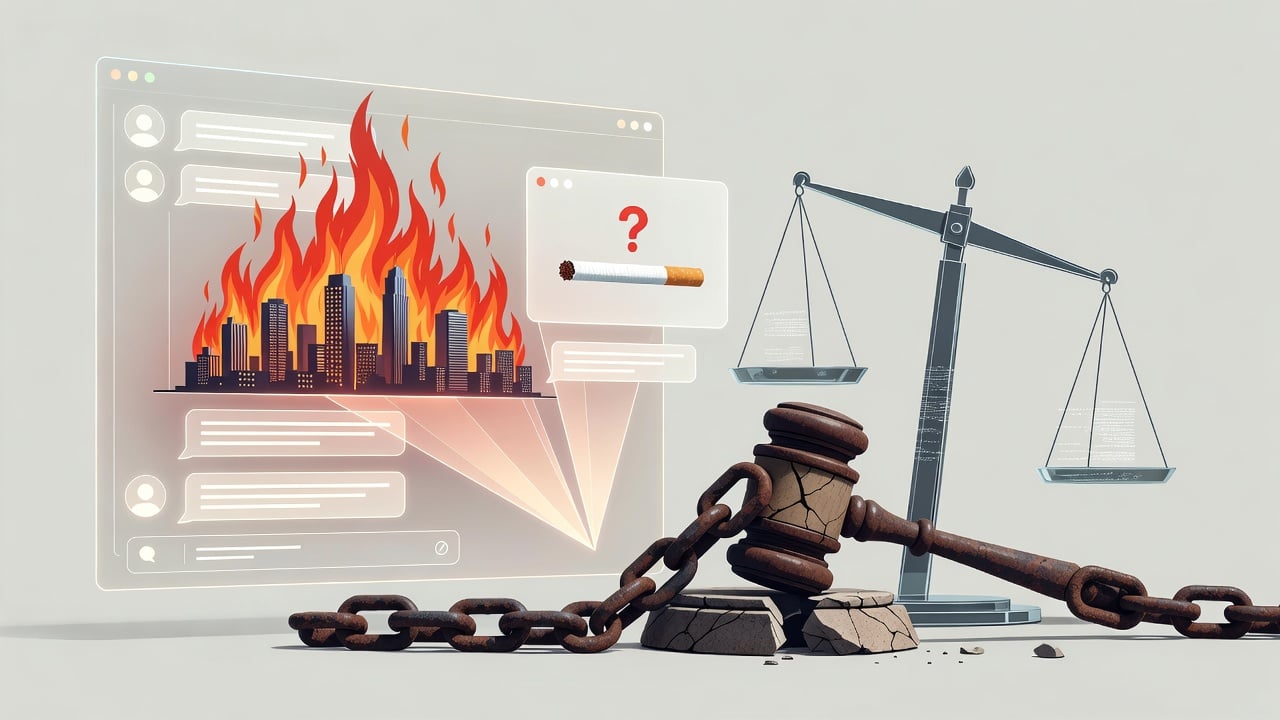
One prompt asked the AI to generate an image of a burning city. Another requested people running from flames. He told the chatbot he once burned a Bible and “felt so liberated.” After the fire started, he typed a pointed question: “Are you at fault if a fire is lift because of your cigarettes.” Prosecutors saw it as an attempt to craft an innocent story. CNN laid out the affidavit details in May.
Yet the strategy fell short. Last week a federal jury deadlocked. Ten favored acquittal. Two leaned toward guilt. A mistrial followed. One juror, Syrina, spoke plainly. The ChatGPT prompts and limited phone data left too many holes. Not enough proof. Mashable covered the outcome on June 28.
But the case continues. A retrial sits on the calendar for October. Rinderknecht remains locked up. And the episode throws fresh light on a fast-moving collision between consumer AI and criminal justice.
Investigators didn’t need a warrant for OpenAI’s servers. They pulled the logs straight from Rinderknecht’s devices. No doctor-patient privilege. No attorney-client shield. Just raw text stored in the cloud or on his phone. Acting U.S. Attorney Bill Essayli highlighted the burning-city image at his October 2025 news conference. “There it is,” he said, according to PCMag. “That’s from his ChatGPT.”
Later testimony added layers. An ATF agent described software on the phone that pointed to the dark web. Right after agents served a search warrant, Rinderknecht asked ChatGPT how to delete all video messages from iCloud. ABC7 reported those details June 11. The government painted a picture of a man angry at society. No friends. No New Year’s invitations. A motive wrapped in isolation and grievance.
Defense lawyers pushed back hard. No accelerant at the scene. No eyewitnesses. No confession. They challenged the lack of proper crime-scene preservation around the initial Lachman Fire. Legal analyst Neama Rahmani noted the strategy. The defense wanted any conviction limited to the first, smaller fire. Victims of the larger Palisades blaze might hesitate to support a full guilty verdict. It could hurt civil suits against the city and state.
The mistrial didn’t surprise everyone familiar with digital evidence. Jurors often demand more than suggestive searches or chatbot chats. They want video. They want physical proof. Here the ChatGPT history served mainly to show state of mind. It didn’t place Rinderknecht at the exact spot with a lighter in hand. Though prosecutors said they had a Bic lighter, geofence data, and Uber records.
This isn’t the first time AI chats have entered courtrooms. Florida authorities investigated OpenAI after a gunman in a campus shooting reportedly used ChatGPT. That probe continues. Yet the Rinderknecht matter stands out. Prosecutors treated the chatbot logs as a window into intent. A new category of evidence, some called it.
Privacy experts warn the implications stretch far beyond arson cases. People pour intimate thoughts into these tools. They ask for advice on everything from relationships to illegal acts. OpenAI CEO Sam Altman has called the lack of privacy expectations a “huge issue.” Once law enforcement obtains the device, those conversations become fair game. Similar to Google search history in past prosecutions.
Defense attorney Steve Haney, representing Rinderknecht, told CNN the logs prove neither confession nor crime scene. He filed motions to keep some of the material out. Courts will keep wrestling with admissibility questions. How much weight should a jury give to a prompt that generates a fiery image months before an actual fire?
Broader trends show AI already reshaping legal practice itself. Lawyers have faced sanctions for submitting briefs filled with fake cases hallucinated by ChatGPT. California fined one attorney $10,000 for exactly that. Judges now issue standing orders requiring disclosure when artificial intelligence assists in drafting filings.
But the Rinderknecht trial flips the script. Here the AI isn’t helping the lawyers. It’s testifying against the defendant. Or trying to. The hung jury suggests limits to its persuasive power. Prompts about climate rage or burning forests may reveal a troubled mind. They don’t necessarily prove he lit the match.
Still, expect more of this. Police and federal agents increasingly scan phones for chatbot histories. In murder cases, domestic disputes, even fraud probes. The data sits there, timestamped and searchable. And unlike deleted texts that might be recovered with difficulty, many AI services retain conversation threads by default.
Rinderknecht’s retrial will test these issues again. Prosecutors will likely refine their presentation of the logs. The defense will hammer the same gaps. Jurors may hear even more about dark web tools and iCloud deletion attempts. The ChatGPT diary could grow from supporting character to central witness.
One thing looks clear. The boundary between private thought and prosecutable evidence has shifted. What you tell an AI today may echo in a courtroom tomorrow. No privilege protects it. No delete button fully erases it. And as artificial intelligence grows more embedded in daily life, courts will spend years drawing the new lines.
The Palisades Fire still haunts Los Angeles. Families lost everything. Some lost loved ones. Whether Rinderknecht bears legal responsibility for all of it remains undecided. But his conversations with a machine have already changed how investigators and attorneys think about digital trails. They have shown that even a chatbot can become part of the permanent record.


 WebProNews is an iEntry Publication