
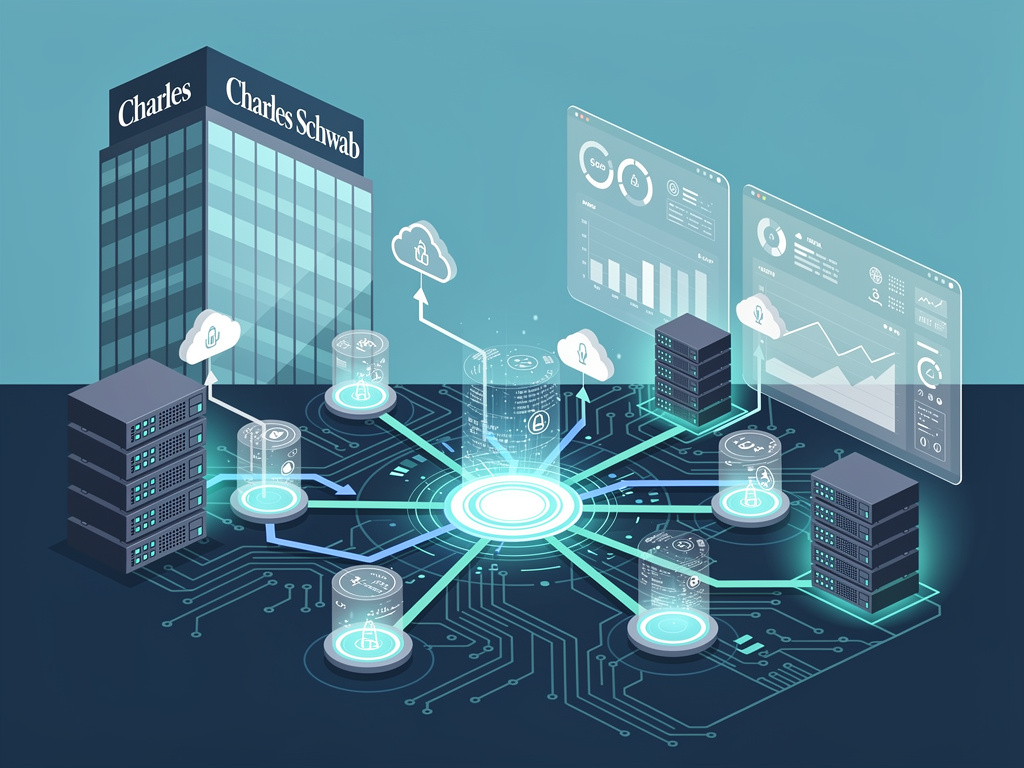
Charles Schwab Corporation has executed a significant organizational restructuring, elevating Chief Information Officer Dennis Howard to lead a newly consolidated technology, operations, and data division. The move, announced alongside a comprehensive banking leadership overhaul, signals the financial services giant’s commitment to digital transformation at a time when technology infrastructure has become the defining competitive advantage in wealth management and retail banking.
According to CIO Dive, Howard will now oversee the firm’s entire technology stack, operational workflows, and data architecture under his expanded mandate. This consolidation places one of the industry’s most critical technology portfolios under unified leadership, a strategic decision that reflects growing recognition across financial services that siloed technology and operations functions create inefficiencies and slow innovation cycles.
The leadership realignment comes as Schwab navigates a complex operating environment marked by rising interest rates, evolving client expectations for digital services, and intensifying competition from both traditional financial institutions and fintech disruptors. Howard’s elevation represents more than a simple organizational chart revision—it embodies a fundamental shift in how the $7.5 trillion asset manager approaches technological capability as a core business driver rather than a support function.
Banking Division Restructuring Signals Broader Strategic Priorities
The technology leadership announcement arrived in tandem with a comprehensive restructuring of Schwab’s banking operations team. This parallel transformation suggests the firm is orchestrating a coordinated effort to modernize both its customer-facing banking services and the underlying technological infrastructure that supports them. The synchronization of these leadership changes indicates executive recognition that banking innovation and technology advancement must proceed in lockstep rather than as independent initiatives.
Financial services analysts have noted that Schwab’s decision to consolidate technology, operations, and data under a single executive represents a departure from the traditional organizational model where these functions often report through separate chains of command. This structural approach has gained traction across the industry as firms recognize that artificial boundaries between technology development, operational execution, and data management create friction that impedes digital transformation efforts.
The timing of Howard’s expanded role coincides with a period of significant technological investment across the brokerage industry. Firms are racing to enhance mobile platforms, integrate artificial intelligence capabilities, improve cybersecurity defenses, and modernize legacy systems—all while maintaining the reliability and regulatory compliance that clients and regulators demand. Howard’s track record at Schwab positions him to orchestrate these competing priorities within a unified strategic framework.
Technology Infrastructure as Competitive Differentiation
Schwab’s organizational restructuring reflects a broader industry recognition that technology infrastructure has evolved from a back-office necessity to a primary source of competitive differentiation. The firm’s clients now expect seamless digital experiences, real-time data access, and sophisticated analytical tools that were considered premium features just a few years ago. Meeting these expectations requires not just incremental improvements but fundamental reimagining of how technology, operations, and data functions collaborate.
Howard brings substantial institutional knowledge to his expanded role, having served as CIO during a period of significant technological advancement at Schwab. His tenure has encompassed the integration of TD Ameritrade’s technology platforms following Schwab’s $26 billion acquisition, a massive undertaking that required harmonizing disparate systems, consolidating data architectures, and ensuring uninterrupted service delivery to millions of clients. The successful navigation of that integration likely influenced the decision to expand his responsibilities.
The consolidation of operations under Howard’s purview represents a particularly strategic move. Operations teams handle the day-to-day processing of trades, account maintenance, client service support, and regulatory compliance—functions that increasingly depend on sophisticated technology platforms and data analytics. By unifying these areas under single leadership, Schwab creates opportunities for tighter integration between system development and operational execution, potentially accelerating innovation cycles and improving service quality.
Data Architecture Emerges as Strategic Asset
The explicit inclusion of data within Howard’s expanded portfolio underscores its elevation to strategic priority status. Financial services firms are sitting on vast repositories of client information, transaction histories, market data, and operational metrics. The ability to harness this information for client insights, risk management, operational efficiency, and business intelligence has become a critical differentiator. Schwab’s decision to place data governance and architecture alongside technology and operations suggests a holistic approach to information management.
Industry observers have noted that effective data utilization requires breaking down organizational silos that have traditionally separated data collection, storage, analysis, and application. By consolidating these functions under unified leadership, Schwab positions itself to develop more sophisticated data strategies that span the entire organization. This approach enables more effective deployment of emerging technologies like machine learning and artificial intelligence, which depend on access to high-quality, well-governed data across multiple business domains.
The restructuring also addresses a persistent challenge in financial services: the tension between innovation and risk management. Technology leaders often face pressure to rapidly deploy new capabilities while operations and compliance teams focus on stability, security, and regulatory adherence. Howard’s expanded role gives him direct accountability for balancing these competing imperatives, potentially enabling more nuanced decision-making about when to accelerate innovation and when to prioritize stability.
Industry-Wide Implications for Financial Services Leadership
Schwab’s organizational model may influence how other financial services firms structure their technology and operations leadership. The traditional separation of CIO, Chief Operations Officer, and Chief Data Officer roles creates coordination challenges that can slow decision-making and implementation. As digital transformation accelerates across the industry, firms are experimenting with different organizational models to achieve greater agility and integration.
The expanded leadership structure also reflects changing skill requirements for technology executives in financial services. Modern CIOs must understand not just technology architecture but also operational workflows, data governance, regulatory requirements, and business strategy. Howard’s broadened responsibilities suggest Schwab believes integrated leadership across these domains will produce better outcomes than specialized executives working through coordination mechanisms.
For Schwab’s competitors, the announcement serves as a signal of the firm’s strategic priorities and investment areas. Technology spending in financial services has reached unprecedented levels, with firms allocating billions of dollars annually to platform modernization, cybersecurity enhancement, and digital capability development. Schwab’s leadership restructuring indicates its intention to maintain competitive parity—or achieve advantage—in these critical areas.
Challenges and Opportunities in the Expanded Role
Howard assumes his expanded responsibilities amid significant operational challenges facing the brokerage industry. Rising cybersecurity threats require constant vigilance and investment. Regulatory requirements continue to evolve, demanding flexible systems that can adapt to new compliance mandates. Client expectations for digital capabilities continue to escalate, driven by experiences with technology leaders outside financial services. And the ongoing integration of acquired businesses requires sustained focus and resources.
The consolidation of technology, operations, and data under single leadership creates opportunities for strategic alignment but also concentrates significant organizational risk. If execution falters in any of these critical areas, the consequences could be substantial. However, unified leadership also enables faster decision-making, clearer accountability, and more coherent strategy development—advantages that likely influenced Schwab’s organizational design choices.
As financial services firms continue their digital transformation journeys, leadership structures will continue evolving. Schwab’s approach—consolidating technology, operations, and data under an expanded CIO role—represents one model for achieving the integration and agility that modern financial services delivery requires. Whether other firms adopt similar structures will depend on their specific circumstances, but the underlying principle—that technology, operations, and data must work in concert rather than in isolation—has become an industry imperative. Howard’s success or challenges in his expanded role will likely influence organizational thinking across the sector for years to come.


 WebProNews is an iEntry Publication