
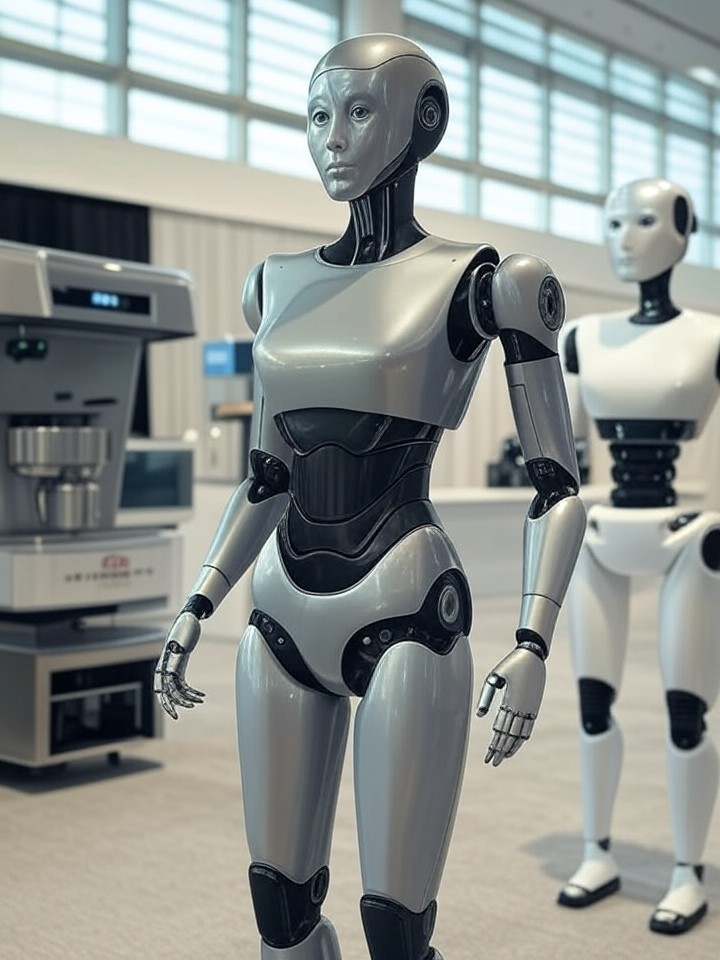
The Bizarre Bots Stealing the Show at CES 2026
At this year’s Consumer Electronics Show in Las Vegas, the spotlight shone brightly on a menagerie of robotic innovations that blurred the lines between utility and whimsy. Journalists and tech enthusiasts alike wandered the sprawling convention halls, encountering machines that poured coffee with uncanny precision or folded laundry with a dexterity that rivaled human hands. These weren’t just prototypes; they represented bold leaps by companies aiming to integrate artificial intelligence into everyday life, often with results that left attendees chuckling or scratching their heads.
One standout was a fluffy robot designed to evoke the joy of interacting with a human baby, a creation that sparked both delight and existential debates among onlookers. As reported in a recent post on X, this cuddly automaton, named Mirumi, was brought to CES by its inventors, promising to recreate joyful experiences for users. Such inventions highlight how robotics firms are pushing boundaries, not just in functionality but in emotional engagement, tapping into human psychology to make machines more relatable.
Yet, the sheer variety on display raised questions about practicality. From humanoid figures dealing cards to origami-inspired crawlers that fold themselves into action, the event served as a proving ground for ideas that might one day reshape households or workplaces. Industry insiders noted that while some robots demonstrated real-world applications, others seemed more like conceptual art pieces, designed to generate buzz rather than immediate sales.
Unveiling the Quirkiest Mechanical Marvels
Diving deeper into specific examples, TechCrunch’s coverage captured the essence of these oddities in an article detailing memorable encounters. In I met a lot of weird robots at CES — here are the most memorable, reporter Brian Heater described robots that don’t always reflect current commercial realities but offer glimpses into future directions. For instance, one robot poured coffee with a theatrical flair, its movements synchronized to mimic a barista’s grace, hinting at hospitality applications where precision meets personality.
Another highlight was a ping-pong playing bot that engaged attendees in matches, showcasing advanced motor skills and real-time AI processing. This wasn’t merely for entertainment; it demonstrated progress in adaptive learning, where machines adjust to human opponents’ styles on the fly. Such capabilities could extend to training tools or even therapeutic devices, aiding in physical rehabilitation through interactive games.
Mashable also weighed in on the spectacle, compiling a list of the strangest tech spotted at the show. Their piece emphasized how CES often features robots intended for home use, humanized to blend into daily life. One example was LG’s CLOiD, a vaguely humanoid assistant that roams homes performing tasks like cleaning or monitoring, evoking memories of cartoon robots from decades past.
AI Integration Fuels the Eccentricity
The infusion of AI into these robots amplified their weirdness, turning simple machines into entities capable of conversation and decision-making. Posts on X from users like Tansu Yegen showcased innovations such as MIT’s origami robot, which starts as a flat sheet and self-assembles when heated, capable of crawling, climbing, and swimming. This compact design points to potential uses in disaster response or exploration, where deployable, lightweight robots could navigate tight spaces.
Bloomberg’s reporting added context, noting in their article on humanoid robots at CES that these machines were performing diverse tasks like folding laundry or dealing cards, all within close proximity. The piece, titled CES 2026 Shows Where Humanoid Robots Work and Where They Don’t, analyzed successes and limitations, such as challenges in battery life or environmental adaptability that still hinder widespread adoption.
Engadget’s roundup of the best tech from the event further illustrated the diversity, selecting winners from categories that included robotic innovations. Their best of CES 2026 highlighted how starting with dozens of candidates, they narrowed down to top picks, including AI-driven robots that caught eyes for their ingenuity.
From Concept to Commercial Viability
Industry experts at the show discussed the path from these prototypes to market-ready products. Many robots, while memorable, face hurdles in scaling production or ensuring safety in uncontrolled environments. For example, a water-powered humanoid with synthetic organs, mentioned in X posts referencing Clone Robotics, represents ambitious biomimicry, but questions linger about durability and cost.
Wired’s live blog from CES provided real-time insights, capturing the chatbot-enabled, sensor-packed glory of these devices. In CES 2026 Live Blog: All of the Coolest Tech We Saw, they noted the AI-infused nature of many exhibits, where robots not only perform tasks but learn from interactions, evolving over time.
This evolution ties into broader trends, as TechCrunch’s live coverage pointed out that CES 2026 was heavily focused on “physical AI,” with companies showcasing gadgets that put intelligence front and center. Their storyline update emphasized the need for robust compute power to make these robots viable beyond the demo floor.
Humanizing Machines: Emotional and Ethical Angles
A fascinating aspect was the effort to humanize these robots, often leading to bizarre outcomes. Mashable’s article on WTF robots listed several, including an AI baby panda for older adults, designed to provide companionship. In 3 WTF robots from CES 2026, they described how these machines are given characteristics to stand out, blending utility with novelty.
Ethical considerations emerged in discussions, particularly around robots mimicking human or animal forms too closely. Posts on X from users like Pinna Pierre highlighted bizarre announcements, such as an AI panda companion or a vibrating chef’s knife, raising questions about whether such tech addresses genuine needs or merely capitalizes on novelty.
CNET’s live updates complemented this, announcing winners and highlighting surprises. Their CES 2026 Live: Breaking News and Everything Announced in Tech captured the event’s wrap-up, noting the robot and AI-heavy focus that defined the show.
Innovators Pushing Boundaries
Companies like Samsung and Lenovo made strong showings, as Mashable reported in their weird tech roundup. Samsung arrived with ambitious displays, including foldables integrated with robotic elements, while Asus and Lenovo unveiled banner innovations. The CES 2026: The weirdest tech we saw piece from Mashable collected strange finds, underscoring that while some ideas seem outlandish, they often make sense in context.
Startups also shone, introducing concepts like holographic assistants or musical lollipops, as noted in X posts from accounts like BIZBoost. These entries, though eccentric, signal a vibrant ecosystem where experimentation drives progress.
Looking ahead, the memorable robots of CES 2026 suggest a future where machines aren’t just tools but companions, entertainers, and helpers. Yet, insiders caution that the gap between show floor demos and real-world deployment remains significant, requiring advancements in AI ethics, energy efficiency, and user acceptance.
The Broader Implications for Tech Sectors
Beyond entertainment, these robots have implications for sectors like healthcare and manufacturing. A robot that folds laundry could assist the elderly, while ping-pong bots might aid in cognitive therapy. Bloomberg’s analysis pointed out where humanoids excel, such as repetitive tasks, but falter in dynamic settings.
TechCrunch’s memorable robots article reiterated that these displays peek into corporate roadmaps, with parent companies investing heavily in R&D. For instance, Nvidia and AMD’s announcements bolstered the compute needed for such AI.
X sentiment reflected excitement mixed with skepticism, with users sharing videos of robots in action, from self-folding origami to humanoid walkers, echoing Jensen Huang’s prediction of a robotics breakthrough.
Navigating the Hype and Reality
As the event wrapped, reflections from outlets like Mashable’s CES hub emphasized the blend of AI and robotics as a defining theme. Their coverage of live updates captured surprises from established players and newcomers alike.
Ultimately, the weird robots of CES 2026 serve as harbingers of change, challenging perceptions of what machines can achieve. While not all will succeed commercially, they fuel innovation, inspiring the next generation of tech that could seamlessly integrate into society.
For industry watchers, the key takeaway is monitoring which of these quirky concepts evolve into staples, transforming novelty into necessity in an increasingly automated world.


 WebProNews is an iEntry Publication