
Pedaling Past Limits: CES 2026’s E-Bike Revolution Tackles Range Anxiety Head-On
In the bustling halls of CES 2026 in Las Vegas, where cutting-edge gadgets vie for attention, a quiet revolution is unfolding in the world of electric bicycles. Amid the dazzle of AI-driven robots and next-generation displays, e-bike manufacturers are unveiling technologies that promise to transform urban commuting and recreational riding. At the forefront is a breakthrough aimed at one of the most persistent challenges for e-bike users: range anxiety, the nagging worry that your battery will die before you reach your destination.
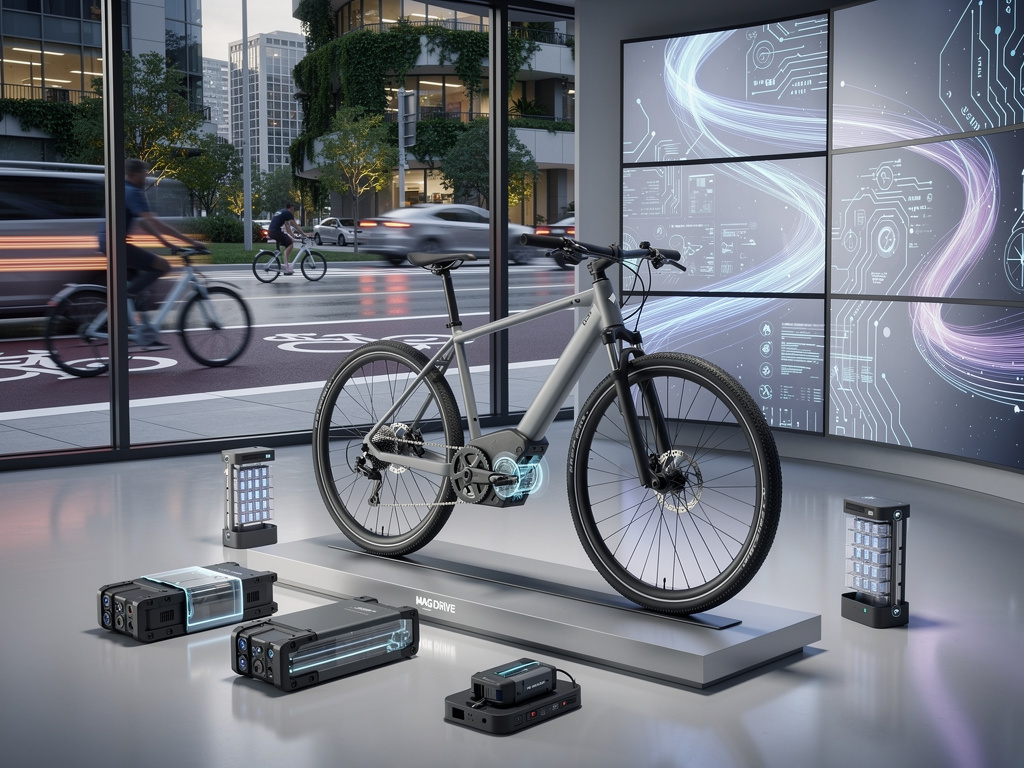
This year’s show, kicking off just days into 2026, has already generated buzz with innovations like Hello Space’s MAG DRIVE system. As reported in a recent article by T3, this pedaling-powered charging mechanism claims to eliminate drag while replenishing battery life on the fly. It’s not just about extending range; it’s about redefining how riders interact with their bikes, blending human effort seamlessly with electric assistance.
Industry insiders are watching closely as these advancements signal a shift toward more sustainable and user-friendly mobility solutions. With global e-bike sales projected to soar—reaching an estimated $119.72 billion by 2030, according to insights from HEZZO—the stakes are high. CES 2026 isn’t merely showcasing prototypes; it’s setting the stage for widespread adoption in cities grappling with traffic congestion and environmental concerns.
Unveiling the MAG DRIVE: A Game-Changer in Battery Tech
Hello Space’s MAG DRIVE operates on a magnetic principle that harnesses pedaling energy to charge the battery without the typical resistance found in regenerative systems. This innovation addresses a core complaint: traditional e-bikes often feel sluggish when regeneration kicks in, deterring riders from longer journeys. By minimizing drag, the system allows for natural pedaling while quietly boosting range, potentially adding miles without plugging in.
Beyond Hello Space, other exhibitors are pushing boundaries. NAVEE, for instance, is debuting electric wagons and dirt bikes that integrate modular battery packs, as highlighted in recent posts on X (formerly Twitter), where users praised the versatility for urban and off-road use. These developments reflect a broader trend toward adaptable power sources, where riders can swap or expand batteries mid-ride.
Experts at the show note that such technologies could reduce the environmental footprint of e-bikes by optimizing energy use. With climate goals in mind, companies are incorporating AI to predict battery drain based on terrain and rider habits, ensuring efficiency without sacrificing performance.
Broader Innovations Shaping E-Bike Futures
CES 2026’s mobility pavilion is abuzz with complementary tech. Bosch, a veteran in e-bike systems, is evolving its connected platforms, building on past honors like the Nyon all-in-one computer recognized at earlier CES events. This year, updates include enhanced IoT integration for real-time range monitoring, allowing apps to suggest optimal routes that conserve power.
Meanwhile, startups like RideAlso, founded by Rivian executives, are introducing transcendent mobility bikes with unique features such as autonomous elements and high payload capacities. Posts on X from users like Sam Sheffer describe these as “absolutely awesome,” emphasizing their potential to rival traditional vehicles in utility.
The integration of smart tech isn’t limited to batteries. Innovations in lightweight frames and AI-assisted navigation are making e-bikes more intuitive. For example, compact electric drives that convert any bike into an e-version, as discussed in X posts by Massimo, offer speeds up to 32 km/h with minimal added weight, broadening accessibility.
Addressing User Pain Points Beyond Range
Range anxiety isn’t isolated; it’s intertwined with issues like charging infrastructure and battery longevity. At CES, solutions are emerging, such as ultra-fast charging stations tailored for e-bikes, showcased by brands like Baseus in their full-range innovations lineup, per a PR Newswire release. These promise to juice up batteries in minutes, ideal for city dwellers without home garages.
Safety features are also evolving. Built-in alarm systems and GPS tracking, as seen in heavy-duty models carrying up to 440 lbs mentioned in X posts by Andy Boenau, deter theft and enhance peace of mind. This is crucial as e-bikes become pricier with advanced tech, making them targets in urban settings.
Furthermore, the push toward connectivity means e-bikes are linking with smart city ecosystems. Imagine bikes that communicate with traffic lights or public transit apps to optimize journeys, reducing overall energy consumption and alleviating range concerns through smarter planning.
Market Dynamics and Competitive Edges
The competitive arena at CES 2026 reveals how established players and newcomers are vying for dominance. Bosch’s ongoing refinements, echoed in their historical CES recognitions, position them as a reliable backbone for many e-bike brands. Yet, agile startups are challenging the status quo with bold claims, like the pedaling-without-drag promise from Hello Space.
Economic factors play a role too. With e-bike costs dropping due to scalable manufacturing, as noted in trends from Velco, adoption is accelerating in emerging markets. This democratization could amplify innovations, as more users demand reliable range solutions.
Regulatory tailwinds are aiding progress. Favorable classifications for e-bikes, highlighted in X posts about autonomous delivery models by Andrew Hughes, mean lower insurance and easier integration into urban logistics, further driving tech investments.
Real-World Applications and User Feedback
Early adopters at CES are testing these innovations, providing immediate feedback. Riders report that systems like MAG DRIVE feel “effortless,” extending trips by 20-30% without extra exertion, based on demos covered in live updates from Tom’s Guide. This hands-on experience underscores the tech’s practicality for daily commutes.
In recreational contexts, off-road e-bikes from NAVEE are garnering praise on X for handling diverse terrains, suggesting range solutions that adapt to adventure seekers. Users envision cross-country tours without the fear of stranding, blending thrill with reliability.
Feedback loops are tightening. AI-driven apps now collect data from rides to refine algorithms, ensuring future iterations better combat range anxiety. This data-centric approach, as discussed in M2050 recaps of past shows, is accelerating evolution.
Sustainability and Long-Term Impacts
Sustainability remains a core driver. By solving range issues, these innovations encourage ditching cars for e-bikes, slashing emissions. Posts on X emphasize how low-emission autonomous e-bikes could revolutionize delivery, being 25 times cheaper than cars while boosting throughput.
Long-term, expect integration with renewable energy. Solar-assisted charging, hinted at in CES previews from The Verge, could make e-bikes truly self-sufficient, especially in sunny regions.
Challenges persist, like battery recycling, but CES exhibitors are addressing them with modular designs that ease upgrades, reducing waste.
Emerging Trends in Smart Integration
Smart bike tech is blending AI and IoT at unprecedented levels, as per HEZZO’s analysis. Features like predictive maintenance alert riders to potential range drops, preventing surprises.
CES 2026 also spotlights multimodal transport. E-bikes that pair with electric scooters or public transit, as in NAVEE’s lineup, create seamless ecosystems, extending effective range through hybrid mobility.
User sentiment on X reflects excitement, with posts lauding how these advancements reshape daily life, from commuting to exploration.
Industry Insider Perspectives
Veterans like those from Cycling Electric, in their CES previews, predict these techs hitting streets soon, influencing urban planning.
Investors are bullish, seeing parallels to electric vehicles’ rise. With buzzwords like AI dominating, as forecasted by Gizmodo, e-bikes are poised for mainstream tech status.
Collaborations are key. Partnerships between auto giants like Rivian and bike innovators signal converged mobility futures.
Future Horizons for E-Bike Evolution
Looking ahead, CES 2026 hints at e-bikes with full autonomy for short hauls, building on X discussions of delivery bots.
Customization will soar, with apps tailoring power output to user profiles, banishing range anxiety for good.
As the show unfolds, these innovations promise not just longer rides, but a redefined relationship between humans and machines on two wheels.


 WebProNews is an iEntry Publication