
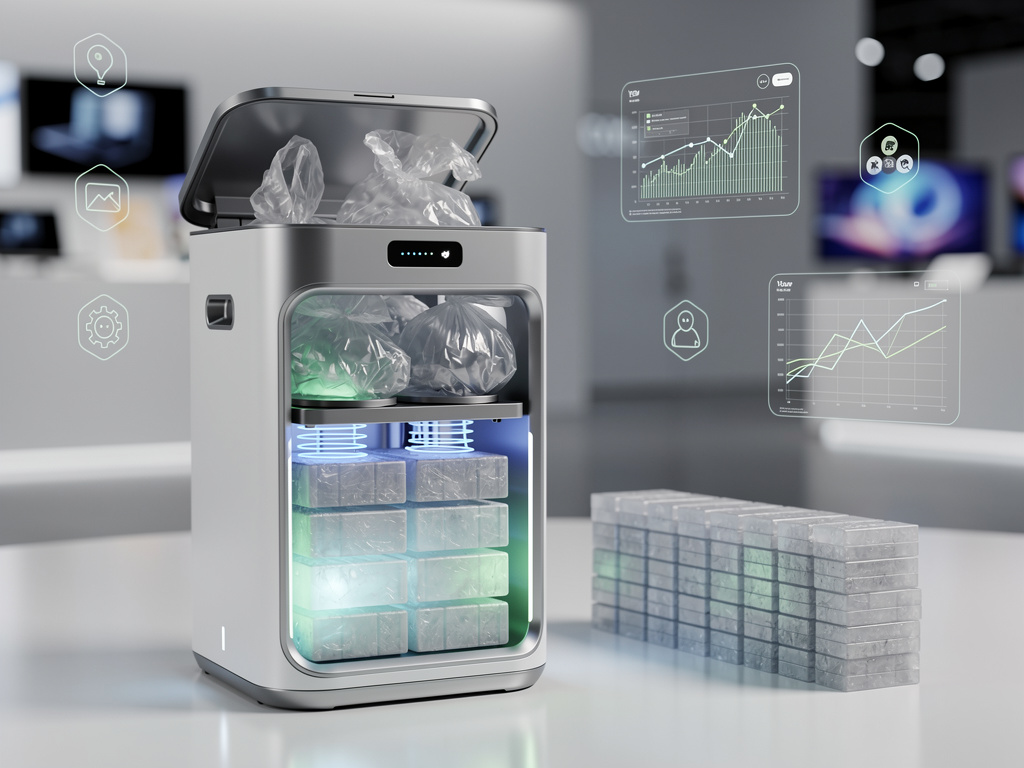
In the bustling halls of CES 2026, amid a sea of futuristic gadgets and AI-driven wonders, one unassuming device stole the spotlight for its practical approach to a persistent environmental challenge: plastic waste. Clear Drop, a startup focused on sustainable home tech, unveiled a smart trash can that doesn’t just collect garbage—it transforms discarded plastic bags into compact, recyclable bricks. This innovation, showcased on the show floor in Las Vegas, promises to rethink how households handle soft plastics, turning everyday waste into a resource that could ease the burden on landfills and recycling centers.
The device operates with a blend of mechanical ingenuity and smart sensors. Users simply toss their used grocery bags, produce wrappers, or other soft plastics into the bin. Inside, a compactor heats and compresses the material, molding it into dense bricks that resemble oversized Lego blocks. These bricks are designed for easy transport to recycling facilities, where they can be processed into new products like park benches or construction materials. According to reports from the event, the process is energy-efficient, using less power than a standard microwave, and it’s all contained within a sleek, kitchen-friendly design that fits under most counters.
Industry observers at CES noted the timeliness of this launch. With global plastic production surpassing 400 million tons annually and recycling rates hovering below 10% in many regions, solutions like this address a critical gap. Clear Drop’s executives emphasized during demos that their product diverts 100% of soft plastic waste from landfills, a claim backed by pilot tests in select U.S. cities. Attendees, including tech analysts, praised the hands-on demonstrations where bags were fed into the machine and emerged as neat bricks in under a minute.
Revolutionizing Waste Management with Heat and Pressure
At the core of Clear Drop’s technology is a proprietary compression system that applies controlled heat—around 150 degrees Celsius—to soften the plastics without melting them entirely, preserving their recyclability. This avoids the pitfalls of traditional recycling, where contamination often renders materials unusable. Sensors detect the type and volume of plastic inserted, adjusting pressure to optimize brick formation. As detailed in coverage from CNET, the bricks are stackable and odor-free, making them ideal for home storage until curbside pickup.
The integration of smart features elevates this beyond a simple compactor. Connected via an app, the device tracks usage patterns, notifying users when a brick is ready or when the bin needs emptying. It even integrates with home assistants like Alexa or Google Home for voice commands. Engineers at Clear Drop drew inspiration from industrial recycling machines but scaled them down for consumer use, incorporating AI to predict maintenance needs and reduce downtime. This modular design allows for easy upgrades, ensuring the product evolves with emerging recycling standards.
Comparisons to existing smart trash cans highlight Clear Drop’s edge. While brands like Simplehuman offer sensor-activated lids and odor control, as noted in product rankings from Today, none actively process waste into a new form. Clear Drop’s model stands out by closing the loop on recycling, potentially reducing the need for municipal sorting facilities. Insiders speculate this could influence broader adoption in smart homes, where waste management is often an afterthought.
Market Potential and Pricing Strategies
Priced at around $200 for the base model, with premium versions reaching $300, Clear Drop aims for accessibility, though some critics question the cost barrier for average consumers. A subscription service for $600 annually provides replacement parts and software updates, as explored in a review by KnowTechie. This model mirrors trends in the smart home sector, where ongoing fees sustain innovation but risk alienating budget-conscious buyers. Company representatives at CES argued that the long-term savings—from reduced waste disposal fees and environmental benefits—justify the investment.
Adoption could accelerate in regions with strict recycling mandates, such as California or parts of Europe, where plastic bag bans are commonplace. Market analysts project the global smart waste management sector to grow from $2 billion in 2025 to over $5 billion by 2030, driven by urban sustainability goals. Clear Drop’s entry positions it as a niche player, potentially partnering with retailers like Amazon, which already sells a range of smart trash cans through its platform, as seen in listings on Amazon.
Competitive pressures are mounting, however. Rivals at CES displayed AI-powered bins that sort recyclables automatically, like those highlighted in posts on X from users discussing sensor-equipped public trash systems in Europe. These innovations, while impressive, focus on sorting rather than transformation, leaving room for Clear Drop to differentiate through its brick-making capability. Industry insiders whisper about potential acquisitions by larger firms like Whirlpool or iRobot, eager to expand their eco-friendly portfolios.
Environmental Impact and Real-World Testing
Beyond the gadgetry, the real value lies in its ecological footprint. Each brick diverts up to 500 plastic bags from landfills, according to Clear Drop’s data, contributing to reduced methane emissions and ocean pollution. Environmental groups at CES lauded the device for empowering individuals in the fight against plastic waste, aligning with global initiatives like the UN’s Plastic Treaty discussions. Pilot programs in homes and small businesses have shown a 90% increase in recycling compliance, with users reporting less clutter from hoarded bags.
Challenges remain, including the energy required for compression and the need for compatible recycling infrastructure. Not all facilities can process these bricks efficiently, a point raised in forward-looking articles from RecycleNation, which envisions AI-driven sorting as the future norm. Clear Drop is addressing this by collaborating with waste management companies to standardize brick acceptance, potentially influencing policy in the U.S. and abroad.
User feedback from early adopters, shared via X posts about similar smart waste tech, underscores enthusiasm for hands-free, hygienic solutions. One viral post described an AI bin that catches trash mid-air, illustrating the playful side of innovation, but Clear Drop’s focus on practicality resonates with those tired of overflowing bag collections under sinks. Engadget’s coverage of the CES demo, available at Engadget, captured the “aha” moment when attendees saw bags morph into bricks, sparking discussions on social media about everyday sustainability.
Innovation Ecosystem at CES 2026
The broader CES 2026 environment amplified Clear Drop’s reveal, with themes of AI integration and sustainability dominating keynotes. Nearby booths featured bizarre tech like AI panda pets and hologram assistants, as chronicled in TechCrunch, but Clear Drop’s grounded approach stood out for its immediate applicability. PBS News Hour’s Day 1 recap, found at PBS News, positioned it among products poised for quick market entry.
Partnerships could propel growth; imagine integrations with smart kitchens where the bin communicates with refrigerators to track packaging waste. This echoes trends in posts on X about sensor-laden public infrastructure, suggesting a hybrid future for home and urban waste systems. Clear Drop’s team, comprising engineers from recycling firms and tech startups, brings credibility, with prototypes refined over two years based on user trials.
Skeptics, however, point to scalability issues. Producing bricks at home might not suit apartments with limited space, and the device’s reliance on electricity could deter off-grid users. Yet, as live updates from The Verge noted, CES winners like LEGO’s sensor-equipped Smart Bricks demonstrate how embedding tech in familiar objects can drive adoption— a parallel Clear Drop might leverage.
Future Trajectories in Sustainable Tech
Looking ahead, Clear Drop plans expansions into commercial models for offices and stores, where plastic waste volumes are higher. Regulatory tailwinds, such as extended producer responsibility laws, could mandate such tech in new buildings. Analysts foresee integrations with blockchain for tracking recycled materials, ensuring transparency from bin to factory.
Consumer sentiment, gleaned from X discussions, leans positive, with users excited about innovations that make recycling effortless. One post hailed AI trash cans that mop floors, hinting at multifunctional devices on the horizon. Clear Drop’s brick system could evolve to handle other materials like films or wraps, broadening its appeal.
Ultimately, this CES standout exemplifies how incremental tech can tackle grand challenges. By empowering users to actively participate in waste reduction, Clear Drop not only innovates but also inspires a shift toward circular economies. As the smart home sector matures, devices like this may become as ubiquitous as voice assistants, weaving sustainability into daily life without fanfare.
Broader Implications for Industry Players
For established players in home appliances, Clear Drop’s emergence signals a need to innovate or collaborate. Companies like iRobot, known for robotic vacuums, might eye acquisitions to bolster their eco-lines. Meanwhile, startups in the space could face funding boosts, with venture capital flowing into green tech post-CES.
Global variations add intrigue; in Asia, where plastic pollution is acute, adapted versions could incorporate local materials. European markets, with advanced recycling networks, might see faster uptake, influenced by EU directives.
In the end, Clear Drop’s trash-to-brick marvel underscores a pivotal moment: when technology meets necessity, transforming the mundane into the meaningful. Industry watchers will monitor its rollout, anticipating ripples across waste management and beyond.


 WebProNews is an iEntry Publication