
Shaking Up Spirits: The AI Bartender Revolution Debuts at CES 2026
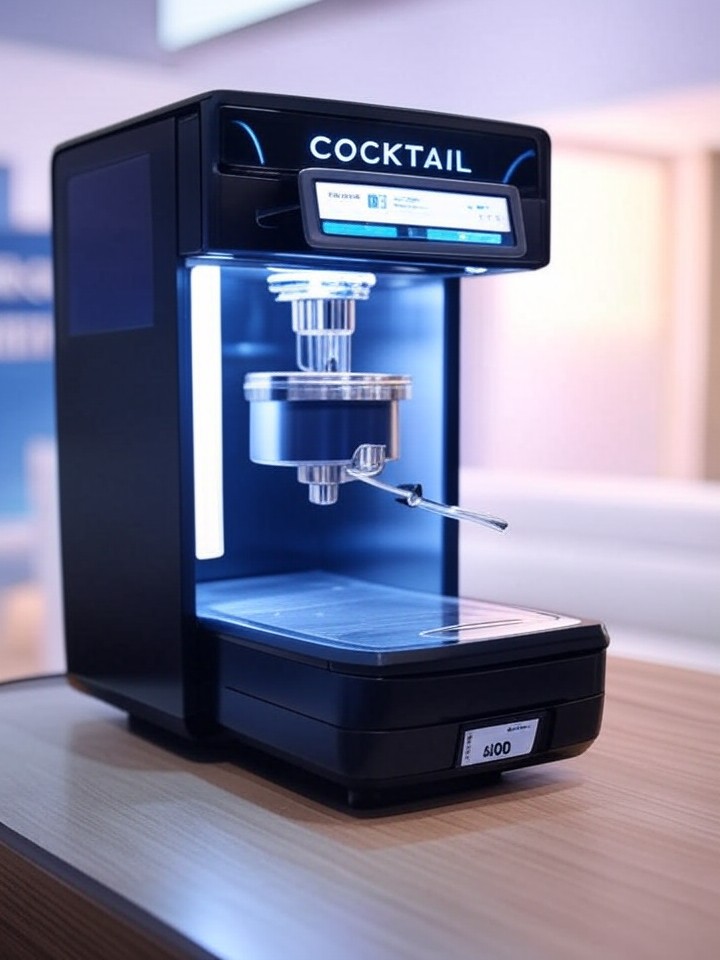
At the bustling halls of CES 2026 in Las Vegas, where cutting-edge gadgets vie for attention amid a sea of tech enthusiasts and industry executives, one device stood out for its blend of whimsy and sophistication: the Breakreal R1 AI cocktail machine. This sleek appliance, unveiled by startup Breakreal, promises to transform home entertaining by mixing drinks with artificial intelligence that generates “unlimited recipes” tailored to user preferences. Drawing from a database of classic cocktails and innovative concoctions, the machine uses natural language processing to interpret requests like “make me something tropical and refreshing,” then dispenses the perfect pour.
The Breakreal R1 isn’t just a glorified dispenser; it’s equipped with sensors that scan ingredients via QR codes, ensuring freshness and compatibility. It even incorporates an ozone cleaning system to maintain hygiene between uses, addressing common concerns with automated kitchen devices. As reported in a recent article from Futurism, the gadget’s debut elicited mixed reactions, with some viewing it as a bizarre novelty that “pours alcohol directly into the void where your soul should be.” Yet, for tech-savvy hosts, it represents a step toward personalized automation in the beverage sector.
Beyond its core functionality, the Breakreal R1 integrates with smart home ecosystems, allowing voice commands through assistants like Alexa or Google Home. This connectivity enables it to remember user histories, suggesting drinks based on past choices or even current mood inferred from facial recognition—though privacy advocates have raised eyebrows at such features. Demonstrations on the show floor showed the machine whipping up everything from a classic martini to experimental fusions like a lavender-infused gin fizz, all with precise measurements that rival professional bartenders.
Unveiling the Tech Behind the Pour
Industry insiders at CES noted that the Breakreal R1 leverages generative AI similar to models powering chatbots, but applied to mixology. By analyzing vast datasets of recipes, flavor profiles, and user feedback, it creates novel drinks on the fly. This capability was highlighted in coverage from The Verge, which listed it among the “most dubious uses of AI” at the event, questioning whether such technology truly enhances everyday life or merely adds unnecessary complexity.
Comparisons to other AI-driven gadgets were inevitable. For instance, the AI Barmen, another CES highlight, scans users’ faces to gauge age and mood before suggesting cocktails, as detailed in a hands-on demo by Mashable. Unlike that device, which focuses on social interaction by “remembering” patrons like a real bartender, the Breakreal R1 emphasizes recipe innovation and ease of use in a compact form factor suitable for countertops.
Feedback from attendees, echoed in posts on X (formerly Twitter), ranged from excitement to skepticism. Users praised the potential for endless experimentation without the mess of manual mixing, while others joked about the device rendering human bartenders obsolete—though experts argue it complements rather than replaces skilled professionals in high-end settings.
Market Potential and Competitive Edges
The rise of AI in consumer appliances reflects broader trends in home automation, where devices aim to anticipate needs rather than just respond to commands. According to the official CES site from the Consumer Technology Association, AI integration dominated the 2026 show, with applications spanning from robotics to wearables. The Breakreal R1 fits into this narrative by bringing “physical AI” to the kitchen, turning abstract algorithms into tangible experiences like a perfectly balanced negroni.
Pricing details emerged during the event, with the R1 slated for a retail launch at around $499, positioning it as an accessible luxury item. This undercuts some competitors, such as high-end automated cocktail makers that lack AI customization. A Gizmodo piece described a similar device as slinging “generative booze,” but the Breakreal’s edge lies in its unlimited recipe generation, which doesn’t require subscriptions or app purchases, as per Futurism’s report.
Challenges abound, however. Maintenance is a key concern; the machine’s ozone cleaning is innovative, but users must supply their own spirits and mixers, potentially leading to inconsistencies if ingredients vary. Moreover, as The Verge pointed out, not all AI integrations feel essential—critics wonder if scanning QR codes for ingredients overcomplicates what could be a simple process.
Broader Implications for the Beverage Industry
Looking ahead, the Breakreal R1 could disrupt the beverage market by democratizing mixology. Home users gain access to professional-level creativity without years of training, potentially boosting sales of premium liquors as people experiment more freely. Industry analysts predict this could spur growth in the smart kitchen sector, projected to reach $50 billion by 2030, driven by AI enhancements.
Social media buzz on X amplified the device’s visibility, with posts showcasing robot bartenders from past years evolving into sophisticated AI agents. One viral demonstration involved a robotic arm trained in minutes to pour drinks, hinting at future iterations where the Breakreal might incorporate physical robotics for even more seamless operation.
Privacy remains a hot-button issue. Facial scanning features, while optional in the R1, echo concerns raised in Mashable’s coverage of the AI Barmen, where the machine “sees you, talks to you, remembers you.” Regulators may scrutinize such data collection, especially as AI devices become more pervasive in homes.
Innovation Meets Consumer Skepticism
Despite the hype, not all reactions were positive. Some CES attendees, as captured in TechCrunch’s recap of the event as “all about physical AI and robots,” viewed the Breakreal R1 as part of an over-AI-ification of mundane tasks. A CNET roundup of CES highlights included similar gadgets, noting the blend of fun and futility in AI-powered appliances.
Yet, for innovators like Breakreal’s founders, the device embodies the fusion of technology and leisure. Drawing from precedents like robot bartenders featured in older X posts, such as a 2017 CGTN clip of “Tipsy” the machine, the R1 advances the concept with modern AI, making it more intuitive and adaptive.
Integration with health trends adds another layer. The machine can suggest low-alcohol or non-alcoholic alternatives based on user profiles, aligning with growing demand for mindful drinking. This feature, not widely covered yet, positions it as a thoughtful addition to wellness-focused smart homes.
Future Prospects and Industry Ripples
As CES 2026 wrapped up, the Breakreal R1 garnered awards buzz, potentially joining the ranks of best-in-show innovations listed in Tom’s Guide’s live coverage. Its ability to clean itself with ozone technology addresses hygiene, a frequent pain point in automated dispensers, setting a new standard.
Competitors are taking note. Established players in kitchen tech may accelerate their AI efforts, leading to a wave of smart bartending devices. For instance, while not directly comparable, advancements in AI sommeliers for wine, as teased in X posts about InterCellar’s developments, suggest a burgeoning field of beverage personalization.
Ultimately, the Breakreal R1’s success will hinge on user adoption. Early adopters, drawn from tech enthusiasts at events like CES, will test its real-world viability. If it delivers on promises of unlimited, personalized cocktails without the hassle, it could redefine home entertaining.
Evolving the Art of Mixology
Delving deeper into the technology, the R1’s AI engine processes requests in real-time, factoring in variables like available ingredients and user allergies. This level of customization surpasses traditional recipe apps, offering a truly generative experience.
Echoing sentiments from The Verge’s dubious AI list, some question if this innovation solves a real problem or merely creates a new one. Bars operating on thin margins, as noted in X discussions, might resist automation that requires upkeep, preferring human touch for customer interaction.
Nevertheless, for the home market, the appeal is clear. Imagine hosting a party where guests request bespoke drinks via voice, and the machine delivers flawlessly. This vision, supported by CES’s focus on physical AI, points to a future where appliances like the Breakreal R1 become staples.
Navigating Ethical and Practical Hurdles
Ethical considerations extend to job displacement in the hospitality sector. While the device is marketed for homes, commercial versions could emerge, challenging bartenders’ roles. Discussions on X highlight this tension, with users debating the merits of robotic efficiency versus human creativity.
On the practical side, software updates will be crucial. Breakreal plans over-the-air improvements to expand recipe databases and refine AI accuracy, ensuring longevity beyond the initial novelty.
In the context of CES’s broader themes, as outlined in the Consumer Technology Association’s press release, the R1 exemplifies how AI is moving from digital assistants to physical embodiments, enhancing daily life in unexpected ways.
Pushing Boundaries in Consumer Tech
As the dust settles on CES 2026, the Breakreal R1 stands as a testament to inventive spirit. Its blend of AI, automation, and mixology captures the event’s essence, where the weird and wonderful converge.
For industry insiders, this device signals shifts in consumer expectations—demanding not just functionality, but intelligent personalization. Whether it becomes a household name or a quirky footnote, it undeniably stirs the pot of innovation.
Looking forward, collaborations with liquor brands could enhance its appeal, integrating sponsored recipes or exclusive ingredients. Such partnerships might accelerate market penetration, turning a CES curiosity into a mainstream must-have.


 WebProNews is an iEntry Publication