
Cerebras’s Meteoric Rise: Chasing Nvidia with a $22 Billion Bet
In the high-stakes world of artificial intelligence hardware, Cerebras Systems Inc. is positioning itself as a formidable challenger to industry titan Nvidia Corp. Recent reports indicate the Sunnyvale, California-based chipmaker is in advanced discussions to secure approximately $1 billion in fresh funding, potentially valuing the company at a staggering $22 billion before the investment. This move comes as Cerebras gears up for a much-anticipated initial public offering slated for the second quarter of 2026, signaling robust investor confidence in its specialized AI processors amid surging demand for advanced computing power.
The funding talks, first detailed in a report by The Information, highlight a dramatic escalation in Cerebras’s valuation. Just months ago, in September 2025, the company closed a $1.1 billion Series G round that pegged its worth at $8.1 billion, according to its own announcement on the Cerebras website. This latest round represents nearly a threefold increase, underscoring the explosive growth in the AI sector where startups are racing to dethrone established players like Nvidia by offering faster, more efficient chips tailored for training and running large language models.
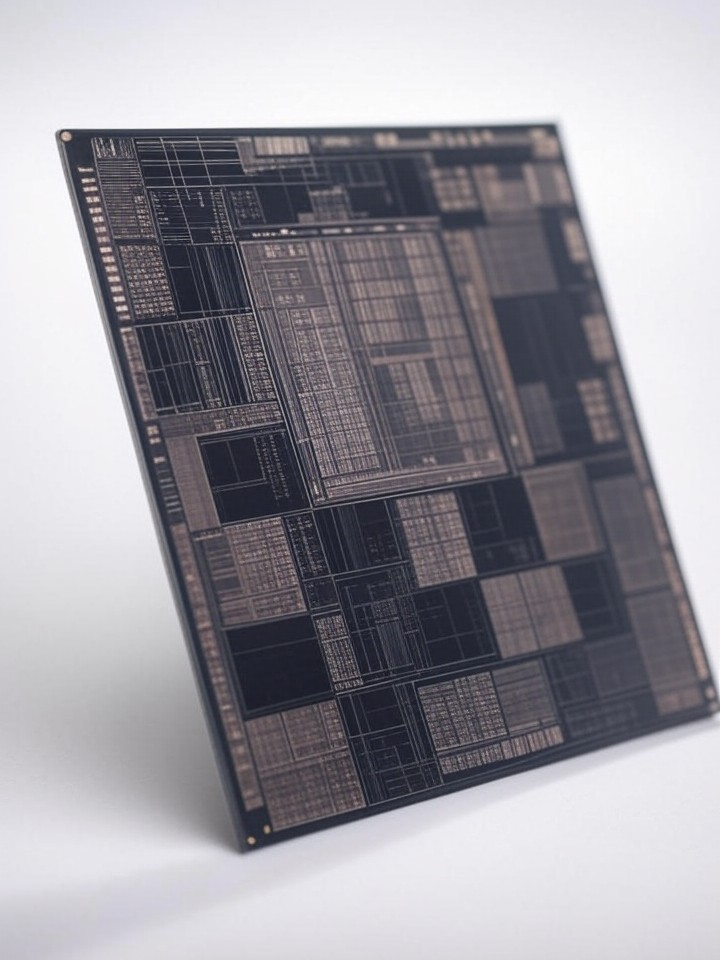
Cerebras’s appeal lies in its innovative wafer-scale engine technology, which integrates massive numbers of transistors into a single, enormous chip—far larger than traditional designs. This approach allows for unprecedented speed in AI workloads, with claims of performance up to 20 times faster than competitors in certain inference tasks, as noted in various industry analyses. Investors appear bullish on this differentiation, especially as global tech giants pour billions into AI infrastructure to support everything from chatbots to autonomous systems.
Funding Surge Amid IPO Preparations
The proposed $1 billion infusion is not just about capital; it’s a strategic bolster ahead of Cerebras’s IPO, which has faced multiple hurdles. Originally filing for a public debut in 2024, the company withdrew its plans in October 2025 following a U.S. national security review involving its investor, UAE-based G42, as reported by Reuters. The scrutiny centered on potential risks of technology transfer to entities like China, prompting G42 to step back from its stake. Now, with that issue seemingly resolved, Cerebras is set to refile as early as next week, targeting a Q2 2026 listing.
This timeline aligns with broader market trends, where AI chip firms are capitalizing on investor enthusiasm. Bloomberg, in a recent piece, corroborated the funding discussions, noting that the capital will fuel Cerebras’s competition against Nvidia by expanding its processor designs and scaling production. The company’s trajectory mirrors that of other AI upstarts, but its valuation jump—from $8.1 billion to potentially $23 billion post-funding—sets it apart, reflecting optimism about its ability to capture market share in a field dominated by a few key players.
Posts on X (formerly Twitter) from industry watchers echo this sentiment, with users highlighting Cerebras’s technological edge and the funding as a sign of intensifying rivalry in AI hardware. One post described it as a “big bet on AI compute,” capturing the excitement around the company’s potential to disrupt the status quo without relying on unverified claims.
Technological Edge and Market Challenges
At the heart of Cerebras’s strategy is its CS-3 system, powered by chips boasting over 4 trillion transistors, dwarfing conventional GPUs. This design enables seamless handling of massive AI models, reducing the need for clustering multiple chips and thereby cutting energy costs and complexity. As detailed in a Bloomberg article, such innovations are crucial for Cerebras to compete with Nvidia’s dominance in data centers, where efficiency translates directly to profitability for cloud providers and AI developers.
However, the path isn’t without obstacles. Cerebras has historically focused on niche, high-performance applications, which limits its addressable market compared to Nvidia’s broad ecosystem. Industry insiders point out that while Cerebras excels in speed for specific tasks like model inference, scaling production to meet widespread demand remains a challenge. A report from Tech Startups notes that this funding round could address those gaps by investing in manufacturing partnerships and R&D to broaden applicability.
Moreover, the geopolitical backdrop adds layers of complexity. The earlier IPO delay due to the G42 investment review, as covered in SiliconANGLE, underscores ongoing U.S. concerns over foreign investments in sensitive tech. Cerebras has navigated this by restructuring its investor base, but any renewed scrutiny could impact its valuation or timeline.
Investor Confidence and Competitive Pressures
The investor pool for this round remains undisclosed, but sources suggest participation from venture firms eager to back AI infrastructure plays. This follows a pattern seen in peers like Etched.ai, which recently secured funding to target similar markets, as mentioned in a SiliconANGLE update on AI chip unicorns. Cerebras’s ability to attract such capital speaks to its proven track record, including deployments with major clients in research and enterprise settings.
Valuation metrics here are telling: At $22 billion pre-money, Cerebras would eclipse many established tech firms, justified by projections of AI spending reaching trillions in the coming years. Yet, skeptics question sustainability, given Nvidia’s entrenched position with its CUDA software ecosystem that locks in developers. Cerebras counters this by emphasizing open-source compatibility and raw performance gains, as evidenced by benchmarks shared in industry forums.
X posts from tech enthusiasts amplify this narrative, with discussions framing the raise as a pivotal moment in the AI arms race. One user noted the “whopping” valuation jump, linking it to broader funding trends in the sector, though such social media buzz should be viewed as indicative of sentiment rather than fact.
Strategic Implications for the AI Ecosystem
Looking ahead, this funding could accelerate Cerebras’s roadmap, including next-generation chips that push boundaries in transistor density and energy efficiency. The company’s focus on wafer-scale integration positions it uniquely for hyperscale AI tasks, potentially eroding Nvidia’s market share in specialized segments like drug discovery and climate modeling.
Broader implications extend to the global supply chain. With U.S. export controls tightening on advanced semiconductors, Cerebras’s domestic operations provide a strategic advantage, reducing reliance on overseas fabrication. This aligns with national priorities, as highlighted in reports from Yahoo Finance, which revisited the company’s IPO preparations.
For industry insiders, the key question is execution: Can Cerebras convert this capital into market dominance? Partnerships with cloud giants like Amazon or Microsoft could be game-changers, amplifying its reach beyond current niches.
Future Horizons and Risks
As Cerebras marches toward its IPO, the funding round serves as a litmus test for investor appetite in AI hardware amid economic uncertainties. Inflationary pressures and potential recessions could dampen enthusiasm, but the AI boom shows no signs of abating, with demand for compute power outstripping supply.
Risks abound, from technological hurdles to competitive responses. Nvidia’s ongoing innovations, such as its Blackwell architecture, keep the pressure on challengers. Cerebras must innovate relentlessly, leveraging its funding to build moats around its tech.
Ultimately, this development underscores a shifting dynamic in semiconductors, where startups like Cerebras are no longer underdogs but serious contenders reshaping how AI is powered. With the IPO on the horizon, all eyes will be on whether this $22 billion valuation translates into lasting value for shareholders and the industry at large.
Evolving Dynamics in AI Hardware
Delving deeper into Cerebras’s history reveals a company founded in 2016 by a team of engineers frustrated with traditional chip limitations. Their breakthrough came with the CS-1 in 2019, featuring 1.2 trillion transistors, evolving to the CS-3 with 4 trillion by 2024. This progression, as chronicled in archival pieces from Seeking Alpha, illustrates a relentless pursuit of scale.
Market analysts project that by 2030, the AI chip sector could exceed $200 billion annually, driven by generative AI. Cerebras’s slice of that pie depends on converting technical prowess into commercial wins, with the new funds earmarked for expanding its Condor Galaxy supercomputers—clusters of its systems already operational in data centers worldwide.
Sentiment on X reflects optimism, with posts praising Cerebras’s speed advantages over Nvidia in benchmarks, though these are often anecdotal and warrant verification through independent testing.
Balancing Growth and Governance
Governance remains a focal point post the G42 saga. Cerebras has strengthened compliance measures, ensuring future investments align with U.S. regulations. This prudence is vital as the company courts institutional backers ahead of going public.
The funding’s structure—likely a mix of venture and strategic capital—could include sovereign wealth funds or tech conglomerates, broadening its network. As reported in Digitimes, this round supports not just R&D but also global expansion, potentially into Asia-Pacific markets under careful oversight.
In essence, Cerebras’s story is one of ambition meeting opportunity, with this raise marking a critical juncture in its quest to redefine AI computing.


 WebProNews is an iEntry Publication