
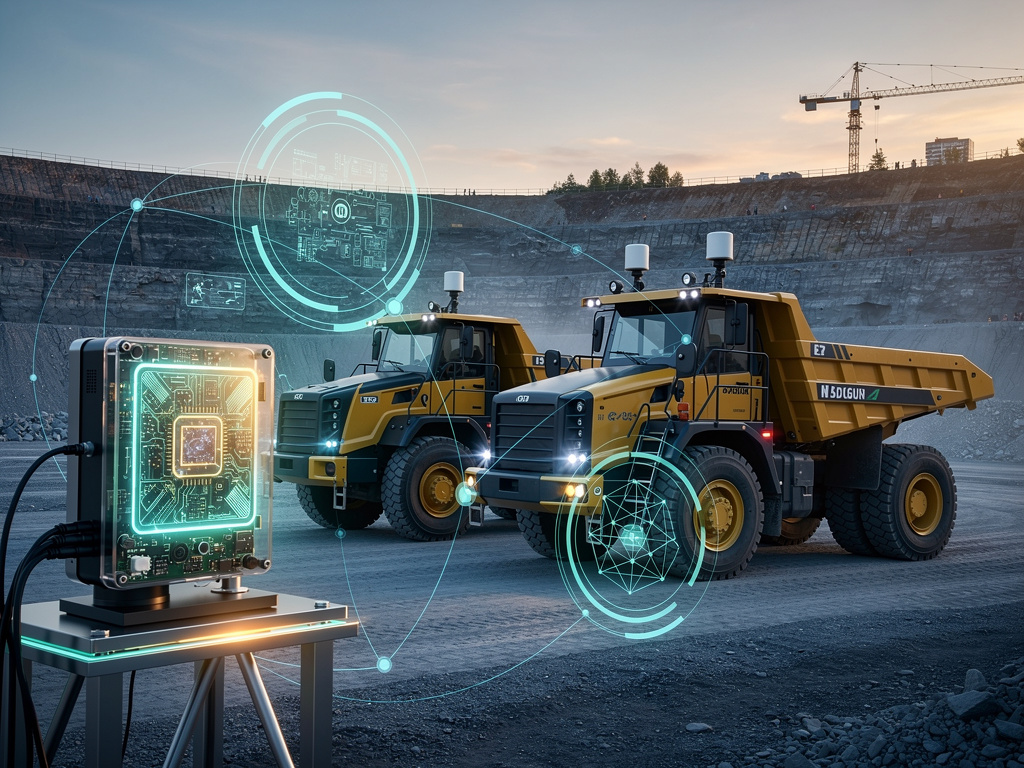
Digging into Tomorrow: Caterpillar and Nvidia’s Bold Bet on AI-Powered Earthmovers
In the bustling world of heavy industry, where massive machines reshape the earth and build the foundations of modern society, a seismic shift is underway. Caterpillar Inc., the iconic manufacturer of construction and mining equipment, has announced a groundbreaking collaboration with Nvidia Corp. to infuse artificial intelligence into its fleet of yellow behemoths. This partnership, unveiled at the Consumer Electronics Show (CES) 2026, promises to transform how excavators, bulldozers, and loaders operate on job sites around the globe. By leveraging Nvidia’s cutting-edge AI technologies, Caterpillar aims to create smarter, more autonomous machines that can think, learn, and adapt in real time.
The initiative, dubbed Cat AI, is already being piloted in one of Caterpillar’s excavators, built on Nvidia’s physical AI platform. This isn’t just about adding fancy gadgets; it’s a fundamental reimagining of industrial equipment. Imagine an excavator that not only digs trenches but also analyzes soil composition, predicts maintenance needs, and optimizes fuel efficiency on the fly. According to details shared in a recent article, this collaboration is set to roll out AI agents capable of processing vast amounts of data from sensors embedded in the machinery.
Industry experts are buzzing about the potential impacts. For years, construction has lagged behind sectors like automotive and logistics in adopting AI, but this move could accelerate the pace. Caterpillar’s decision to partner with Nvidia, a leader in graphics processing units and AI computing, underscores a strategic pivot toward digital innovation in an industry traditionally dominated by mechanical prowess.
Unlocking Real-Time Intelligence on the Jobsite
At the heart of this partnership is Nvidia’s Jetson Thor platform, which enables on-device AI processing without constant reliance on cloud connections. This is crucial for construction sites, often located in remote areas with spotty internet. Caterpillar’s Cat AI system will run directly on equipment, analyzing sensor data in milliseconds to provide operators with personalized insights, real-time coaching, and safety alerts. As reported by TechCrunch, the pilot involves AI agents that enhance machine autonomy, allowing them to navigate complex terrains and dynamic environments with unprecedented precision.
Beyond individual machines, the vision extends to entire fleets. Caterpillar envisions interconnected systems where AI serves as a “digital nervous system” for job sites. This could mean fleets of machines communicating seamlessly, sharing data on everything from weather conditions to equipment status, thereby boosting overall productivity. The company’s press release highlights how this technology processes billions of data points instantly, a feat made possible by Nvidia’s expertise in machine learning and computer vision.
The debut of the Cat AI Assistant at CES 2026 adds another layer of intrigue. Built using Nvidia’s Riva open speech models, this voice-activated tool acts as a proactive partner for operators. It can answer questions about equipment maintenance, recommend parts, and even provide personalized advice based on historical data. In-cab features include voice activation for hands-free operation, ensuring that drivers keep their focus on the task at hand while receiving critical updates.
From Concept to Concrete Applications
Caterpillar’s foray into AI isn’t starting from scratch. The company has been investing in autonomy for years, but this partnership with Nvidia elevates it to new heights. For instance, in mining operations, AI-equipped machines could autonomously haul materials, reducing human error and increasing efficiency in hazardous environments. Construction firms might see reduced downtime as predictive analytics foresee mechanical failures before they occur, potentially saving millions in repair costs.
Posts on X (formerly Twitter) reflect growing excitement among tech enthusiasts and industry watchers. Users have noted how this collaboration could make heavy equipment “smarter and faster,” with one post highlighting the “future of heavy industry getting a tech upgrade.” While these social media sentiments aren’t definitive, they indicate a positive buzz, especially following the CES announcements. Analysts suggest this could position Caterpillar as a frontrunner in industrial AI, much like how Tesla disrupted automotive with self-driving tech.
Nvidia’s role extends beyond hardware. The chipmaker is providing frameworks for physical AI, which simulates real-world physics in digital environments. This allows Caterpillar to test and refine AI models virtually before deploying them on actual machinery. As detailed in Nvidia’s own blog post on the collaboration, available at NVIDIA Blog, the integration of Jetson Thor with Caterpillar’s sensors creates a robust edge computing setup, ideal for the rugged demands of construction and mining.
Navigating Challenges in AI Adoption
Of course, integrating AI into heavy machinery isn’t without hurdles. Safety remains paramount; these are massive machines that could cause significant damage if something goes wrong. Caterpillar is addressing this by emphasizing AI as an augmentation to human operators rather than a replacement. The system provides recommendations and alerts, but final decisions rest with skilled workers. Regulatory bodies will likely scrutinize these technologies, ensuring they meet stringent safety standards before widespread adoption.
Cost is another factor. Upgrading fleets with AI capabilities requires substantial investment, which might deter smaller operators. However, Caterpillar argues that the long-term benefits—such as improved fuel efficiency and reduced maintenance—will offset initial expenses. In a press release from PR Newswire, the company outlines how AI-driven recommendations could process data at scales previously unimaginable, leading to operational savings.
Competition is heating up too. Rivals like Komatsu and John Deere have their own autonomy initiatives, but Caterpillar’s tie-up with Nvidia gives it a technological edge. Nvidia’s dominance in AI chips positions this partnership as a potential game-changer, potentially setting new industry standards. As one industry insider noted in discussions on X, this could be the “ChatGPT moment” for physical AI in heavy industry, echoing Nvidia CEO Jensen Huang’s comments at CES.
Economic Ripples and Future Prospects
The economic implications are vast. The global construction equipment market is projected to grow significantly, driven by infrastructure booms in developing nations. By embedding AI, Caterpillar could capture a larger share, especially in markets like Asia and Africa where labor shortages are acute. The partnership also aligns with broader trends toward sustainability; AI-optimized machines could minimize waste and emissions through precise operations.
Looking ahead, Caterpillar plans to expand Cat AI across its product lines, from compact loaders to massive mining trucks. The company’s CES keynote, as covered by Caterpillar’s official site, showcased prototypes that demonstrate autonomy at scale. This includes machines capable of self-navigation in variable conditions, a boon for disaster response or remote operations.
Investors are taking note. Caterpillar’s stock has seen positive movement following the announcement, with analysts from Yahoo Finance pointing to the strategic value of this tech infusion. Nvidia, already a darling of the AI boom, benefits from diversifying into industrial applications, reducing reliance on consumer tech sectors.
Voices from the Field and Broader Impacts
Feedback from early adopters is encouraging. Pilot programs in select job sites have reported increased productivity and operator satisfaction. One construction manager, quoted in an article from Interesting Engineering, described how real-time coaching helped novice operators perform like veterans, bridging skill gaps in the workforce.
On a societal level, this technology could reshape labor dynamics. While fears of job displacement loom, proponents argue it will create new roles in AI maintenance and data analysis. Training programs will be essential to upskill workers, ensuring the human element remains integral. Caterpillar is already partnering with educational institutions to develop curricula focused on AI in heavy equipment.
Globally, the partnership could influence supply chains. With AI enabling predictive maintenance, parts distribution becomes more efficient, potentially reducing global downtime in critical industries like mining and energy. As highlighted in a Canadian Mining Journal piece at Canadian Mining Journal, this is particularly relevant for resource extraction, where every minute of operation counts.
Pioneering a New Era in Industrial Innovation
As Caterpillar and Nvidia push boundaries, the collaboration serves as a blueprint for other industries. Agriculture, logistics, and even space exploration could adopt similar AI integrations. The emphasis on edge computing ensures reliability in disconnected environments, a key differentiator from cloud-dependent systems.
Challenges aside, the optimism is palpable. At CES 2026, demonstrations drew crowds, with attendees marveling at machines that “think” independently. This isn’t science fiction; it’s the next chapter in industrial evolution, where silicon meets steel to forge a more efficient future.
In wrapping up this deep exploration, it’s clear that Caterpillar’s alliance with Nvidia isn’t just about smarter excavators—it’s about redefining productivity, safety, and sustainability in heavy industry. As these technologies mature, they promise to build not just structures, but a more intelligent world. With ongoing developments, the full potential of Cat AI will unfold in the coming years, marking a pivotal moment for both companies and the sectors they serve.


 WebProNews is an iEntry Publication