
Prime Minister Mark Carney stood before reporters in Toronto on Thursday and laid out a plan. Canada would spend C$3.2 billion over the next decade to grow more fruits and vegetables at home, process more food domestically and loosen the grip of a handful of grocery giants on the retail market. The announcement came as grocery prices remain a top concern for voters and as global supply chains face repeated shocks.
The strategy marks the first formal national effort of its kind. It redirects existing funds and adds new money aimed at year-round production, expanded processing capacity and stronger local supply networks. Officials hope the moves will cut reliance on imports, ease price pressure for families and give independent grocers a better shot at competing.
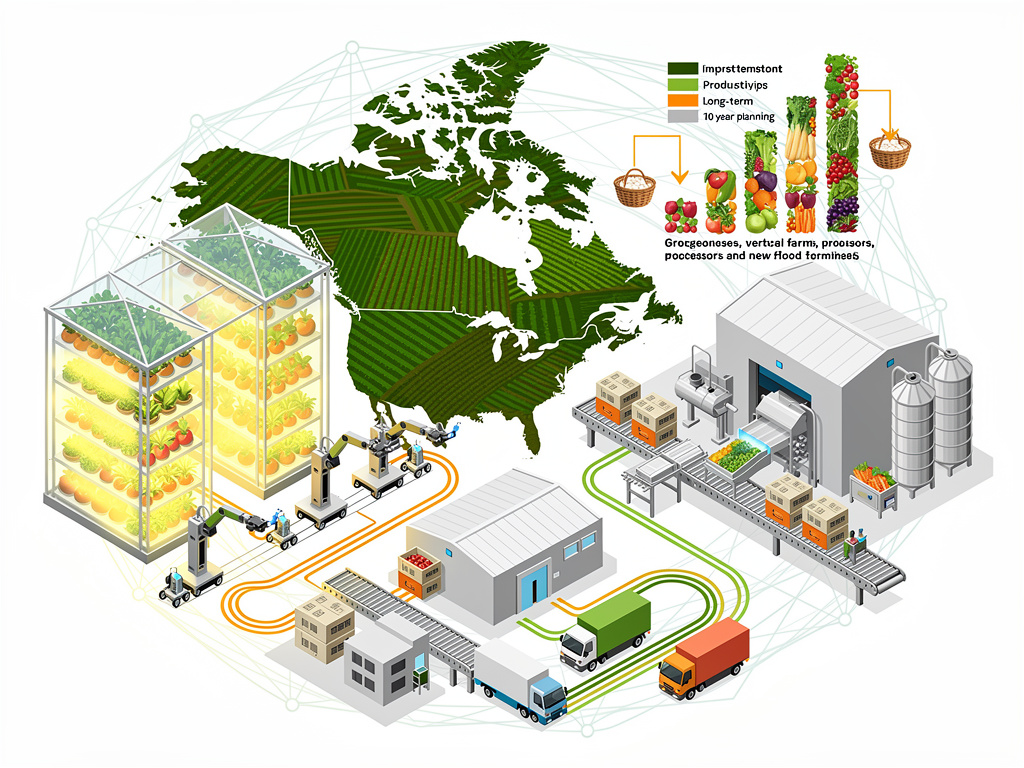
Details released by the government show C$750 million earmarked for controlled environment agriculture. That money targets greenhouses, vertical farms and similar facilities to produce fruits and vegetables outside traditional growing seasons. Another C$1 billion will flow through Farm Credit Canada to help small and medium-sized processors expand. The goal is straightforward. Stop shipping raw Canadian crops abroad only to buy back finished products later.
And then there is the retail side. A separate C$1 billion fund over 10 years will support new food terminals and regional hubs. The first two terminals are slated for construction by the end of 2028. These facilities should make it easier for smaller producers and independent stores to source Canadian goods without depending on the dominant retail chains. The government also plans to spend C$12.9 million a year to examine anti-competitive practices, including exclusive leases that block new entrants.
Carney was direct in his remarks. “We are going to grow more at home, process more at home and feed more Canadians with Canadian food,” he said, according to CBC News. The prime minister pointed to Canada’s position as the ninth-largest exporter of agri-food products yet the 11th-largest importer. That gap, he argued, leaves the country exposed.
The plan builds on earlier signals from the government. In January, Carney first spoke of developing a national food security strategy to strengthen domestic output and improve access to affordable, nutritious food. Thursday’s release puts dollar figures and timelines behind those words. It also includes regulatory tweaks. Faster approvals for new seeds, fertilizers and veterinary products. Temporary exemptions so meat processed in provincial facilities can cross provincial borders. An increase in the lifetime capital gains exemption for farm transfers to C$1.25 million.
Industry groups had called for exactly this kind of focus. A joint submission from farm organizations in March urged Ottawa to treat food production as a national priority on par with energy and supply chain security. The Canadian Federation of Agriculture and partners stressed the need for profitable farms, stable input costs and faster technology adoption. Their message was clear. Without strong farms, the rest of the system falters. (Canadian Federation of Agriculture)
Yet questions remain about execution. Canada already exports massive volumes of grains, oilseeds and meat. Domestic production of fresh produce, however, has lagged. Decades of trade agreements encouraged specialization. Imports fill supermarket shelves for much of the year. Recent data from Canada’s Food Price Report 2026 showed families facing nearly $1,000 in additional annual food costs. One in four households reports some level of food insecurity.
The new money for greenhouses and vertical farms attempts to address that seasonal weakness. Proponents say these systems can deliver consistent supply and reduce transport emissions. Critics point to high energy and capital costs. Success will depend on whether the C$750 million sparks enough private investment to move the needle on domestic share. Current estimates suggest Canada produces roughly 75 percent of its consumed food. The strategy aims to push that figure higher, though exact targets were not spelled out in every release.
Processing capacity sits at the center of the plan. Too often Canadian farmers send raw product south or overseas. Processors in other countries capture the added value and jobs. The C$1 billion processor fund seeks to reverse that flow. Protein Industries Canada has already partnered with companies to shift supply chains toward domestic ingredients. Its February announcement of nine new projects signaled early momentum in the sector. (Protein Industries Canada)
Retail reform may prove the toughest piece. Five large chains control about 75 percent of the grocery market. Independent operators struggle to secure shelf space and competitive supply terms. The new food terminals and hubs are designed to create alternative pathways. So too are the planned investigations into property control clauses that lock up prime retail locations. Whether these steps erode the dominance of the big players remains to be seen. Enforcement of the Grocery Code of Conduct, now fully in effect since January, will offer an early test.
Community-level efforts received attention as well. In March the government committed fresh support through the Local Food Infrastructure Fund. That program has already backed more than 1,400 projects with C$101 million to date. Agriculture and Agri-Food Minister Lawrence MacAulay stated that “Domestic food production is central to food security. By investing in local food infrastructure, we’re helping communities build more resilient systems and provide more nutritious food to Canadians who need it most.” (Government of Canada)
Analysts note the strategy arrives at a moment of heightened global concern. The World Bank reported food price inflation still running above 5 percent in many countries in early 2026. Supply chain risks, from weather events to trade tensions, have pushed governments everywhere to reassess self-reliance. Canada’s approach mixes production incentives with competition policy and community support. It avoids heavy subsidies for staple grains, where the country already holds advantages, and focuses instead on perishables and value-added activities.
But. Not everyone is convinced the scale matches the challenge. Some researchers argue Canada could aim higher. The Arrell Food Institute suggested the country has the land, water and climate trends to become the world’s leading food producer while cutting domestic hunger and emissions. Its analysis called for coordinated pillars around resilience, equity and productivity. The new strategy touches each area but stops short of such an ambitious overarching target. (Arrell Food Institute)
Policy Options, published by the Institute for Research on Public Policy, highlighted a disconnect between the food strategy and Canada’s new Defence Industrial Strategy. The latter makes no mention of food despite emphasizing secure supply chains. That omission, the article argued, undercuts claims of comprehensive national resilience. (Policy Options)
Recent coverage from Bloomberg and Reuters framed the announcement as a direct response to persistent grocery cost complaints. Both noted the mix of new spending and redirected funds. They also highlighted performance metrics attached to the plan. A 25 percent increase in local food sales by small and mid-sized producers by 2030 stands as one measurable goal.
Farm groups welcomed the attention on succession, regulation and processing. They have long warned that without profitable operations, productive land will exit the sector. The capital gains change and faster approvals address two perennial complaints. Still, they continue to press for broader trade and input cost measures that were not central to Thursday’s rollout.
The strategy also nods to northern and Indigenous communities. Additional funding for programs like the Northern Isolated Community Initiatives Fund aims to bolster traditional harvesting and local production systems. These efforts remain small relative to the overall package yet carry symbolic weight in a country with vast remote territories.
Implementation will test the government’s coordination skills. Multiple departments, from Agriculture and Agri-Food to Finance and Industry, must align. Provincial buy-in matters too, especially for terminal projects and meat inspection exemptions. Early reaction on social media ranged from cautious optimism among producers to skepticism that any government plan can outrun market forces or entrenched retail power.
Carney’s background as a former central banker and climate advocate shapes the framing. He presents the strategy as both an economic and resilience play. Higher domestic capacity should buffer against future disruptions. Greater competition should temper price spikes. And increased local production should deliver environmental gains if paired with sustainable practices.
Whether the numbers add up is another matter. The C$3.2 billion stretches across 10 years. Annualized, it represents a modest fraction of the overall agri-food economy. Private capital will need to follow. Tax measures, such as immediate write-offs for greenhouse investments announced earlier in the year, are meant to encourage exactly that response. Early data on uptake will be closely watched.
For now the plan exists on paper and in press releases. Its success will show up in grocery aisles, on farm balance sheets and in the market share of independent retailers. Canadians have heard promises before. This time the government has attached specific funds, deadlines and metrics. The question is whether those prove enough to shift a complex, trade-exposed food system in a meaningful direction.
One thing is certain. The conversation about food security has moved from the margins to the center of Canadian policy. How effectively Ottawa executes this strategy will influence not only grocery bills but also the country’s broader economic resilience for years ahead.


 WebProNews is an iEntry Publication