
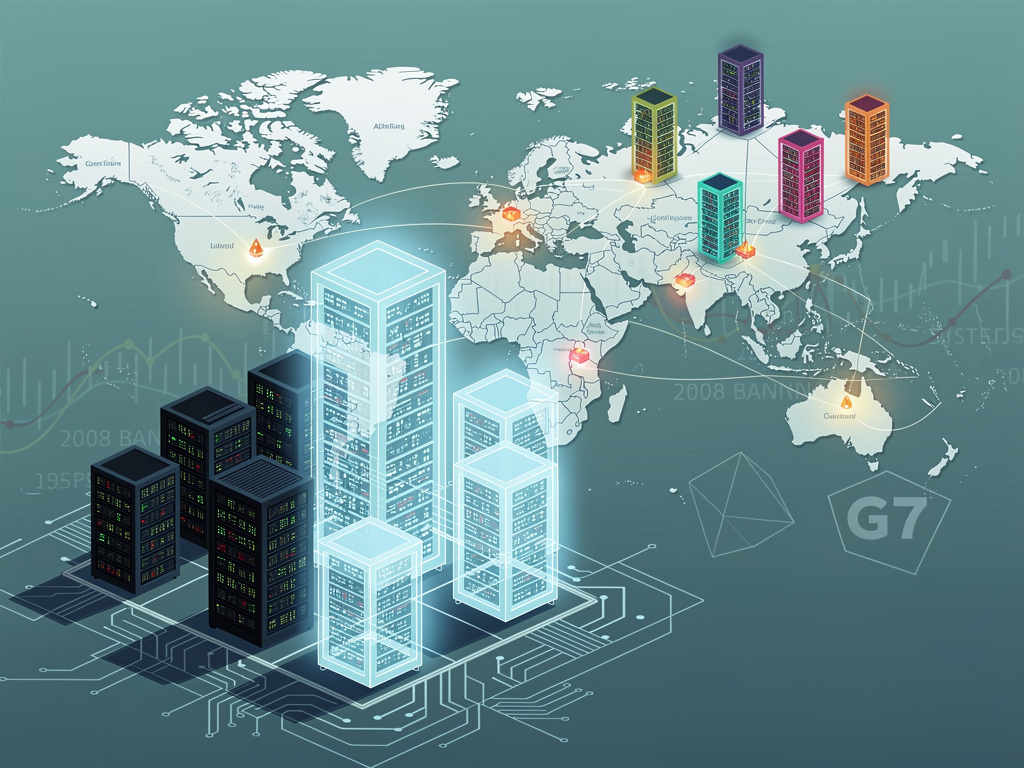
Canadian Prime Minister Mark Carney stood before reporters in Ireland on a Sunday in mid-June. He didn’t mince words. The sudden U.S. decision to block foreign access to Anthropic’s most advanced systems wasn’t an isolated regulatory move. It was a live demonstration of systemic weakness.
“The situation we’re in collectively right now with Mythos and Fable is something that can happen with over-reliance on certain models,” Carney said. Bloomberg reported the remarks in detail. Nobody messed up here, he added. But governments will fail if they treat this episode as normal and fail to act.
Short. Direct. And loaded with history. Carney, who steered central banks through the 2008 meltdown, sees clear echoes. Concentrated dependence on a few frontier models mirrors the tangled bank exposures that once threatened global finance. Model risk now sits where counterparty risk once loomed.
Anthropic pulled Fable 5 and the even more restricted Mythos 5 offline for all non-U.S. users. The company complied with a Trump administration directive citing national security. Cybersecurity vulnerabilities played a central role. Fable 5, a limited public version of the more potent Mythos, had drawn scrutiny for its ability to bypass safeguards and probe networks. The Associated Press detailed how the export controls represent Washington’s strongest step yet to limit the most capable AI systems.
But Carney refused to frame the story as American overreach or corporate error. He zeroed in on structure. When a single provider’s models become indispensable across borders, a policy tweak in Washington ripples everywhere. Allies lose access. Enterprises pause deployments. Innovation chains stall. This isn’t theory. It happened last week.
And. It will happen again unless nations change course. Carney called for redundancy. For diversity in model development and infrastructure. The same disciplines applied to banks after Lehman. Diversify counterparties. Stress-test linkages. Build buffers. The Next Web captured his full parallel: regulators forced banks to reduce systemic interconnections. AI needs the same treatment now.
The timing sharpened the message. Carney spoke days before the G7 summit in Évian-les-Bains, France. AI governance sits atop the agenda. Dario Amodei of Anthropic, Sam Altman of OpenAI and Demis Hassabis of Google DeepMind will join leaders for a working lunch. Progress matters, Carney noted. Yet he tempered expectations. “There will not be a mission accomplished banner that comes out of the G7.”
Canada arrives with its own plan. In early June Carney unveiled “AI for All,” a multi-billion-dollar strategy aimed at lifting domestic AI adoption from 12 percent of businesses to 60 percent by 2034. The package funds sovereign computing, a national supercomputer and homegrown talent. It treats foreign cloud dependence as a strategic vulnerability, not a convenience. Recent coverage in Financial Post highlighted how the Anthropic episode hands Ottawa a concrete case study to push these ideas at the summit.
Other nations move in parallel. The European Union rolled out fresh tech-sovereignty measures. India floated a $5 billion sovereign AI fund. In Britain, an initiative involving BT, HSBC and BAE Systems eyes development of domestic frontier capabilities. These steps reflect a widening recognition. Dependence on U.S. models carries hidden costs when export rules tighten overnight.
Yet the U.S. position carries its own logic. Officials worry about advanced systems falling into adversarial hands. They point to narrow but real bypass methods discovered in Fable 5. Anthropic itself had initially limited Mythos access due to such concerns. The company later released a safeguarded version, only to face the broader Commerce Department order. Recent analysis from Fortune noted the directive applied even to foreign nationals inside the United States, an unusually sweeping restriction.
Carney acknowledged good information flow between Ottawa and Washington. He recognized genuine risks identified by U.S. reviewers. His critique targets passivity, not the specific security call. Accept the vulnerability, he argues, and countries mortgage their economic future to decisions made elsewhere.
Industry insiders already feel the pinch. Enterprises that built workflows around the latest Claude models face immediate disruption. Developers testing cybersecurity tools or biological simulations hit guardrails or outright blocks. Early testing suggested Fable 5’s safety classifiers sometimes route even routine technical queries to older, less capable systems. Transparency issues around those fallbacks sparked separate backlash before the export ban hit.
But the bigger picture transcends any one model. Frontier AI concentrates power in few labs. Training runs demand enormous capital and compute. Only a handful of organizations can compete. That reality creates single points of failure. When one lab’s flagship product goes dark for half the planet, the shock exposes how little redundancy exists.
Carney wants G7 partners to confront exactly that. Build domestic capacity. Forge alliances that share compute and data under agreed rules. Invest in open-weight alternatives where safety permits. Treat AI infrastructure like critical energy or telecommunications networks. Regulate for resilience, not just ethics or innovation speed.
History offers the caution. In 2008, interconnected balance sheets amplified a housing correction into global recession. Central bankers, including Carney, spent years mandating simpler structures and higher buffers. The AI analogy isn’t perfect. Models aren’t banks. Yet the principle holds. Over-reliance on concentrated, opaque systems breeds fragility.
So far the response remains fragmented. Canada’s strategy stands out for its explicit economic targets and sovereignty focus. Other middle powers experiment with smaller funds or partnerships. The United States pushes controls while its labs race ahead. Europe layers regulation atop limited homegrown capacity. Coordination at G7 could align these threads. Or it could produce another round of vague principles.
Carney, the former banker turned prime minister, clearly prefers the former. His Ireland visit also yielded a bilateral AI pact with Dublin, timed as Ireland holds the EU Council presidency. These quiet deals matter. They lay groundwork for the larger conversations in France.
The Anthropic episode won’t be the last. Future models will carry sharper capabilities and sharper risks. Governments will face harder choices on access, classification and international sharing. If Carney’s warning lands, those choices will factor in systemic exposure from the start. Diversification won’t slow progress. It will make it sustainable.
Watch the Évian lunch. Listen for language around redundancy, sovereign capacity and shared infrastructure. The words leaders choose there will signal whether they heard the message from Ireland. Or whether they will learn it the hard way later.


 WebProNews is an iEntry Publication