
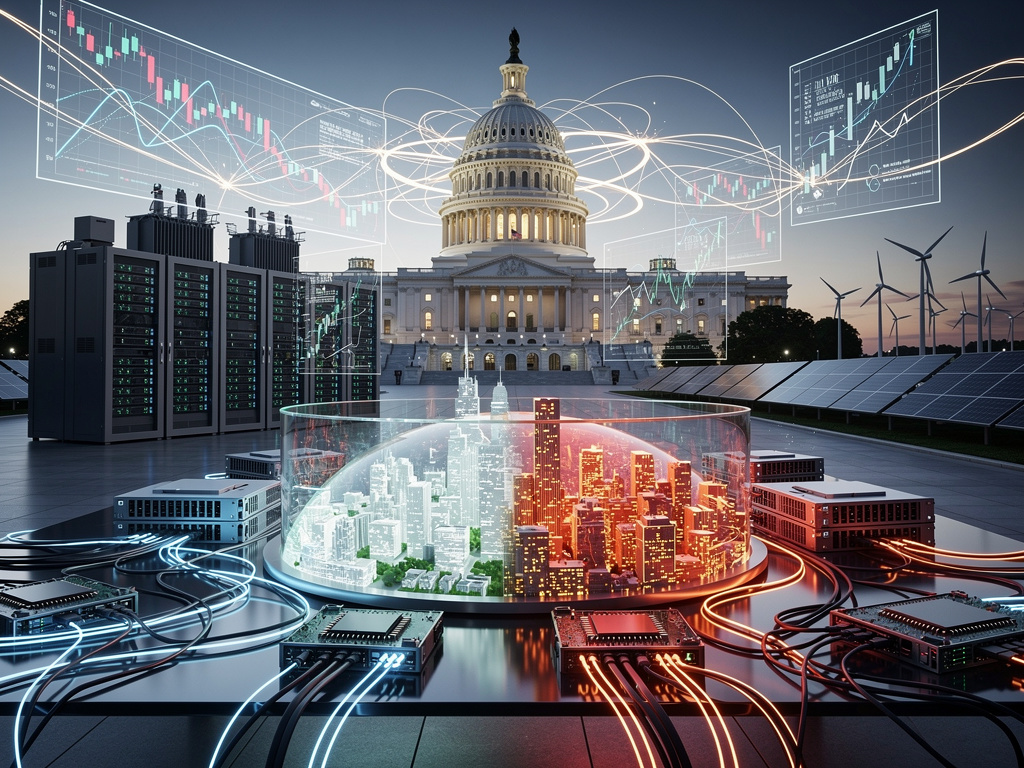
Capitol Hill’s Slow March into the AI Frenzy: Debating Bubbles Amid Tech’s Torrid Rise
In the corridors of power, where policy often lags behind innovation, a new conversation is bubbling up about artificial intelligence. Lawmakers are beginning to grapple with whether the explosive growth in AI investments represents a sustainable boom or an overinflated bubble ready to burst. This debate, long simmering in Silicon Valley boardrooms and Wall Street trading floors, is now echoing through Capitol Hill, with figures like Rep. Alexandria Ocasio-Cortez sounding alarms about potential economic fallout. As tech giants pour billions into data centers and advanced chips, politicians are questioning if this rush mirrors past manias like the dot-com era.
The catalyst for much of this discussion stems from recent market dynamics. AI-related stocks have driven a significant portion of U.S. market gains, with companies like Nvidia seeing their valuations skyrocket. Yet, skeptics point to the massive capital expenditures—hundreds of billions pledged for infrastructure—that may not yield immediate returns. This has prompted some in Congress to wonder if federal intervention or oversight is needed to prevent a crash that could ripple through the broader economy.
Beyond the financial implications, there’s a growing concern about the societal costs. Energy demands from AI operations are straining power grids, and there’s talk of how this could exacerbate inequalities or environmental issues. Politicians are starting to connect these dots, realizing that AI isn’t just a tech story but one with profound policy ramifications.
Voices of Caution and Optimism in Congress
Rep. Ocasio-Cortez has been vocal, warning that an AI bubble could leave ordinary Americans holding the bag, much like previous economic downturns. Her comments, highlighted in a recent Business Insider piece, underscore a divide on the Hill. While some Democrats push for regulatory safeguards, Republicans like Sen. Ted Cruz acknowledge uncertainties but emphasize the economic opportunities, stating that challenges are inevitable in any transformative shift.
This partisan split isn’t absolute, however. Bipartisan committees have held hearings on AI’s role in defense and cybersecurity, as detailed in updates from K&L Gates. For instance, a Senate Armed Services Subcommittee session in March 2025 explored AI’s integration into military strategies, stressing human oversight and the energy required to fuel these technologies. Such discussions reveal a Congress trying to catch up, balancing innovation with risk.
Industry leaders are also weighing in, influencing the debate. OpenAI’s Sam Altman has downplayed bubble fears, while others like Bill Gates express measured optimism. These perspectives, compiled in analyses from Business Insider, show a spectrum of views that lawmakers are digesting as they formulate positions.
Energy Demands and Infrastructure Strains
The sheer power hunger of AI systems is emerging as a flashpoint. Massive server farms and data centers are projected to consume electricity on a scale that could overwhelm aging U.S. grids, especially during extreme weather events. Posts on X from experts like Laurie Garrett highlight this risk, noting how AI and related tech could devour resources needed for everyday resilience.
This isn’t just theoretical; real-world investments are accelerating. Tech firms are seeking federal backstops for their buildouts, as noted in X discussions by users like DCinvestor, who point to OpenAI’s requests for funding support. Such pleas underscore the intersection of private ambition and public policy, with some arguing it’s a sign of overreliance on government to prop up potentially unsustainable growth.
Moreover, the global context adds urgency. Hearings have touched on competition with China, where energy capacity buildouts are seen as critical to maintaining U.S. leadership. Sen. Mike Rounds and others have emphasized this in subcommittee talks, warning that without rapid infrastructure upgrades, America risks falling behind in the AI arms race.
Market Parallels and Historical Lessons
Drawing parallels to the 2000 dot-com bubble, critics argue that today’s AI hype is built on promises rather than proven revenue streams. X posts from analysts like Shay Boloor contrast the eras, noting that while the internet bubble lacked infrastructure, AI has real adoption but faces scalability hurdles. This historical lens is informing Capitol Hill’s approach, with lawmakers referencing past crashes to justify caution.
Yet, optimists counter that AI’s tangible applications—in healthcare, finance, and beyond—set it apart. A New York Times article explores how ongoing technological advances continue to buoy investor confidence, even amid bubble talk. Big Tech’s investments, while enormous, are driving innovations that could pay off long-term.
The debt angle is particularly intriguing. Bloomberg has reported on how AI’s boom is increasingly financed through borrowing, shifting from cash-rich balance sheets to leveraged plays. This “AI debt bubble,” as some call it, could pose systemic risks if interest rates rise or returns disappoint, a concern that’s trickling into policy discussions.
Regulatory Horizons and Policy Shifts
As the Trump Administration signals interest in AI regulation, Capitol Hill is ramping up its scrutiny. Hearings and bills in the pipeline aim to address not just economic bubbles but ethical and security dimensions. For example, experts at Senate sessions have debated AI’s potential for blackmail or autonomous decision-making, as captured in X posts summarizing Anthropic’s testimony.
Internationally, the debate extends to governance gaps. A Reuters piece highlights the paradox: while leaders discuss AI rules, billions lack basic internet access, questioning the equity of this tech surge. This global view is influencing U.S. politicians to consider broader implications.
On the economic front, AI’s contribution to GDP is undeniable. X analyses from sources like StockMarket.News point out how data center expenditures have become a major growth driver, potentially insulating the economy from downturns but also concentrating risks in one sector.
Investor Sentiment and Future Trajectories
Sentiment on platforms like X reflects a mix of hype and skepticism. Posts warning of a burst, such as those attributing 80% of 2025 stock gains to AI firms, contrast with bullish takes on enterprise integration. Tech leaders predict AI becoming the backbone of business, shifting from experimentation to core operations.
However, doubters like Gary Marcus, referenced in recent X threads, argue we’re far from the promised reasoning capabilities, suggesting overvaluation. This tension is palpable in market analyses from Yahoo Finance, which questions if the S&P 500’s AI-fueled rise is sustainable.
Looking ahead, some foresee a soft landing rather than a spectacular pop. A 24/7 Wall St. piece suggests gradual corrections, influenced by figures like Michael Burry’s bets against AI winners. This nuanced view is gaining traction among insiders.
Sector-Specific Impacts and Broader Ramifications
In healthcare, executives debate AI’s bubble status while acknowledging its potential for workflows and outcomes, as seen in X posts from industry observers. This sector-specific lens shows how AI’s value proposition varies, complicating blanket bubble assessments.
Financially, off-balance-sheet debts from tech giants—totaling billions—are raising red flags. X users like Sargis Chilingaryan note how this could freak out regulators, echoing concerns in DNYUZ coverage of Washington’s evolving stance.
Politically, the debate is shaping 2026 agendas. With AI tied to national security and economic dominance, expect more hearings and perhaps legislation to mitigate risks without stifling innovation.
Evolving Narratives and Strategic Imperatives
The narrative is evolving from pure enthusiasm to critical examination. Business leaders’ weighs-ins, as in Business Insider compilations, reveal disagreements: Peter Thiel’s skepticism versus Jensen Huang’s bullishness on hardware demands.
Energy and infrastructure remain pivotal. X discussions highlight the need for massive buildouts to avoid losing ground to competitors, aligning with policy pushes for federal support.
Ultimately, Capitol Hill’s engagement could define AI’s trajectory. By addressing bubbles proactively, lawmakers might foster a more stable path forward, ensuring tech’s promise benefits society at large.
Global Competition and Domestic Priorities
Competition with China looms large, with hearings emphasizing AI’s role in cyber defense. K&L Gates recaps underscore the strategic imperatives, including energy demands that could strain resources.
Domestically, wealth concentration tied to AI assets worries economists. X posts link this to consumer spending dependencies, painting a picture of an economy precariously balanced on tech’s shoulders.
As 2026 unfolds, the debate will likely intensify, blending economic analysis with policy innovation to navigate this high-stakes terrain.


 WebProNews is an iEntry Publication