
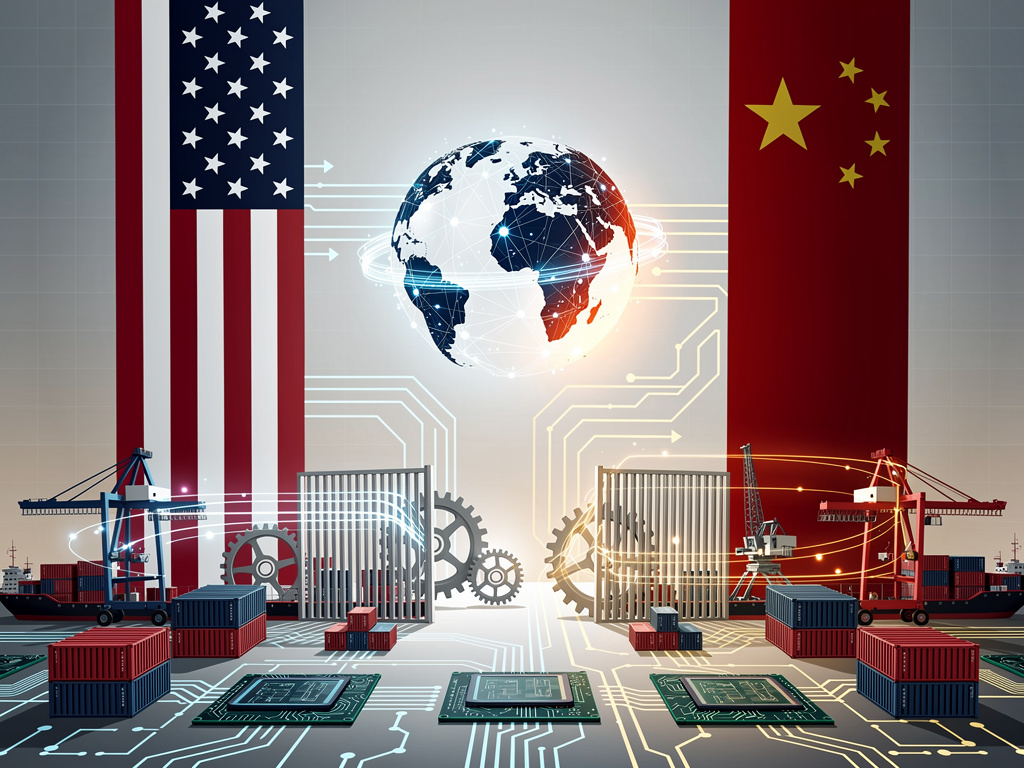
Top U.S. and Chinese economic officials traded pointed complaints over trade policies in a video call last Thursday, setting a tense tone just weeks before Presidents Donald Trump and Xi Jinping meet in Beijing. U.S. Treasury Secretary Scott Bessent and Trade Representative Jamieson Greer spoke with Chinese Vice Premier He Lifeng. Both sides called the exchange candid. Yet beneath the diplomacy, fresh frictions simmer. Reuters captured the details: Bessent warned that China’s new extraterritorial regulations chill global supply chains by punishing firms that shift sourcing away from Beijing. China fired back. Officials voiced serious concern over U.S. restrictive measures, including tariff probes targeting Chinese goods.
Bessent put it bluntly on X. “Our meeting was both candid and comprehensive, and I stressed that China’s recent provocative extraterritorial regulations have a chilling effect on global supply chains.” He added optimism, though. “I look forward to a productive summit between President Trump and President Xi in Beijing.” From Beijing’s side, state broadcaster CCTV described the talks as “candid, in-depth and constructive.” The goal? Resolve mutual economic issues. Expand pragmatic cooperation. Both agreed to keep talking through a consultation mechanism, aiming for healthy, stable ties between the world’s largest economies.
And there’s more. Greer floated a “Board of Trade” idea during the call—a government-to-government body to handle non-sensitive goods trade and boost U.S. agricultural access in China. Bloomberg reported the pitch, noting it as a potential tool for managing bilateral flows. U.S. Trade Representative’s office echoed this on X, with Greer stating the board could optimize trade while stressing farm market openings.
This call caps a bumpy road. Recall the October 2025 Busan summit. Trump and Xi forged an uneasy truce there, after Trump’s “Liberation Day” tariffs sparked retaliation—China curbed rare-earth exports, vital for U.S. tech and defense. The U.S. Supreme Court struck down Trump’s global duties in February, forcing fresh investigations. China responded with supply chain rules to hit companies diversifying away. Paris talks in March laid groundwork, discussing ag purchases and joint bodies. But Trump delayed his Beijing trip—from late March—due to the U.S.-Israeli war on Iran, rescheduling for May 14-15. Ties held steady amid energy disruptions from the Strait of Hormuz crisis.
Tensions run deeper. Ten steel groups urged Bessent, Greer, Secretary of State Marco Rubio, and Commerce Secretary Howard Lutnick to shield U.S. steel from Chinese investment, citing security risks. Industry warns against opening autos to Beijing too. China separately raised Taiwan with Rubio—Foreign Minister Wang Yi called it the “biggest point of risk” in ties. Broader curbs persist: U.S. limits tool shipments to a top Chinese chipmaker.
So what now? Markets watch closely. Optimism flickered post-call—copper prices ticked up on easing risk perceptions, per trading updates. But don’t count on breakthroughs. The Busan deal rewound escalation: China resumed soy buys, suspended rare-earth curbs for a year; U.S. cut tariffs 10%, lifted fentanyl duties. Still, root issues linger—tech controls, overcapacity, security. Trump eyes de-risking from China in key areas, with tariffs possibly easing to prior levels by July, Bessent has said.
Separate diplomacy overlapped. Wang Yi and Rubio talked too, per reports. China pushes steady relations despite U.S. moves. Beijing state media stressed willingness to promote sustainable development. Yet actions speak. New regs. New probes. Leverage builds on both sides.
Trump’s team signals resolve. Bessent prioritizes American competitiveness. Greer enforces fair trade. He Lifeng, Xi’s economic point man, balances complaints with cooperation pledges. The summit looms large. Will it yield a new framework? Or just manage the divide? History suggests truces over transformations. Beijing hosts. Trump visits first time in eight years. Stakes high. Global chains hang in balance.


 WebProNews is an iEntry Publication