
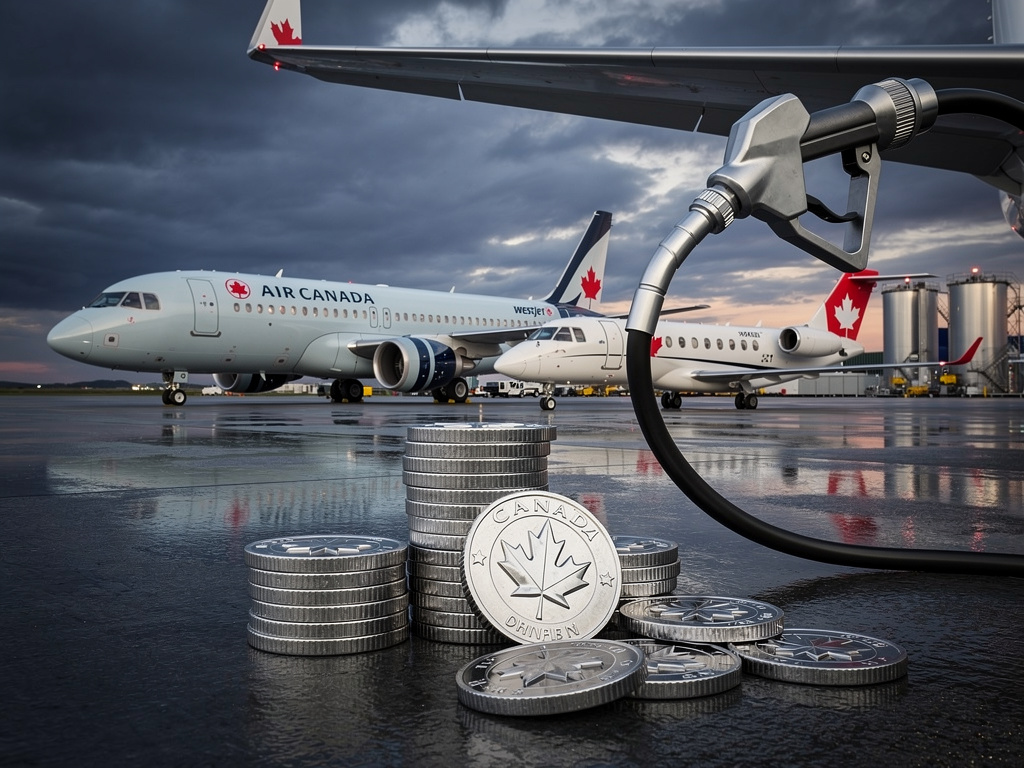
The Canadian government has introduced a specialized loan initiative aimed at helping airlines manage the financial pressures stemming from elevated fuel prices. This program arrives at a time when carriers across the country continue to recover from pandemic-related disruptions while facing ongoing cost increases that threaten their operational stability. According to reports from Investing.com, the measure specifically targets fuel cost challenges that have intensified in recent months due to global market volatility and supply chain constraints.
The initiative forms part of a broader strategy by Ottawa to support critical transportation sectors without resorting to direct subsidies that might draw criticism from fiscal conservatives. Industry observers suggest the loans will provide temporary breathing room for airlines dealing with jet fuel prices that have climbed more than 30 percent over the past year. These increases stem from a combination of geopolitical tensions, production decisions by major oil producers, and recovering demand for air travel that has outpaced supply in certain regions.
Air Canada, WestJet, and several smaller regional operators stand to benefit from the program, which offers favorable interest rates and flexible repayment terms tied to future revenue performance. Government officials emphasize that the loans come with strict accountability measures to ensure funds address fuel-related expenses rather than general operational shortfalls. This approach reflects lessons learned from previous support packages distributed during the height of COVID-19 restrictions when transparency concerns arose regarding how some recipients allocated public money.
The timing of this announcement coincides with peak summer travel season when fuel consumption reaches its highest levels. Airlines typically hedge against price fluctuations through futures contracts, but recent market unpredictability has limited the effectiveness of these strategies. Many carriers exhausted their hedging positions earlier than anticipated, leaving them exposed to spot market prices that have remained stubbornly high. The new loan program addresses this gap by providing access to capital that can cover immediate fuel purchases while longer-term contracts are renegotiated.
Economic analysts point out that aviation fuel represents roughly 25 to 35 percent of an airline’s total operating costs, making it the second-largest expense after labor. When prices spike, carriers face difficult choices between absorbing losses, raising ticket prices, or reducing flight frequencies. The latter option particularly concerns smaller communities that rely on regular air service for medical access, business connectivity, and tourism revenue. By offering this financial tool, federal authorities aim to prevent service cuts that could harm regional economies across provinces like Newfoundland, Saskatchewan, and British Columbia.
Transportation Minister Omar Alghabra described the program as a targeted response to circumstances beyond the airlines’ control. During a press briefing, he highlighted how global events including the conflict in Ukraine and OPEC production adjustments have created conditions that no single carrier could reasonably anticipate or fully mitigate. The minister stressed that the loans would be administered through Export Development Canada, an agency with extensive experience managing large-scale financing for strategic industries.
Industry groups have largely welcomed the development while calling for additional measures to address structural challenges facing Canadian aviation. The National Airlines Council of Canada noted that while fuel costs represent an immediate threat, other pressures including labor shortages, regulatory compliance expenses, and infrastructure fees continue to strain balance sheets. Spokespeople suggested the loan program should serve as a foundation for more comprehensive policy discussions about maintaining competitive air travel options for Canadian consumers.
From an environmental perspective, the initiative has sparked mixed reactions. Some climate advocates argue that supporting fossil fuel-dependent industries contradicts Canada’s commitment to reducing greenhouse gas emissions. Others counter that a stable aviation sector allows for gradual transition toward sustainable aviation fuels and more efficient aircraft technologies. The government has indicated that recipients of these loans will be encouraged to invest portions of their savings into cleaner technologies where feasible, though specific requirements remain under development.
Financial markets responded positively to the news, with shares of major Canadian carriers showing modest gains in the days following the announcement. Investors appear to view the program as a signal that Ottawa remains committed to preserving domestic aviation capacity despite competing budget priorities. Credit rating agencies have also taken note, suggesting that reduced financial uncertainty could help maintain or improve the debt profiles of companies like Air Canada that carry significant pandemic-era obligations.
The program’s structure includes several innovative features designed to align government and industry interests. Repayment schedules can be adjusted based on fuel price movements, with accelerated payments required during periods of lower costs. This mechanism creates a natural hedge for both parties and reduces the likelihood of long-term taxpayer burden. Additionally, the loans include covenants that limit executive compensation increases and dividend payments until principal amounts are substantially repaid, addressing public concerns about corporate governance in previously supported sectors.
Smaller carriers operating in remote areas have expressed particular appreciation for the tailored approach. Companies serving northern territories often operate with thinner margins and less ability to pass costs onto passengers who already face high travel expenses. The loan criteria reportedly take these unique circumstances into account, offering more generous terms for operators whose routes serve indigenous communities or support resource development projects critical to national economic interests.
International comparisons reveal that Canada’s approach differs from strategies adopted by other nations. The United States has primarily relied on tax incentives and infrastructure spending to support its carriers, while several European countries have opted for direct equity injections or more substantial subsidy programs. Canadian officials maintain that their loan-based model strikes an appropriate balance between providing necessary assistance and maintaining market discipline. They point to successful applications of similar financing tools in the agriculture and manufacturing sectors as evidence that targeted lending can produce positive outcomes without distorting competition.
Looking ahead, the success of this program will likely be measured not only by how many airlines participate but also by whether it prevents significant service disruptions or bankruptcies. Industry experts caution that while the loans address fuel costs, they cannot resolve all challenges facing the sector. Persistent pilot shortages, aging aircraft fleets, and evolving passenger expectations for sustainable travel options will require ongoing attention and investment.
The initiative also reflects broader governmental recognition of aviation’s strategic importance to Canada’s economy. Beyond direct employment of approximately 200,000 workers, the industry facilitates trade, tourism, and family connections across vast distances. In a country characterized by challenging geography and dispersed population centers, reliable air service functions as essential infrastructure comparable to roads and railways. This perspective helps explain why policymakers have moved quickly to implement support measures when specific threats emerge.
As global fuel markets continue to fluctuate, the Canadian loan program may serve as a model for other nations seeking pragmatic solutions to similar pressures. Its emphasis on accountability, performance-based terms, and strategic industry support offers an alternative to both unrestricted subsidies and complete market withdrawal. Whether the approach proves sufficient to stabilize the sector through current challenges will become clearer in coming quarters as airlines report their financial results and operational metrics.
The program’s rollout includes comprehensive monitoring mechanisms to track fund usage and economic impacts. Regular reporting requirements will provide transparency for taxpayers while offering government officials data to refine future support initiatives. This evidence-based approach to policy implementation represents an evolution in how Ottawa engages with strategic industries facing external shocks.
For Canadian travelers, the ultimate test will be whether the assistance translates into stable fares and reliable schedules. Early indications suggest that participating airlines plan to maintain current route networks while using the financial flexibility to optimize fuel purchasing strategies. This outcome would represent a positive development for consumers who have endured years of uncertainty regarding air travel availability and pricing.
The Canadian government’s decision to launch this loan program demonstrates a pragmatic response to immediate industry needs while acknowledging longer-term structural considerations. By providing targeted financial support tied to specific cost pressures, authorities have created a mechanism that balances competing interests of fiscal responsibility, economic stability, and sectoral competitiveness. As implementation proceeds, stakeholders across the aviation value chain will watch closely to assess both short-term relief and potential contributions to more sustainable industry practices in years ahead. The measure adds another chapter to the complex relationship between public policy and commercial aviation in Canada, one that continues to evolve in response to global economic forces and domestic priorities.


 WebProNews is an iEntry Publication