
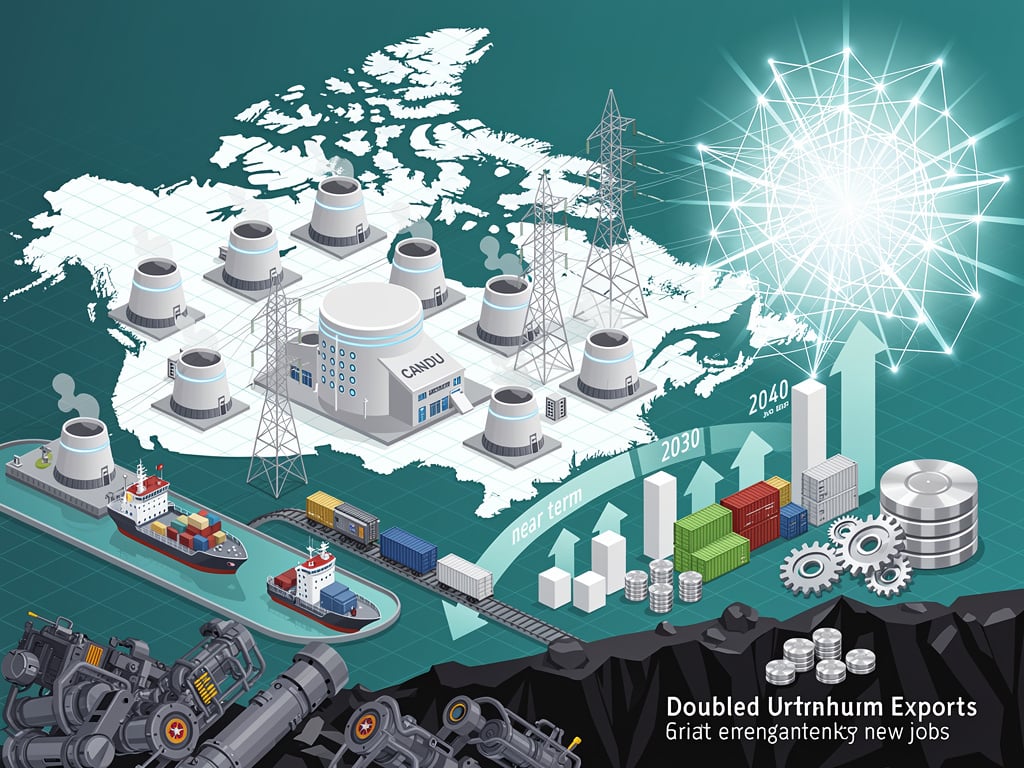
Energy and Natural Resources Minister Tim Hodgson stood in Newmarket, Ont., on June 22 and laid out an ambitious federal blueprint. Canada would build up to 10 new large-scale reactors. It would modernize its homegrown CANDU technology. And it would position itself as a preferred global supplier of nuclear systems and uranium fuel. The 23-page document, released that day, carries a clear message. Nuclear power stands as essential to doubling the electricity grid, securing affordable baseload energy, and claiming a larger share of a booming international market.
The strategy organizes its goals around four pillars. Those include enabling new builds across the country, becoming a supplier and exporter of choice, expanding uranium production together with nuclear fuel opportunities, and advancing fresh Canadian nuclear innovations. Hodgson called it a coordinated targeted plan for the nuclear sector at home and abroad. A plan that will mean new tools, new partnerships, new builds. Most importantly, a new civilian nuclear renaissance for Canada.
It’s a renaissance because this is not the start of something completely new. We are writing the next chapter in one of Canada’s greatest industrial success stories, Hodgson added. The timing feels deliberate. Global interest in nuclear energy has surged. Thirty-eight countries have endorsed tripling capacity by 2050. Canada already generates about 15 per cent of its electricity from four nuclear plants, three in Ontario and one in New Brunswick. Yet the country possesses decades of expertise, a strong supply chain, and CANDU reactors operating in nations from South Korea to Romania.
Specific targets fill the document. Ensure a modernized, cost-competitive CANDU design is available by 2030. Enable construction of up to 10 new large-scale reactors within Canada, with two under construction by 2035 and five more planned or under development by 2040. At least one reactor under construction outside Ontario by 2035. Finalize a Canadian-made microreactor by 2035 and deploy it to a remote community by the late 2030s. Double uranium exports. Break into at least four new international markets by 2040 while engaging six to 10 new nuclear entrant countries over 15 years.
Officials briefed reporters that the construction bill could exceed $100 billion. The strategy offers no dedicated new funding. Instead it points to vehicles such as the Canada Growth Fund, the Canada Infrastructure Bank, green bonds, loan guarantees, and scaled-up private capital from pension plans and sovereign wealth funds. A draft nuclear financing policy is promised by April 2027. Natural Resources Canada has also proposed shifting impact assessments for nuclear projects to the Canadian Nuclear Safety Commission from the broader Impact Assessment Agency. Consultations continue after pushback from environmental and Indigenous groups.
Ontario has already moved. The province partnered with Ottawa on the Darlington New Nuclear Project, where the first BWRX-300 small modular reactor in the G7 is under construction. Site work has advanced. The foundation for the reactor building is in place. Ontario Power Generation expects the unit to power 300,000 homes and support 3,700 jobs annually once operating, with 18,000 jobs during peak construction. Saskatchewan eyes SMRs for the mid-2030s. Alberta has signaled interest through energy agreements with Ottawa. New Brunswick continues to explore additional capacity.
But the federal plan leans hard on CANDU. The strategy mentions the technology dozens of times. It highlights that CANDU reactors do not require enriched uranium, a fuel Canada does not produce domestically. That fact gains new weight as Western allies seek to reduce dependence on Russian supplies. The government wants to bolster the entire domestic CANDU supply chain, complete a modernized design by 2030, and treat reactor exports as an instrument of foreign and industrial policy. Reactor exports are not transactional. They establish multi-decade partnerships, creating durable geopolitical and commercial relationships that advance Canada’s broader foreign policy interests, the document states.
As Canada works to diversify its trading relationships and strengthen ties with middle powers, CANDU can be a central instrument of that strategy. The approach carries risks. CANDU competes with designs such as Westinghouse’s AP1000. Brookfield Asset Management holds interests in rival technology, a point noted amid Prime Minister Mark Carney’s ethics screen that kept him away from strategy development because of past financial ties to the firm. Carney was not shown the document. Government officials emphasized he played no role.
Industry voices welcomed the clarity. Ontario’s Energy and Mines Minister Stephen Lecce said nuclear power will be a key driver of jobs, growth, and long-term competitiveness. The province has long called for federal investment to build out the next generation of made-in-Canada nuclear energy. The Canadian Nuclear Association and supply chain companies see potential for tens of thousands of additional positions. Hodgson projected the current 90,000 direct and indirect nuclear jobs could double to more than 180,000 in the coming decades.
Opposition came quickly. Conservative Leader Pierre Poilievre dismissed the release. An announcement will not build anything. And this is the problem we’ve had with the Carney Liberals is their promises are being reported on as results and so far there have been no results. Poilievre called for repeal of anti-development laws, depoliticizing the nuclear regulator, and removing perceived Liberal obstacles to get actual projects completed.
Recent coverage adds texture. A Globe and Mail report obtained the document and noted the emphasis on a fleet-based approach to achieve economies of scale while keeping costs in check. It also flagged the absence of firm new spending commitments and the challenge of long timelines and high capital demands that have caused past projects to lose priority. The piece described nuclear as a triple threat for economy, energy transition, and sovereignty, yet warned that hesitation is not a neutral choice. It is a decision to cede ground that will be difficult to recover.
BNN Bloomberg’s account, published the same day, stressed Hodgson’s framing of the strategy as the next chapter in Canada’s nuclear story and highlighted the link to last month’s Clean Electricity Strategy that aims to double the grid by 2050. It quoted officials confirming the potential $100-billion-plus price tag and the role of existing funding mechanisms. Ontario’s memorandum of understanding with New York State to share nuclear technology development also surfaced in reporting.
Earlier signals pointed toward this moment. In April the government announced it was preparing the strategy around the same four pillars. A March Reuters story reported Hodgson’s comments at a financial summit that a comprehensive electricity and nuclear plan would arrive soon. Provincial interest has grown in parallel. Saskatchewan continues evaluating large reactors. Alberta and Ottawa have agreed to collaborate on nuclear options. Canadian Nuclear Laboratories has invited proposals for SMRs at Chalk River and explored microreactors for remote and defense needs.
Yet questions linger on execution. Nuclear projects remain expensive and complex. Regulatory streamlining is proposed but not yet in force. Fuel security forms another gap. Canada mines uranium but lacks domestic enrichment capacity, the only G7 nuclear nation in that position. A May analysis in Policy Options warned that reliance on foreign enriched uranium, particularly from Russia, poses strategic risks as SMR fleets expand. The new strategy hints at boosting domestic enrichment if CANDU exports fall short.
Private capital interest is rising. Institutional investors have placed bets on nuclear abroad. The federal plan seeks to channel more of that money into Canadian projects through de-risking measures and clearer policy signals. Pension funds and sovereign wealth vehicles are singled out. Success will depend on provinces choosing technologies, utilities signing firm contracts, and the supply chain scaling without major delays.
The Darlington project offers a live test case. Construction progress includes completed excavation, a massive basemat installed 35 metres down, and work on turbine and administrative buildings. The Canadian Nuclear Safety Commission cleared a key regulatory hold point in March 2026. If that first SMR unit comes online near the end of the decade as planned, it could build confidence for the larger ambitions outlined this week.
Canada enters this push from a position of strength. Its CANDU fleet has operated safely for decades. The regulator enjoys international respect. Uranium resources are abundant. But the window is narrowing. Other nations are investing heavily and courting the same markets. The federal document warns that delay means lost opportunities that prove hard to regain. Hodgson and his officials have delivered a detailed roadmap. Whether provinces, industry, and private capital translate those words into steel and concrete will determine if the renaissance actually arrives.
And the stakes extend beyond electricity. Nuclear partnerships create long-term geopolitical ties. They support hydrogen production, industrial heat, and remote community power. They reinforce energy security at a time of global uncertainty. The strategy makes those connections explicit. For an economy seeking to reduce emissions while growing demand from data centers, electric vehicles, and manufacturing, the bet on nuclear looks increasingly difficult to ignore.


 WebProNews is an iEntry Publication