
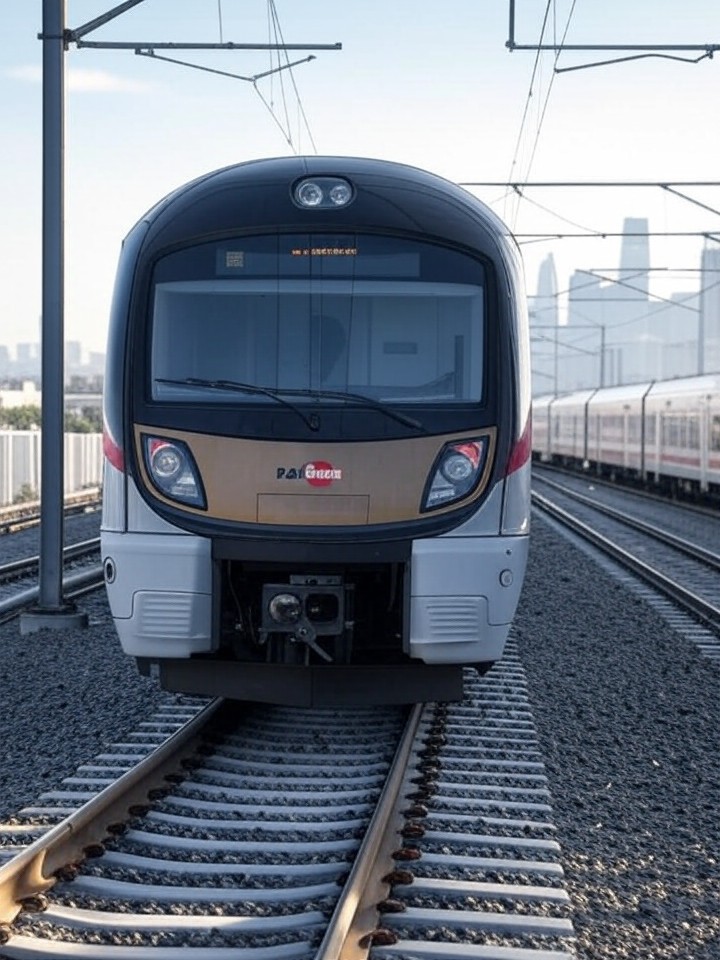
Electrifying the Tracks: How Caltrain’s Overhaul is Redefining American Commuter Rail
In the heart of California’s Silicon Valley, a transformation is underway that’s capturing the attention of transportation experts nationwide. Caltrain, the commuter rail line connecting San Francisco to San Jose and beyond, has undergone a massive electrification project, resulting in surging ridership and a model for modern regional rail. This shift from diesel to electric power isn’t just about cleaner air—it’s reshaping how Americans think about public transit in an era of hybrid work and environmental imperatives.
The project’s roots trace back to the early 2010s, when plans for the Caltrain Modernization Program were set in motion. Funded through a mix of federal grants, state propositions, and local contributions, the initiative aimed to replace aging diesel trains with sleek electric multiple units. According to details from the Wikipedia entry on the Caltrain Modernization Program, the total cost ballooned to $2.44 billion by late 2021, reflecting delays and additional expenses, yet it promised faster, more frequent service.
Ridership figures tell a compelling story. In Fiscal Year 2025, Caltrain carried 9.1 million passengers, a 47% jump from the previous year. Monthly totals exceeded one million for the first time post-pandemic in June 2025, with similar highs in July and August. This growth, as highlighted in a blog post from the High Speed Rail Alliance, underscores the appeal of all-day, frequent service over traditional peak-hour commuting.
The Push for Electrification and Its Operational Gains
Electrification wasn’t merely an environmental choice; it was a strategic necessity. The new Stadler KISS electric trains offer superior acceleration, allowing for tighter schedules and more stops without sacrificing speed. Service frequency has increased by 20%, with half-hourly trains all day, every day, and even hourly limited-stop options during peaks. Weekend service doubled, making the system more versatile for non-work trips.
This model aligns with international best practices, as noted in the Seamless Bay Area blog on the California State Rail Plan. By prioritizing service outcomes—like reliability and connectivity—over mere infrastructure builds, Caltrain has created a network that integrates seamlessly with buses, bikes, and other modes. The result? A 60% ridership spike in the months following electrification compared to the prior year.
Funding played a pivotal role, with significant backing from the California High-Speed Rail Authority. A press release from the Governor of California emphasizes how a $714 million investment not only electrified the corridor but also paves the way for future high-speed rail integration. This interconnected vision is crucial for scaling up regional mobility.
Challenges in Funding and Infrastructure Upgrades
Despite the successes, hurdles remain. Cost overruns, initially pegged at $1.9 billion, escalated due to delays in 2021, adding hundreds of millions. The Metropolitan Transportation Commission, a key partner as per its project page, contributed to upgrades like positive train control and level boarding platforms, essential for accessibility and efficiency.
On the ground, the transition involved overhauling 51 miles of track, installing overhead catenary systems, and testing new trainsets starting in 2023. Insights from a National Academies report detail how electrification met air-quality goals and complied with high-speed rail funding agreements, switching from diesel to zero-emission operations.
Public sentiment, gleaned from recent posts on X, reflects enthusiasm mixed with calls for broader adoption. Users highlight the ridership boost and urge similar electrifications elsewhere, pointing to Caltrain as a blueprint for revitalizing underused rail lines amid shifting work patterns.
Economic and Environmental Ripple Effects
The benefits extend beyond ridership. Electrification reduces greenhouse gas emissions, aligning with California’s ambitious climate targets. By eliminating diesel exhaust, Caltrain improves air quality along the densely populated Peninsula corridor, benefiting communities from San Francisco to Gilroy.
Economically, the project stimulates development. Faster travel times—now up to 20% quicker on express routes—make areas like Palo Alto and Mountain View more accessible, boosting real estate and business activity. The American Public Transportation Association recognized Caltrain as the fastest-growing transit agency in December 2025, a nod to its post-pandemic recovery.
Integration with the broader state rail plan is another win. The Caltrans California State Rail Plan emphasizes equity and resiliency, incorporating feedback from regional workshops to ensure benefits reach underserved populations. This service-led approach, focusing on rider needs, has made Caltrain a linchpin in California’s zero-emission transportation future.
Lessons for National Rail Modernization
Caltrain’s story offers valuable insights for other regions. In places like Chicago or New York, where commuter rails still rely on outdated diesel fleets and rush-hour schedules, adopting a regional rail model could unlock similar gains. Frequent, all-day service caters to flexible lifestyles, from remote workers to leisure travelers, potentially reversing decades of declining ridership.
Comparisons to global systems are instructive. Europe’s S-Bahn networks in cities like Berlin provide seamless, high-frequency service, much like Caltrain’s new timetable. Domestically, the push for electrification ties into federal initiatives, with the Federal Transit Administration providing $647 million via its Core Capacity grant, as detailed in the aforementioned Wikipedia entry.
However, challenges like funding shortfalls loom. A recent East Bay Times article warns of a projected $75 million annual deficit from 2027 to 2035 without new revenue sources, despite 57% ridership growth in 2025. This underscores the need for sustainable financing models, perhaps through congestion pricing or public-private partnerships.
Future Horizons and High-Speed Integration
Looking ahead, Caltrain’s electrification sets the stage for California’s high-speed rail ambitions. The corridor will eventually link to the Central Valley segment, creating a unified network from San Francisco to Los Angeles. A Newsweek piece outlines plans for 2026 advancements, emphasizing how shared tracks with Caltrain accelerate progress.
Community impacts are profound. Enhanced connectivity reduces reliance on cars, easing traffic on Highway 101 and cutting commute times. For industry insiders, this means rethinking rail as a backbone of multimodal systems, integrating with emerging tech like autonomous shuttles for last-mile solutions.
Posts on X from transportation advocates echo this optimism, praising the 47% ridership surge and calling for nationwide replication. Yet, they also note ongoing issues, such as the need for better integration with local buses to avoid service silos.
Sustaining Momentum Amid Uncertainties
To maintain gains, Caltrain must address operational kinks. Early teething problems with the new fleet, including software glitches, have been reported, but overall reliability has improved. The doubled weekend service has particularly appealed to families and tourists, broadening the user base beyond commuters.
Broader policy implications are clear. As noted in the High Speed Rail Alliance blog, this success argues for every North American commuter railway to embrace regional rail principles—fast, frequent, and flexible. It’s a departure from antiquated models focused solely on 9-to-5 workers.
Federal and state investments, like the $19 million awarded by Caltrans for San Joaquin Valley improvements as per a Caltrans news release, signal growing support for rail enhancements. These funds support extensions like the Downtown Rail Extension to San Francisco’s Salesforce Transit Center, further embedding Caltrain in urban fabrics.
Innovating for Equity and Resilience
Equity remains a core focus. The state rail plan’s workshops, as described on the Caltrans site, gathered input on eliminating barriers and distributing benefits fairly. For Caltrain, this means affordable fares, accessible stations, and outreach to low-income communities, ensuring the electrification dividend isn’t limited to tech hubs.
Environmental resilience is another pillar. Electric trains are less vulnerable to fuel price volatility and contribute to California’s goal of a zero-emission rail network by mid-century. In an age of climate change, such adaptations are vital for long-term viability.
Industry experts see Caltrain as a case study in adaptive infrastructure. By leveraging high-speed rail funds for local upgrades, it demonstrates efficient resource allocation. As one X post from a rail enthusiast put it, the project’s completion after years of planning shows the power of persistent investment in public transit.
Charting the Path Forward
As Caltrain approaches its second year of electrified operations, the metrics are promising. With over 104 trains daily and one million monthly riders, as reported in a Railway Age success story, it’s a testament to thoughtful modernization.
Yet, scaling this model nationally requires political will and innovative funding. Regions eyeing similar transformations should study Caltrain’s blend of technology, service design, and community engagement.
In the end, Caltrain’s evolution from a diesel-dependent line to a vibrant regional network illustrates the potential of rail in America’s mobility future. It’s not just about moving people—it’s about building connected, sustainable communities that thrive in a changing world.


 WebProNews is an iEntry Publication