
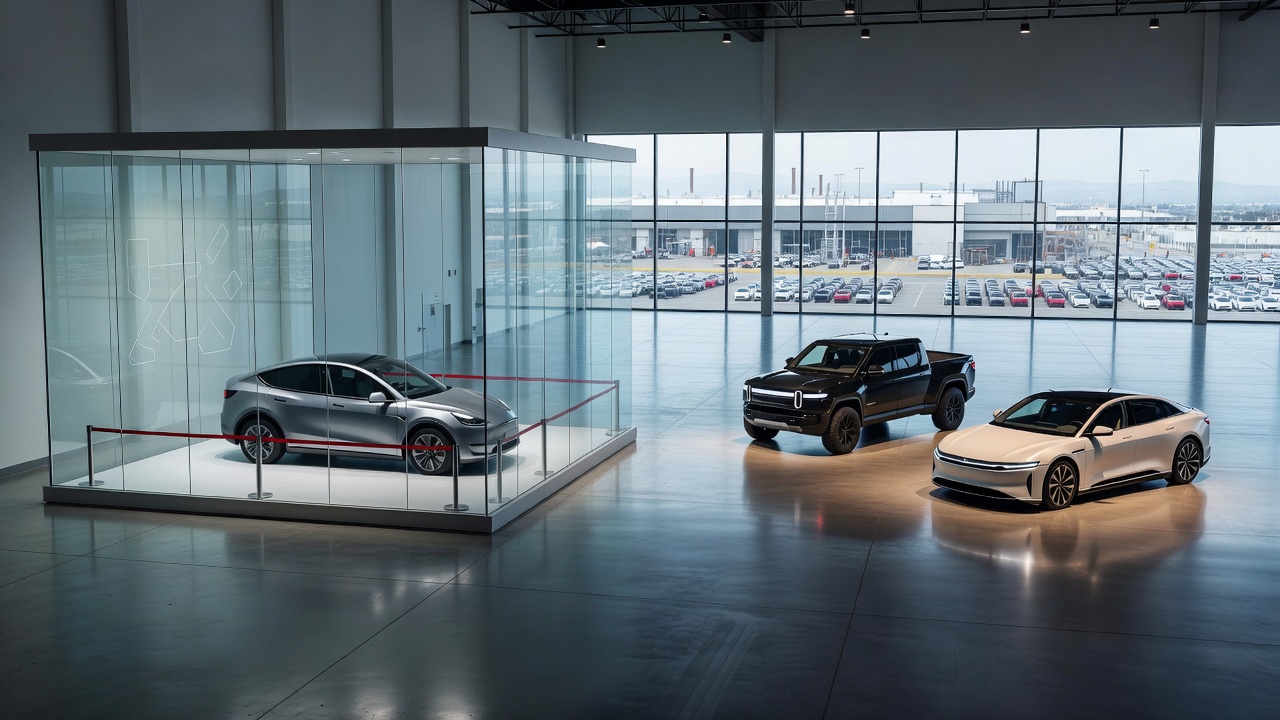
California just handed electric-vehicle buyers a fresh set of incentives. The $135 million program aims to keep first-time purchasers loyal after federal tax credits vanish. Yet one name stands out by its absence. Tesla.
The rules favor companies still headquartered in the state. Rivian and Lucid qualify for waivers on price caps. Tesla does not. The distinction appears deliberate. And it fits a longer pattern of tension.
Lawmakers set the bar at $50,000 for new vehicles and $25,000 for used ones. That excludes many models on the market. But California-based manufacturers dodge those limits entirely. Rivian’s R2 starts near $45,000 yet many variants exceed the threshold. Lucid’s Air begins at $70,990 and the Gravity at $79,990. Both can still participate fully.
Tesla builds cars at its Fremont factory. The company once called California home. It moved headquarters to Texas in 2021. That relocation, combined with years of public clashes between Elon Musk and Gov. Gavin Newsom, seems to explain the exclusion. Yahoo Finance laid out the details in a report published July 5, 2026.
Some Tesla models fall under the $50,000 line. First-time buyers could still choose them. The program, however, signals clear preference for in-state players. No application process required. Just the purchase. The message lands with force.
This latest move doesn’t arrive in isolation. Regulators have tangled with Tesla for years. In December 2025 the state’s Department of Motor Vehicles threatened a 30-day sales suspension. Officials cited misleading marketing around Autopilot and Full Self-Driving features. A judge had already ruled the company overstated capabilities. Tesla brushed aside the claims. Not one customer complained, executives said. Al Jazeera covered the escalation.
Earlier disputes reached deeper. During the 2020 pandemic Musk defied local health orders and reopened the Fremont plant. He sued Alameda County. The standoff drew national attention. It previewed the billionaire’s willingness to challenge state authority.
Content moderation battles followed. X, formerly Twitter, sued California over a 2022 law requiring transparency reports on how platforms handle hate speech, disinformation and harassment. Musk’s company argued the measure violated the First Amendment. The suit remains a flashpoint in the broader tech regulation fight.
Even Musk’s expanding ventures face pushback. SpaceX secured an apology from California regulators in April 2026 after settling claims of political bias by the Coastal Commission. The episode underscored persistent friction across Musk’s portfolio.
Yet Tesla maintains deep roots here. Fremont remains a manufacturing cornerstone. Recent hiring notices show the company recruiting managers for Model Y production lines, signaling continued investment. Optimus humanoid robots may soon roll off repurposed assembly lines at the same site. Production could begin as early as late July 2026.
Robotaxi ambitions add another layer. Musk said in July 2025 that Tesla would expand the service to the San Francisco Bay Area within months, pending approvals from state agencies. Success hinges on cooperation from the very regulators who have clashed with him repeatedly. Reuters reported the timeline.
California’s EV market matters enormously. The state once led adoption. Tesla dominated early sales. Registrations for its Model 3 fell sharply in 2024, down 36 percent in its largest U.S. market. Slumping demand, rising competition and policy headwinds all play roles. Bloomberg noted the buyer incentives Tesla offered to counteract softness.
Rivals sense opportunity. Rivian and Lucid gain direct financial help from the new program. Both maintain significant operations inside California. Their executives have avoided the public feuds that mark Musk’s style. The contrast appears intentional.
Newsom has positioned the state as a climate leader. He touts billions spent on clean energy and transportation. Yet critics see selective enforcement. Tesla helped create the modern EV category. The company still employs thousands in California. Its exclusion from incentives raises questions about whether policy now serves political score-settling more than emission goals.
Musk’s own rhetoric fuels the divide. He has repeatedly criticized Newsom and California governance on X. Those posts reach millions. They shape perceptions. They also invite retaliation. The cycle continues.
Broader legal fights compound the strain. Musk lost a California jury verdict in May 2026 when a federal panel ruled his OpenAI lawsuit came too late under the statute of limitations. Other shareholder suits tied to his Twitter acquisition played out in San Francisco federal court. One jury found him liable on certain misleading statements, though damages remain unresolved.
States including California sued the Trump administration in 2025 over Musk’s informal role in federal budget decisions through the Department of Government Efficiency. The suit claimed unconstitutional power. It reflected wider Democratic unease with his growing influence.
Still, the EV incentives stand out for their specificity. They target first-time buyers. They seek to lock in loyalty before federal support disappears. The $7,500 tax credit once helped bridge price gaps. Its phase-out leaves a void. California chose to fill part of that void selectively.
Industry watchers note the irony. Tesla’s success sprang from California’s early embrace of zero-emission rules and incentives. The state’s regulatory posture helped birth the company. Now that same state tilts the field against its most visible product.
Buyers may not notice immediately. Many Tesla models still qualify on price. Brand loyalty runs strong. But the signal matters. Future programs could tighten further. Competitors will advertise their eligibility. Market share could shift at the margin.
Tesla has options. It could accelerate robotaxi deployment. It could highlight Fremont jobs and tax revenue. It could expand production of affordable models that meet the caps. Executives have shown resourcefulness before.
The deeper contest, though, involves trust. Can California craft climate policy without punishing companies whose leaders voice dissent? Does Musk’s combative approach undermine his own interests in the state that launched him?
Answers remain elusive. The latest incentives suggest one direction. They favor the quiet partners over the loudest voice. They reward headquarters location more than manufacturing footprint or innovation record. The approach may satisfy political constituencies. Whether it accelerates EV adoption at the pace California claims to want is another question.
Fremont keeps humming. Optimus prototypes move down the line. Robotaxis await permits. And the public battle between America’s most prominent industrialist and its largest state rolls on. Neither side shows signs of retreat.


 WebProNews is an iEntry Publication