
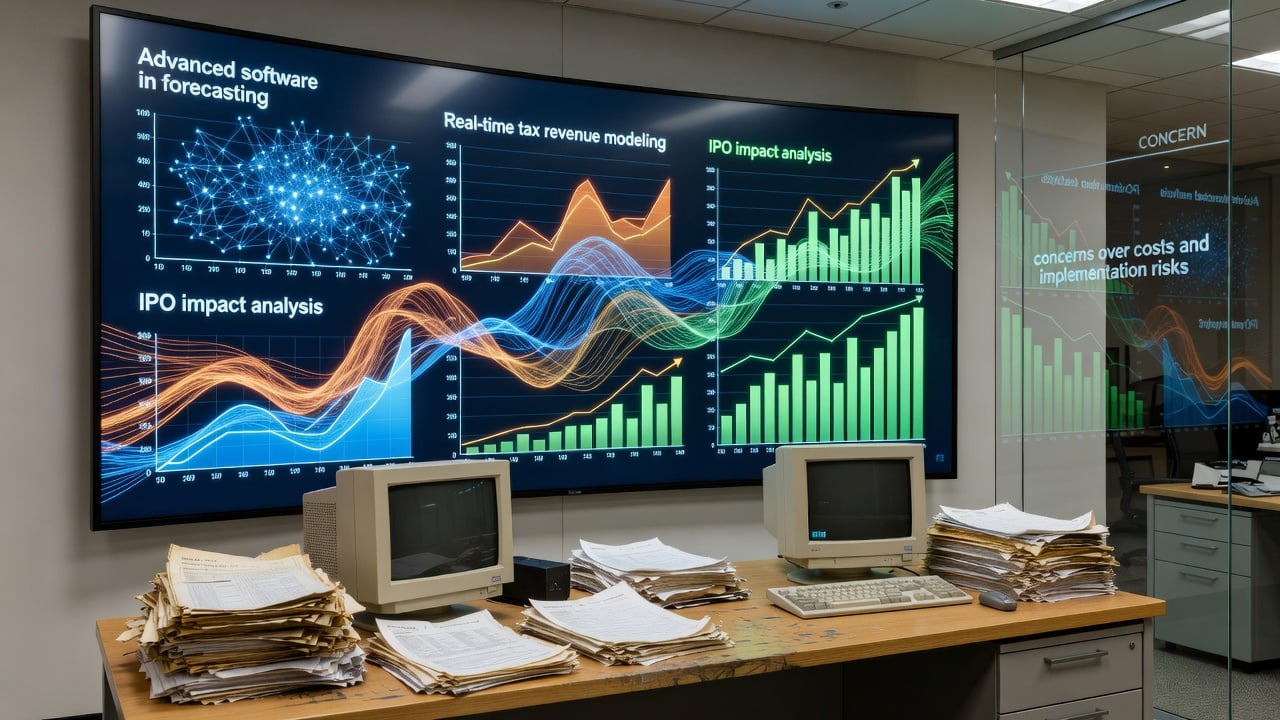
California lawmakers have proposed a significant shift in how the state handles its financial planning by integrating advanced software systems designed to improve budget accuracy and long-term forecasting. The move comes as part of broader efforts to modernize government operations and address persistent challenges in managing public funds amid economic uncertainty. According to a report from The Next Web, the initiative includes provisions that would allow the state to allocate reserves specifically for technology upgrades aimed at refining tax collection processes and preparing for potential initial public offerings of state-backed assets.
The proposal reflects growing recognition that traditional spreadsheet-based budgeting methods fall short when dealing with California’s massive and complex economy. With an annual budget exceeding $300 billion, even small forecasting errors can lead to substantial shortfalls or unexpected surpluses that complicate policy decisions. By adopting specialized budgeting software, state officials hope to create more dynamic models that incorporate real-time economic data, demographic shifts, and industry trends. These tools typically employ sophisticated algorithms to simulate various scenarios, helping policymakers anticipate the impact of changes in federal funding, housing markets, or employment rates.
One key component of the plan involves updating the state’s tax administration infrastructure. California’s tax system generates the majority of its revenue through personal income taxes, which fluctuate significantly based on the performance of high-tech industries and capital gains. The proposed software would enhance the ability to track these volatile revenue streams with greater precision, reducing the likelihood of mid-year budget adjustments that often disrupt ongoing programs. Officials believe improved tax forecasting could stabilize funding for education, healthcare, and infrastructure projects that currently face repeated threats of cuts during economic downturns.
The article from The Next Web highlights how the budget reserve would specifically target investments in systems capable of modeling the financial implications of taking companies public. This aspect addresses situations where state pension funds or investment vehicles hold stakes in promising startups. Having accurate software to evaluate the timing and structure of potential IPOs could help maximize returns while minimizing market disruption. Such capabilities matter particularly in a state that serves as home to Silicon Valley, where numerous firms approach public markets each year.
Implementation would require coordination across multiple agencies, including the Department of Finance, the Franchise Tax Board, and the Legislative Analyst’s Office. Each entity currently maintains separate data systems that often require manual reconciliation, creating delays and opportunities for error. The new platform would aim to establish common data standards and automated reporting mechanisms that allow for continuous updates rather than periodic snapshots. This transition mirrors similar efforts undertaken by other large states seeking to replace outdated legacy systems with more adaptable solutions.
Critics of the proposal raise concerns about the initial costs and the learning curve associated with new technology. Government technology projects have a mixed track record, with some initiatives experiencing significant overruns or failing to deliver promised improvements. Supporters counter that the long-term savings from better financial management would outweigh these risks. They point to examples from municipalities that have successfully deployed budgeting software to reduce waste and improve service delivery. The reserve fund mechanism would help insulate the project from annual budget battles, providing dedicated resources over multiple fiscal years.
Beyond immediate budgeting functions, the software could strengthen California’s position in national discussions about fiscal policy. As one of the world’s largest economies, the state’s financial decisions influence markets and federal budget calculations. More accurate projections would give California a stronger voice when advocating for its share of federal resources or when negotiating with bond rating agencies. The systems might also facilitate greater transparency by generating public reports that explain the assumptions behind revenue estimates and spending priorities.
The proposal appears amid ongoing debates about how best to manage the state’s substantial budget reserves. California has built up significant rainy day funds during periods of strong economic growth, yet determining the appropriate size and use of these reserves remains contentious. By incorporating advanced analytical tools, decision-makers could develop clearer guidelines for when and how to deploy these funds during recessions. The software might help model the multiplier effects of different spending strategies, showing how infrastructure investments or tax rebates could stimulate recovery.
Tax policy represents another area where the new systems could drive meaningful change. California’s tax code contains numerous credits, deductions, and special provisions that complicate compliance and enforcement. Modern software could analyze the effectiveness of these provisions by tracking their actual economic impact rather than relying on static estimates. This capability would support evidence-based decisions about which incentives to maintain, modify, or eliminate. For businesses operating in the state, clearer understanding of tax implications could reduce uncertainty and potentially encourage investment.
The connection to initial public offerings extends beyond state investment portfolios. Many California companies that go public generate substantial tax revenue through employee stock options and capital gains. The proposed tools would help forecast these revenue surges with greater accuracy, allowing the state to plan for corresponding increases in public services that often accompany economic booms. Conversely, the systems could help prepare for the inevitable corrections that follow periods of market exuberance.
Integration with existing government systems presents both technical and organizational challenges. Many state agencies still rely on mainframe computers installed decades ago, creating compatibility issues with contemporary software packages. The transition plan would likely include provisions for data migration, staff training, and parallel operations during the implementation phase. Success would depend on selecting vendors with proven experience in governmental applications rather than purely commercial solutions that might not accommodate unique regulatory requirements.
Public accountability forms an essential element of the proposal. The software systems would need to include features that allow independent auditors and legislative committees to verify the integrity of the models and assumptions. Open data initiatives could extend this transparency by making certain forecasting tools available to academic researchers and policy analysts. Such measures would help build confidence in the state’s financial projections and reduce partisan disagreements about basic economic facts.
The timing of this initiative coincides with broader technological advances in artificial intelligence and machine learning that are transforming financial analysis across sectors. While the state’s approach remains grounded in practical budgeting needs, these emerging capabilities could eventually enhance predictive accuracy even further. For now, the focus centers on establishing reliable baseline systems that can evolve as technology progresses and policy priorities shift.
California’s experience with this budgeting software initiative could provide valuable lessons for other governments facing similar challenges. The state’s size and economic diversity make it an ideal testing ground for approaches that might later be scaled to national levels. If successful, the project could demonstrate how targeted technology investments can strengthen fiscal management without requiring fundamental changes to tax structures or spending priorities.
As the proposal moves through the legislative process, stakeholders from various sectors will weigh in on specific features and implementation strategies. Business groups may emphasize the need for systems that accurately reflect industry cycles, while advocacy organizations might focus on ensuring equitable distribution of resources identified through improved analysis. The outcome will likely reflect compromises that balance technical sophistication with practical usability for elected officials who must ultimately make the policy decisions.
The reserve allocation for this purpose signals a commitment to treating technology as a core component of financial governance rather than an afterthought. This perspective recognizes that accurate information forms the foundation of sound public policy. Without reliable data and analysis, even well-intentioned programs can produce unintended consequences or fail to achieve their objectives. By investing in better tools for understanding its own finances, California aims to make more informed choices that benefit residents across the economic spectrum.
The discussion around this budget proposal reveals deeper questions about the role of technology in democratic governance. While software cannot replace human judgment, it can illuminate options and consequences that might otherwise remain obscure. As California explores these possibilities, the results will influence not only its own fiscal future but also the expectations placed on governments everywhere to demonstrate competence in managing public resources through whatever means prove most effective. The initiative represents a practical step toward aligning administrative capabilities with the complexity of modern economies, where traditional methods increasingly show their limitations.


 WebProNews is an iEntry Publication