
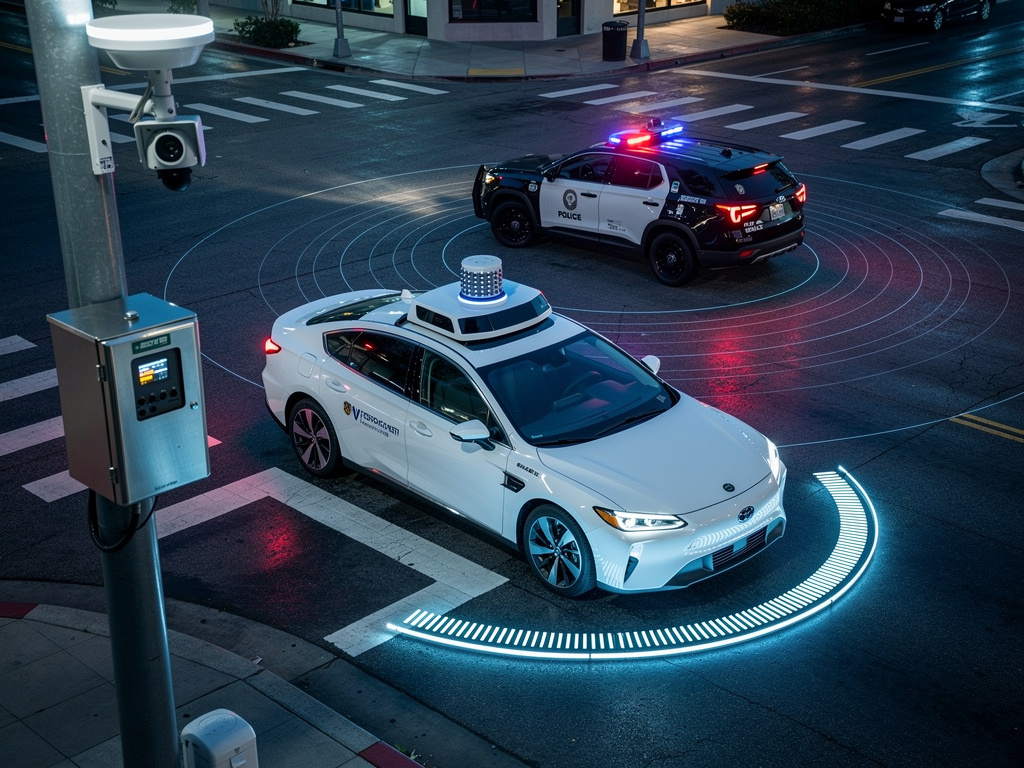
California’s robotaxis just lost their get-out-of-jail-free card. For years, police watched empty Waymo vehicles blow through red lights or make illegal U-turns, hands tied by rules demanding a human to sign the ticket. No longer. The state DMV approved sweeping new regulations on April 28, 2026, empowering officers to slap “Notices of AV Noncompliance” on companies like Alphabet’s Waymo and Tesla when their driverless cars break traffic laws. Enforcement kicks in July 1.
Picture this: A San Bruno cop pulls over a Waymo last September for an illegal U-turn during a DUI checkpoint. Lights flashing. Car empty. “Our citation books don’t have a box for ‘robot,'” the department posted on social media, as reported by San Francisco Chronicle. Officers notified Waymo instead. That glitch—and many others—helped spark the change.
The rules close a loophole first exposed in 2023 by NBC Bay Area. Driverless cars needed no human behind the wheel to accept citations. Companies faced reputational hits at worst. Now, officers issue notices directly to manufacturers for violations like running reds, ignoring pedestrians, or illegal turns. Firms must report details to DMV within 72 hours—or 24 for serious cases. Repeat offenders risk fleet caps, speed limits, or permit yanks.
And it’s not just tickets. First responders get teeth too. AV operators must answer calls from police, firefighters, or EMTs in 30 seconds. Local emergency chiefs can trigger geofencing to boot robotaxis from crash sites or fire scenes. This targets complaints piling up: Waymos blocking stations, freezing mid-street, or cruising into active hazards. A March meeting of federal officials and responders highlighted vehicles “freezing up” dangerously, per a recent Gizmodo piece citing Wired.
From Loophole to Accountability: The Backstory
Pushback built slowly. The California Gig Workers Union, representing rideshare drivers, hammered safety gaps and missing accountability. AVs barreled into police zones, they said. Communities in Sacramento and San Diego resisted Waymo tests. Then came AB 1777, signed by Gov. Gavin Newsom, laying groundwork. Authored by ex-Assemblymember Philip Ting, it mandated communication devices—not just QR codes—for first responders to reach technicians. The DMV’s rules build on that, dubbed “the most comprehensive AV regulations in the nation” after public input, according to the agency’s statement.
Waymo operates across Los Angeles, San Francisco, and beyond, logging 500,000 paid rides weekly in 10 cities. Statistically safer—fewer crashes per mile than humans. But scale exposes flaws. CBS San Francisco notes firefighters and paramedics fuming over blockages. SF Standard detailed local chaos: robotaxis dodging yellow tape. Tesla eyes robotaxi rollout here, but hasn’t launched. Cruise, post its 2023 pedestrian-dragging scandal, lurks too.
Critics question readiness. Emergency workers say performance has slipped since launch. Wired’s Thursday report flagged that slide. Unions push bills for U.S.-based overseers with California licenses. But companies tout data: Waymo’s miles dwarf Uber’s daily trips? No—500,000 vs. 36 million globally. Still, growth demands guardrails.
Trucks on Horizon, Fines in Rearview
DMV didn’t stop at taxis. Rules greenlight testing heavy-duty AV trucks and transit. Oversight expands to all classes. Police gain protocols for notices, delivery, processing—tied to AB 1777. NBC Bay Area explains: Companies detail incidents, face graduated penalties. One notice? Fix it. Many? Grounded.
So what happens July 1? An LAPD cruiser spots a Waymo ignoring a crosswalk. Officer scans the VIN, issues the notice electronically. Waymo reports back. DMV tracks patterns. First responders ping during a pileup—vehicle pulls over in 30 seconds or gets fenced out. Fines sting. Operations shrink if ignored.
Industry insiders see tension ahead. Waymo’s safety claims clash with street-level gripes. Tesla’s entry could multiply incidents. But accountability might force fixes. California sets the pace—other states watch. Robotaxis aren’t above the law anymore.
Operators brace. Police prepare. Streets change.


 WebProNews is an iEntry Publication