
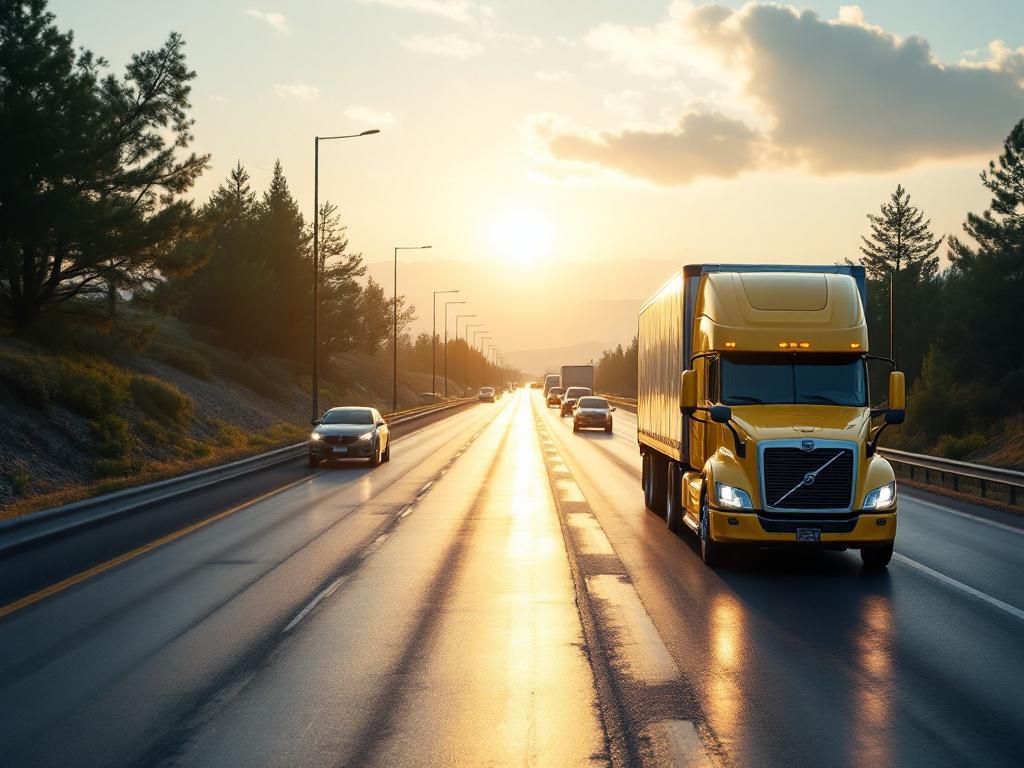
California’s Highway Revolution: Autonomous Trucks Gear Up for the Golden State
California, long a pioneer in technological innovation, is on the cusp of a major shift in its transportation sector. Regulators at the state’s Department of Motor Vehicles (DMV) have unveiled revised rules that could finally permit the testing of self-driving trucks on public highways, potentially ending a longstanding prohibition. This development, detailed in a recent report by TechCrunch, marks a significant pivot for an industry eager to integrate autonomous heavy-duty vehicles into one of the nation’s busiest freight networks. The proposed regulations not only open the door for testing but also address enforcement gaps, such as enabling police to ticket driverless vehicles directly, closing a loophole that has frustrated law enforcement in the past.
The move comes amid growing pressure from tech giants and logistics firms who argue that autonomous trucks could enhance efficiency, reduce costs, and improve safety on California’s vast highway system. Companies like Waymo and Aurora have been testing lighter autonomous vehicles in the state for years, but heavy-duty trucks—those exceeding 10,001 pounds—have been barred from public road trials. This restriction has forced manufacturers to conduct experiments in more permissive states like Texas and Arizona, where such vehicles are already navigating real-world conditions. The DMV’s latest proposal, as outlined in their official autonomous vehicle regulations page, aims to balance innovation with public safety by establishing stringent testing protocols.
Industry insiders view this as a critical step toward broader deployment. For instance, the rules would require companies to obtain permits, submit detailed safety data, and ensure human oversight during initial phases. This framework builds on California’s existing allowances for passenger autonomous vehicles, which have been tested extensively in urban areas like San Francisco. However, the introduction of massive semi-trucks raises unique challenges, including their potential impact on traffic flow, infrastructure wear, and emergency response scenarios.
Regulatory Evolution and Industry Pushback
The path to this proposal has been fraught with contention. Earlier attempts to lift the ban faced fierce opposition from labor unions and safety advocates. In 2023, Governor Gavin Newsom vetoed a bill that would have mandated human drivers in autonomous trucks, citing the need to foster technological advancement. That decision, covered in an Associated Press report, drew criticism from groups like the Teamsters, who warned of job losses and safety risks. Recent sentiment on social platforms, including posts on X (formerly Twitter), echoes these concerns, with users highlighting fears that driverless trucks could displace thousands of workers in an already strained labor market.
Despite the veto, momentum has built. A June 2025 bill attempted to impose limits on driverless operations rather than an outright ban, allowing limited use while addressing union demands. As reported by Overdrive, this represented a compromise after two previous outright bans were rejected. The DMV’s current initiative appears to sidestep legislative hurdles by focusing on regulatory adjustments, potentially fast-tracking implementation. Sources indicate that public comment periods and revisions could lead to final approval by early 2026.
Critics, however, remain vocal. Labor leaders argue that autonomous trucks could exacerbate unemployment in the trucking sector, which employs over 300,000 people in California alone. Posts on X from figures like former presidential candidate Marianne Williamson in 2023 decried the veto as prioritizing tech over workers, a sentiment that persists in recent online discussions. Meanwhile, safety experts point to incidents involving smaller autonomous vehicles, such as Waymo’s robotaxis, which have faced scrutiny for blocking emergency vehicles and causing minor collisions.
Technological Advancements Driving Change
At the heart of this regulatory shift are rapid advancements in autonomous technology. Companies developing self-driving trucks tout sophisticated sensor arrays, AI-driven decision-making, and redundant safety systems that they claim outperform human drivers in consistency and reaction times. For example, Aurora Innovation has demonstrated trucks capable of highway navigation without human intervention, relying on lidar, radar, and cameras to detect obstacles. These innovations, as explored in a NBC Bay Area investigative piece, could transform logistics by enabling 24/7 operations and reducing fuel consumption through optimized routing.
California’s proposal aligns with national trends. The federal government, under the National Highway Traffic Safety Administration, has been encouraging states to update rules for autonomous vehicles. Yet, California’s approach is distinctive in its emphasis on phased testing: starting with safety drivers on board, progressing to remote monitoring, and eventually full autonomy. This tiered system, detailed in DMV documents, aims to gather data on real-world performance before widespread adoption.
Economic incentives are also at play. The state’s ports, handling billions in annual cargo, stand to benefit from efficient trucking. Autonomous vehicles could alleviate bottlenecks at facilities like the Port of Los Angeles, where driver shortages have caused delays. Industry analyses suggest that self-driving trucks might cut operational costs by up to 30%, a boon for e-commerce giants like Amazon that rely on swift deliveries. However, this efficiency comes with trade-offs, including the need for infrastructure upgrades to accommodate vehicle-to-infrastructure communication.
Challenges in Safety and Enforcement
Safety remains a paramount concern. The DMV’s rules address a key issue: accountability for violations. Previously, driverless vehicles operated in a gray area, with citations often issued to absent operators. The new framework empowers law enforcement to ticket companies directly, as noted in the TechCrunch article. This change follows incidents where autonomous cars evaded fines due to the lack of a human driver, prompting legislation like a recent California law to hold operators responsible, per a Land Line Media report.
Public perception is mixed. While tech enthusiasts celebrate the potential for reduced accidents—autonomous systems don’t fatigue or get distracted—skeptics reference high-profile failures, such as Cruise’s 2023 suspension after a pedestrian incident. For trucks, the stakes are higher given their size and cargo loads. Simulations and tests in other states have shown promise, but California’s diverse terrain, from urban freeways to mountainous routes, will test these systems rigorously.
Moreover, environmental considerations factor in. Autonomous trucks could optimize fuel use, aligning with California’s green goals, but critics worry about increased road wear from heavier loads. The DMV plans to monitor emissions and energy efficiency as part of testing criteria, integrating with broader state initiatives to phase out diesel engines by 2035—though recent federal actions under President Trump have revoked some EV mandates, as mentioned in X posts referencing congressional resolutions.
Labor Impacts and Economic Ripples
The human element cannot be overlooked. Trucking unions have long fought against automation, fearing mass job displacement. In California, where immigrant drivers form a significant portion of the workforce, new federal rules under the Trump administration could ban certain non-citizen truckers, compounding automation’s effects. A CalMatters analysis estimates up to 61,000 drivers at risk, potentially accelerating the shift to autonomy.
Proponents counter that automation creates new roles in monitoring, maintenance, and data analysis. Companies like Uber Freight, which has lobbied for lifting the ban since 2022 as reported by Fast Company, argue that technology will augment rather than replace humans. Yet, historical precedents, such as the automation of manufacturing, suggest otherwise. Economic studies project that full adoption could reshape supply chains, lowering costs but concentrating wealth among tech firms.
Resistance persists on social media, with X users like David Sirota highlighting Big Tech’s influence on policymakers through lobbying. Posts from 2023 and recent ones underscore a divide: some see innovation as inevitable, others as a threat to livelihoods. As California deliberates, stakeholders are urging inclusive policies, perhaps mandating retraining programs for affected workers.
Future Horizons for Autonomous Freight
Looking ahead, the DMV’s proposal could set a precedent for other states. If approved, testing might commence on designated highways, with data informing national standards. Industry players are optimistic; a SFist article notes the agency is finalizing details, potentially allowing commercial deployment by 2027. This timeline dovetails with advancements in AI, where machine learning improves adaptability to unpredictable conditions.
Challenges like cybersecurity loom large. Autonomous trucks, connected to networks, are vulnerable to hacks, prompting calls for robust defenses. The rules include requirements for data security, but experts warn of evolving threats. Integration with existing traffic—human-driven vehicles, cyclists, and pedestrians—will require sophisticated algorithms to predict behaviors.
Ultimately, California’s decision could redefine freight movement, blending innovation with caution. As regulators weigh input from public hearings, the outcome will influence not just the state but the nation’s approach to autonomous technology. With economic, safety, and social stakes high, this evolution demands careful navigation to ensure benefits are broadly shared.
Balancing Innovation with Oversight
The broader implications extend to policy frameworks. California’s model emphasizes evidence-based regulation, requiring companies to report incidents and performance metrics transparently. This data-driven approach contrasts with more laissez-faire states, potentially leading to safer nationwide standards. For insiders, the key will be how these rules adapt to real-world feedback, perhaps incorporating union input to mitigate job impacts.
International comparisons offer insights. Countries like Germany and China have advanced truck platooning—where vehicles follow closely to save fuel—under strict guidelines. California could adopt similar tactics, enhancing efficiency on routes like Interstate 5. Yet, domestic politics, including federal overrides on state mandates, add complexity.
As the comment period unfolds, expect heated debates. Tech firms will push for swift approval, while advocates demand safeguards. The result could usher in a new era for transportation, where autonomous trucks become commonplace, transforming how goods move across the Golden State and beyond.


 WebProNews is an iEntry Publication