
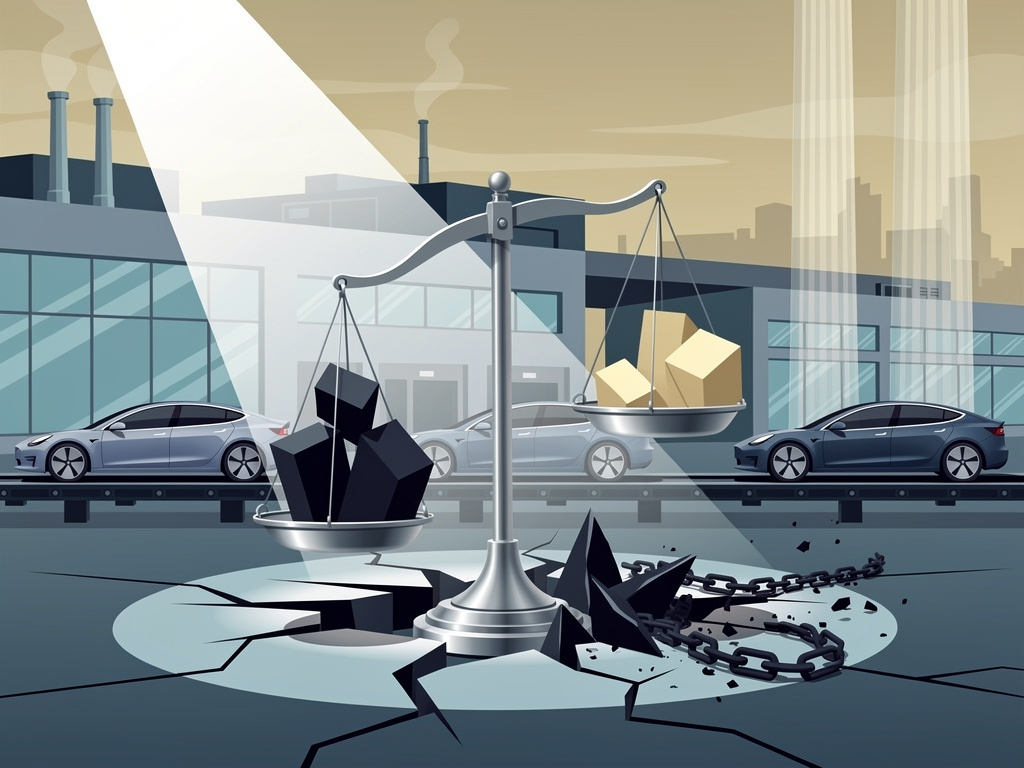
A California judge has blocked Tesla from ending a long-running state civil rights lawsuit that accuses the electric-vehicle maker of tolerating widespread racial harassment and unequal treatment of Black workers at its factories. The ruling, handed down this week in Alameda County Superior Court, sets the stage for a July trial that could force the company to defend years of employment practices before a jury.
The California Civil Rights Department sued Tesla in 2022 after a three-year probe. It claims Black employees faced the n-word so often that some referred to the Fremont plant as a “plantation” and themselves as “slaves.” Supervisors and managers allegedly joined in or looked the other way. Pay gaps, dead-end assignments, and retaliation for complaints round out the accusations. Ars Technica reported the details Tuesday evening.
CRD Director Kevin Kish welcomed the decision. “Tesla employment practices remain rooted in some of the ugliest relics of the past,” he said. “Black workers are paid less for their work. They are subjected to racist slurs. They face threats of being fired for speaking out. We look forward to having our day in court to hold Tesla accountable and to protect the rights of workers in our state.” The agency posted the full statement on its site the same day.
Judge Peter Borkon rejected Tesla’s motion for summary judgment. He viewed the evidence in the light most favorable to the state. And he found the carmaker failed to produce undisputed facts strong enough to shift the burden back to the CRD. Tesla had submitted declarations and pointed to its written anti-harassment policies. Borkon wasn’t persuaded. “The court is not persuaded that the existence of written policies alone is sufficient to establish a prima facie showing that there was no harassment or discrimination,” he wrote.
The numbers tell part of the story. Of 240 declarations gathered by the state, every single one reported hearing the n-word at the Fremont factory. Tesla offered 228 declarations of its own. In 99 of those, the worker said the same thing. The judge calculated that at least 339 of roughly 12,000 Black workers at the plant had encountered the slur. He called Tesla’s sample non-representative and limited mostly to one site when the lawsuit covers the entire California operation. Such gaps left triable questions on whether a pattern existed and whether the company knew about it yet failed to act.
Similar holes appeared in Tesla’s defense on job assignments, pay, promotions, discipline, and retaliation. The company produced workforce demographics but no statistical analysis of applicant pools, compensation differentials, or promotion rates by race. On retaliation claims it cited testimony from the related Vaughn case. Only 3 percent of those witnesses reported adverse actions after complaining, Tesla argued. Borkon dismissed the sample as insufficient to prove the absence of a broader pattern across the state. “Tesla did not present evidence that it had legitimate non-discriminatory business reasons for the allegedly retaliatory employment decisions,” he concluded.
The ruling trims older claims. Incidents before June 18, 2018, fall outside the statute of limitations. Everything after that date can proceed. The CRD seeks damages for affected workers plus court orders that would require Tesla to overhaul training, complaint handling, and promotion systems. A trial date of July 20 now looks firm.
This fight sits inside a larger wave of legal pressure. A separate class action brought by Black Fremont workers, known as Vaughn v. Tesla, lost its class status late last year when Judge Borkon ruled that too many randomly selected plaintiffs declined to testify. Hundreds of individual suits have followed. The first batch of those trials is slated to begin in coming months, according to plaintiff attorneys. Reuters noted in January that the federal Equal Employment Opportunity Commission also sued Tesla in 2023 over similar harassment and retaliation claims at the same plant. That case entered mediation earlier this year but remains unresolved.
Earlier verdicts offered a preview of what jurors might hear. Owen Diaz, a former elevator operator, won a $137 million award in 2021 after testifying that colleagues and supervisors bombarded him with slurs and racist graffiti. A judge cut the punitive portion, a second jury awarded about $3.2 million, and Tesla settled rather than appeal further. The New York Times covered the resolution in March 2024. The state agency drew on hundreds of similar worker complaints during its investigation.
Tesla has consistently denied any systemic problem. In a 2022 blog post it called the original state complaint misguided and emphasized its diversity numbers. The company says more than 60 percent of its hourly workforce in California comes from minority groups and that it investigates every complaint. It did not respond to requests for comment on this week’s ruling, Ars Technica reported.
Yet the repeated lawsuits paint a picture of a factory floor where racial tension simmers beneath the surface of rapid production ramps. Fremont has long operated at the edge of capacity. Managers push for speed. Some workers say that pressure leaves little room for addressing bias reports. Others describe a culture in which certain slurs became normalized workplace banter until complaints triggered pushback. The CRD argues Tesla’s response often fell short of what the law demands.
Legal observers expect the July trial to turn on two questions. Did Tesla maintain policies on paper while allowing a hostile environment in practice? And did it act promptly when problems surfaced? Borkon’s order suggests those issues cannot be resolved on summary judgment. Evidence from both sides will face cross-examination. Juries in prior Tesla cases have shown willingness to award significant damages when they find the company fell short.
The stakes extend beyond any single payout. A verdict against Tesla could encourage more workers to come forward. It might also influence how other Silicon Valley manufacturers handle similar complaints. The auto industry has confronted racial bias claims for decades. Tesla, as the newest major player, now finds itself under the same microscope its older rivals once did.
CRD officials say they remain open to settlement talks but appear prepared to let a jury decide. “The order holds that CRD’s evidence shows there are factual issues for a jury to decide as to whether Tesla is liable for systemic anti-Black harassment, discrimination, and retaliation,” the agency said in its statement. For Tesla the coming months will test whether its internal controls satisfy California law or whether courts will demand more sweeping changes.
And the calendar keeps moving. With one trial set for July and related individual cases queued up through the rest of the year, the company’s legal exposure on race issues shows no sign of fading. What began as a state investigation years ago has grown into a sustained courtroom battle that could reshape accountability standards for one of the world’s most valuable automakers.


 WebProNews is an iEntry Publication