
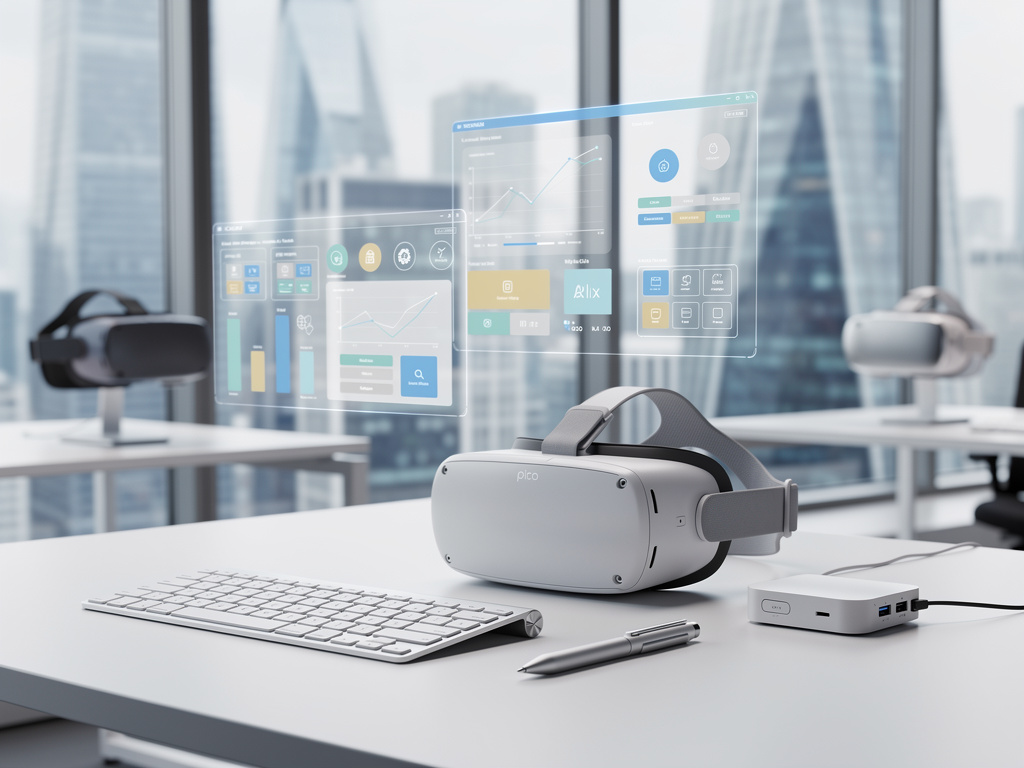
ByteDance, the Chinese tech giant best known as the parent company of TikTok, is preparing to launch a virtual reality headset that could fundamentally alter the competitive dynamics of the spatial computing market. Known internally as “Project Swan,” the device is being designed not merely as a gaming accessory or media viewer, but as a full-fledged productivity computer — the kind of device that Meta has long promised but has yet to fully deliver with its Quest lineup.
The headset, which is expected to arrive later this year under ByteDance’s Pico brand, represents an ambitious bet that the future of personal computing will be worn on the face rather than carried in a bag. According to reporting by CNET, Project Swan is being built with a clear emphasis on work-oriented features, including virtual desktop environments, multitasking capabilities, and a form factor light enough to wear for extended periods. If ByteDance can execute on that vision, it would position Pico as a serious challenger to Meta’s dominance in the consumer VR space — and potentially to Apple’s Vision Pro at the high end.
A Headset Built for the Office, Not Just the Living Room
What distinguishes Project Swan from existing Pico headsets — and from much of the current VR market — is its explicit focus on productivity. While Meta’s Quest 3 and Quest 3S have gradually added work features such as virtual monitors and mixed-reality passthrough, those capabilities have largely felt like afterthoughts bolted onto what remains fundamentally a gaming platform. Project Swan, by contrast, appears to be engineered from the ground up with office work in mind.
As CNET reported, the device is expected to feature high-resolution displays suitable for reading text, advanced passthrough cameras for mixed-reality use, and software optimized for spawning multiple virtual screens in a user’s physical environment. The goal is to create a device that could plausibly replace a laptop and external monitor setup for knowledge workers — a proposition that Apple has attempted with the $3,499 Vision Pro, but at a price point that has limited its appeal to early adopters and corporate buyers.
ByteDance’s Quiet Hardware Ambitions
ByteDance acquired Pico in 2021 for a reported $1.4 billion, a move that signaled the company’s intention to compete directly with Meta in the VR hardware market. Since then, Pico has released several headsets, including the Pico 4, which gained traction in European and Asian markets but has struggled to make inroads in North America, where Meta’s Quest line commands an overwhelming share of consumer VR sales.
Project Swan appears to represent a strategic pivot for Pico. Rather than going head-to-head with Meta on gaming — a battle that Pico has been losing due to Meta’s massive content library and aggressive pricing subsidized by advertising revenue — ByteDance seems to be targeting the productivity segment, where no single company has yet established clear dominance. Apple’s Vision Pro has the most polished productivity experience currently available, but its steep price and limited battery life have kept it from achieving mass adoption. Meta’s Quest headsets are affordable but lack the display quality and software polish needed for sustained work use.
The Technical Specifications That Matter
While full specifications for Project Swan have not been officially confirmed by ByteDance, industry analysts and supply chain reports suggest the headset will feature pancake lenses, a Qualcomm Snapdragon XR chipset, and displays with a resolution high enough to render text crisply at virtual desktop distances. Weight is reportedly a key design priority, with ByteDance aiming for a device that sits well below 500 grams — lighter than the Vision Pro’s approximately 650 grams and competitive with the Quest 3’s 515 grams.
Battery life and thermal management will be critical factors in determining whether the device can realistically serve as a work computer. One of the persistent complaints about the Apple Vision Pro is that its external battery pack, while reducing head-mounted weight, introduces cable management issues and limits untethered use to roughly two hours. If ByteDance can deliver three or more hours of productivity-focused battery life in a comfortable form factor, it could carve out a meaningful niche among remote workers and frequent travelers who want a portable multi-monitor setup.
The Software Challenge: Building a Productivity Platform From Scratch
Hardware alone will not determine Project Swan’s success. The more daunting challenge for ByteDance may be building a software platform that can compete with the work-oriented features Meta and Apple have spent years developing. Meta has partnered with Microsoft to bring Xbox cloud gaming and some Microsoft 365 functionality to Quest, while Apple’s visionOS benefits from deep integration with macOS and the broader Apple software ecosystem.
Pico’s current software platform runs on a modified version of Android, which provides access to a broad base of applications but lacks the kind of first-party productivity tools that Apple offers with visionOS. ByteDance will need to either develop its own virtual workspace applications or secure partnerships with major enterprise software providers — companies like Microsoft, Google, and Slack — to make Project Swan a credible work device. The company’s track record with Douyin (the Chinese version of TikTok) and its enterprise communication tool Lark (known as Feishu in China) suggests it has the engineering talent to build sophisticated software, but doing so for a Western audience accustomed to specific productivity workflows is a different proposition entirely.
Geopolitical Headwinds and Market Access
Any discussion of ByteDance’s hardware ambitions must contend with the geopolitical reality that has shadowed the company for years. TikTok has faced repeated threats of bans in the United States over concerns about data security and Chinese government influence, and those same concerns could complicate the launch of a ByteDance-branded computing device in Western markets. A VR headset designed to function as a primary work computer would have access to sensitive corporate data, documents, and communications — a prospect that may give enterprise IT departments and government agencies pause.
Pico has already faced distribution challenges in the United States, where its headsets are not widely available through major retailers. Project Swan’s success in the American market may depend on ByteDance’s ability to address data sovereignty concerns, potentially by partnering with U.S.-based cloud providers for data storage and processing, or by establishing transparent data handling practices that satisfy regulators and corporate buyers.
Meta’s Response and the Broader Competitive Picture
Meta is not standing still. The company has been steadily improving the productivity capabilities of its Quest platform, and CEO Mark Zuckerberg has repeatedly stated that he views mixed reality as the next major computing platform. Meta’s upcoming headsets are expected to feature improved displays and more powerful processors that could narrow the gap with dedicated productivity devices. The company also has the advantage of scale: with tens of millions of Quest headsets already in consumers’ hands, Meta can iterate on productivity features with a massive installed base providing feedback.
Apple, meanwhile, is reportedly working on a more affordable version of the Vision Pro that could arrive in 2026, potentially at a price point closer to $2,000. If Apple can deliver a lighter, cheaper spatial computer that retains the Vision Pro’s best productivity features, it could squeeze both Meta and Pico from above. Samsung and Google are also collaborating on a mixed-reality headset powered by Android XR, adding yet another competitor to an increasingly crowded field.
Why Project Swan Matters Beyond VR
The significance of Project Swan extends beyond the VR headset market. It represents a test case for whether a Chinese technology company can successfully compete in the Western consumer electronics market with a device that handles sensitive personal and professional data. It also tests the proposition that VR headsets have matured enough — in terms of display quality, comfort, and software — to serve as legitimate productivity tools rather than niche gadgets for gaming and entertainment.
If ByteDance can deliver a headset that is comfortable enough to wear for a full workday, sharp enough to replace a physical monitor, and affordable enough to undercut the Vision Pro by a wide margin, it could accelerate the broader adoption of spatial computing as a mainstream work tool. That outcome would benefit not just Pico but the entire industry, including Meta and Apple, by validating the category and attracting more software developers to build productivity applications for head-mounted displays.
For now, Project Swan remains largely shrouded in secrecy, with ByteDance declining to comment publicly on specific features or release dates. But the signals from supply chain reports, patent filings, and the company’s hiring patterns all point in the same direction: ByteDance is making a serious play for the future of work, and it intends to put that future on your face.


 WebProNews is an iEntry Publication