
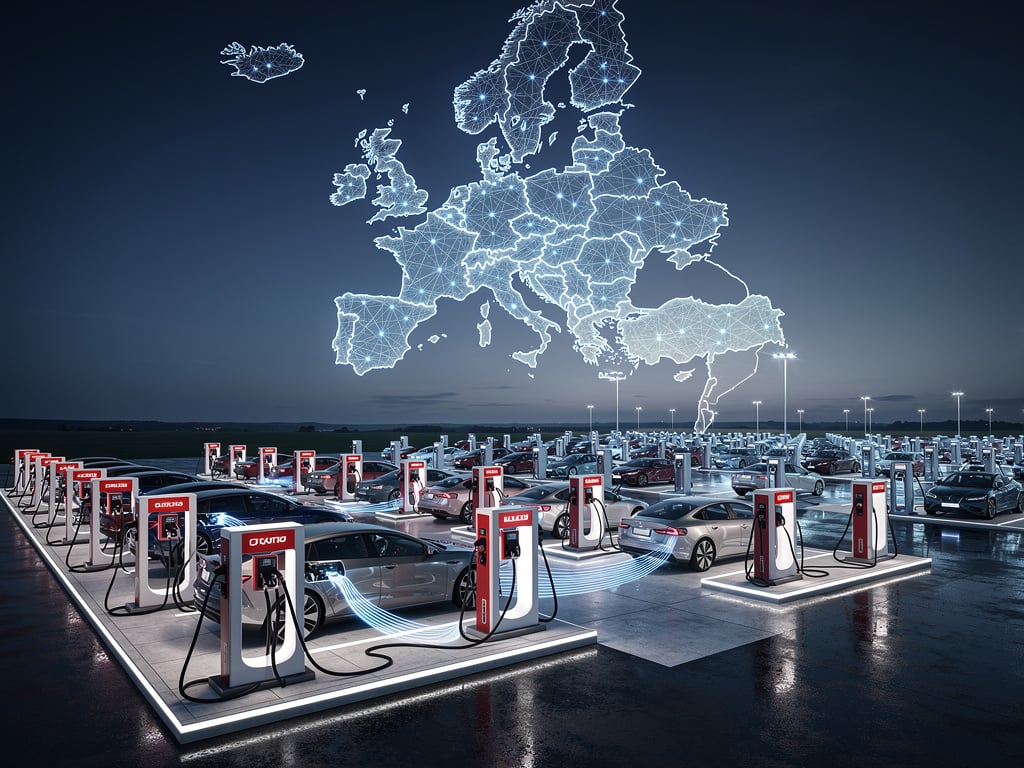
BYD has built more than 5,700 ultra-fast charging stations across China in a matter of months. Each delivers up to 1,500 kilowatts. That’s three to six times the peak output of Tesla’s latest V4 Superchargers.
The gap isn’t close. A compatible BYD vehicle can gain 10% to 70% charge in five minutes. It reaches 97% in nine. Drivers add roughly 250 miles of range during a coffee stop. Tesla owners typically wait 20 to 30 minutes for similar replenishment at most stalls.
Power, Batteries and the Limits of Speed
The difference starts with the battery. BYD’s second-generation Blade Battery and its new Super e-Platform support 1,000-volt architecture and 10C charging rates. Current peaks at 1,000 amps. The company self-developed an all-liquid-cooled megawatt terminal that handles these extremes without damage. Lian Yubo, BYD executive vice president, described the system in the company’s official announcement: “BYD has self-developed the world’s first all-liquid-cooled Megawatt Flash Charging terminal system, with a maximum output capacity of up to 1360kW.” (BYD)
But there’s a catch. These times apply only to vehicles engineered for them. Most current EVs, including many Teslas, lack the thermal management, cell chemistry and high-voltage systems to accept such power safely. Early tests in China reportedly showed a Tesla accepting the plug with minor port interference and achieving decent but not record speeds. Real-world compatibility remains limited.
BYD doesn’t stop at new stations. Its dual-gun technology can convert existing public chargers into faster ones on the fly. Intelligent voltage-boost features promise broader compatibility with older infrastructure. The result? A network that grows faster than rivals can respond.
Tesla built its Supercharger advantage over years. The network once defined convenience for EV owners. Open access for non-Tesla vehicles expanded its reach. Yet deployment now lags. While Tesla adds stalls, BYD installs complete high-power sites at a blistering pace. Recent data shows the Chinese company deploying 2.4 times more charging power per month. (Electrek)
And the expansion continues. BYD hit 5,000 stations just 27 days after launch in March 2026. It reached 5,715 across more than 300 cities by early May. The target stands at 20,000 in China by year’s end. Overseas plans look equally ambitious. The first European Flash Charger opened in Germany this month, followed quickly by the UK. BYD aims for 3,000 stations across Europe by the end of 2027 and 6,000 total outside China. Early units in Europe use CCS2 plugs, easing adoption beyond its home market.
Discussions on X reflect growing awareness. One recent post asked Elon Musk directly when Tesla would match the capability. Others noted BYD’s push into Canada, where the company seeks talent to build the network. (Drive Tesla Canada, referenced in recent X activity)
Cost and grid impact draw scrutiny. Each charger runs an estimated 580,000 euros in Europe. That adds up fast. Yet BYD buffers stations with battery storage charged overnight during low-demand periods. The approach reduces strain on local grids. Tesla’s newer V4 sites also use advanced power sharing. Still, the raw speed advantage belongs to BYD.
Analysts see broader implications. Faster charging shrinks the convenience gap with gasoline cars. Refueling anxiety drops when five minutes delivers a long drive. For fleet operators and ride-hailing services, time equals money. BYD’s tech could accelerate EV adoption in markets where charging infrastructure has lagged.
Tesla isn’t standing still. It has begun deploying Megachargers for heavy trucks and continues upgrading its network. V4 stalls reach 500 kW at peak. Folding units cut installation time and cost. Yet the contrast in philosophy stands out. Tesla emphasizes more stalls per site with shared power. BYD bets on extreme power per stall. One recent analysis found BYD’s initial 5,000 stations delivered more total charging capacity in a single month than Tesla’s entire U.S. network at the time. (CleanTechnica)
Vehicle integration matters too. BYD pairs the chargers with models like the Han L and Tang L, now in pre-sales. These cars accept the full megawatt flow. The platform also includes a 30,000 RPM motor and new silicon carbide chips for efficiency. Such vertical integration gives BYD control from battery cell to charger plug.
Early reactions from testers are positive. Videos from China and the first European site show smooth operation and dramatic time savings. One independent reviewer who traveled to verify claims called the experience world-changing. Pricing remains competitive. In the UK, BYD targets around 50 pence per kWh, with hopes of going lower.
The competitive dynamic has shifted. Tesla once led on charging experience. Its network remains denser in many Western markets. But BYD’s rapid build-out and technical leap create pressure. Share price reactions in early 2025 showed how announcements alone can move markets. As BYD exports more vehicles and chargers, the question grows louder. Can Tesla close the speed gap? Or will it double down on ubiquity and software integration?
Industry watchers expect hybrid answers. Some markets will favor BYD’s ultra-fast stops. Others may stick with established networks. What seems clear is that five-minute charging has moved from prototype to production scale. The era of waiting 30 minutes for a meaningful charge faces real disruption. And drivers, not just engineers, will decide which approach wins their loyalty.


 WebProNews is an iEntry Publication