
BYD’s Leap into Ultra-Long-Range EVs
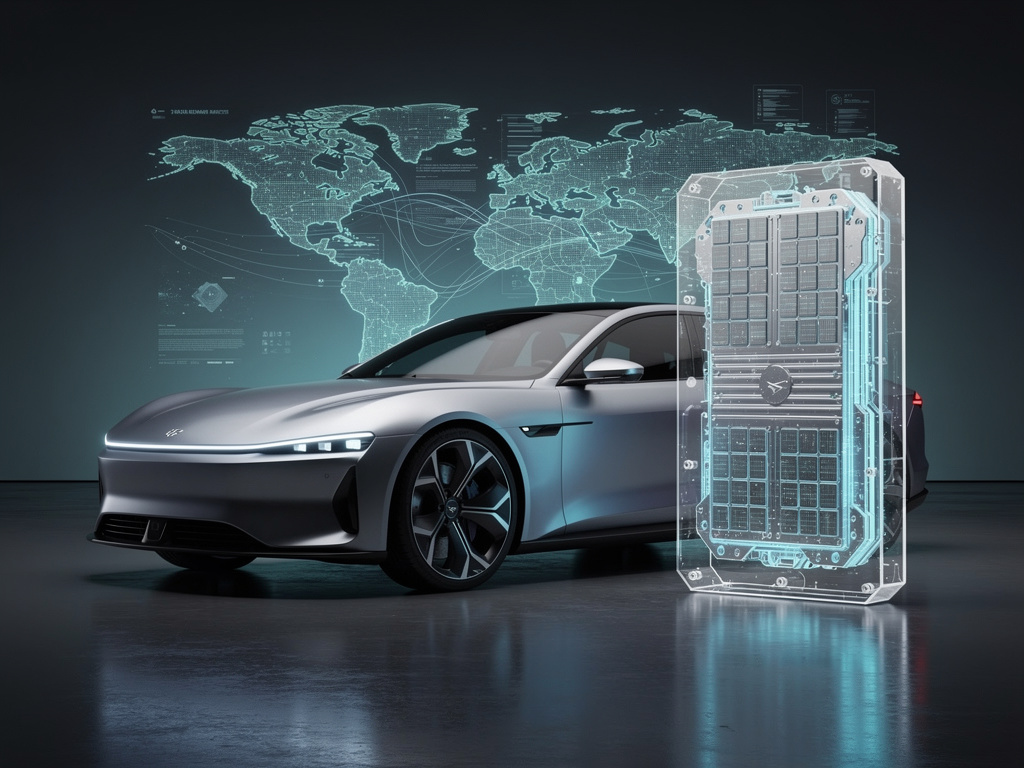
In the rapidly evolving world of electric vehicles, Chinese automaker BYD has unveiled a groundbreaking model that could redefine expectations for battery range and performance. The Yangwang U7, a luxury electric sedan, boasts a massive 150 kWh Blade battery pack, promising up to 1,006 kilometers—or roughly 625 miles—on a single charge under China’s CLTC testing standard. This development, detailed in recent reports, positions BYD at the forefront of the push for extended-range EVs, challenging global rivals like Tesla and traditional automakers scrambling to keep pace.
The U7’s battery technology builds on BYD’s proprietary Blade system, known for its safety and efficiency. Unlike conventional lithium-ion packs, the Blade battery uses a long, flat cell design that enhances energy density and thermal stability, reducing the risk of fires. According to industry analyses, this iteration offers significant improvements over previous versions, with options for 135.5 kWh and 150.01 kWh packs, delivering ranges of 800 km to 1,006 km respectively. These figures, while optimistic under CLTC protocols, suggest real-world performance that could exceed 500 miles, a boon for long-haul drivers wary of charging infrastructure limitations.
BYD’s announcement comes amid a surge in EV adoption, where range anxiety remains a key barrier. The company’s integration of quad-motor drivetrains, with one permanent-magnet synchronous motor per wheel, not only boosts power but also optimizes energy use. Insiders note that this setup allows for precise torque distribution, improving handling and efficiency on diverse terrains.
Battery Innovations Driving the Change
Delving deeper into the technology, BYD’s Blade 2.0 battery represents a refinement of its original design launched in 2023. As reported by BYD USA, the system prioritizes safety through a structure that withstands extreme puncture tests without igniting. This is particularly relevant as EV fires, though rare, garner significant media attention and regulatory scrutiny.
Recent updates indicate BYD is pushing energy density toward 300 Wh/kg in future iterations, up from the current 200 Wh/kg, incorporating lithium alloy materials to minimize cell swelling. Posts on X from industry observers highlight enthusiasm for these advancements, with users praising the battery’s charging curve that maintains high speeds—up to 170 kW—from low states of charge, enabling quick top-ups.
Comparisons with competitors reveal BYD’s edge. For instance, Tesla’s Model S offers around 405 miles on its top trim, while Lucid’s Air Grand Touring hits 516 miles under EPA standards. The U7’s CLTC rating, though not directly comparable, underscores BYD’s focus on maximizing capacity in a market where Chinese consumers prioritize range over other features.
Market Implications and Global Expansion
BYD’s aggressive innovation aligns with its record-breaking sales. In 2025, the company sold 4.6 million vehicles, surpassing Tesla as the world’s largest EV maker, as noted in a Bloomberg report. This milestone reflects not just volume but a strategic emphasis on technology that competitors often emulate, according to BYD executives who stress the need for original research to maintain leadership.
The Yangwang sub-brand, targeting premium segments, positions the U7 against luxury offerings like the Mercedes-Benz EQS or BMW i7. With pricing expected in the high-end range—potentially around $100,000 or more in international markets—the vehicle appeals to affluent buyers seeking both performance and sustainability. Its all-wheel-drive system delivers rapid acceleration, likely sub-3 seconds to 60 mph, combining supercar thrills with EV efficiency.
Globally, BYD is expanding beyond China, with models like the Atto 3 and Seal gaining traction in Europe and Australia. The company’s website, BYD Europe, highlights a lineup that integrates Blade batteries across various sizes, from 49.92 kWh in compact SUVs to the U7’s behemoth pack. This scalability demonstrates BYD’s vertical integration, controlling everything from battery production to vehicle assembly, which keeps costs down and innovation cycles short.
Challenges in Range Standardization
However, the U7’s impressive specs invite scrutiny over testing standards. CLTC ranges often exceed real-world results by 20-30% compared to the more conservative EPA or WLTP protocols used in the U.S. and Europe. A CarNewsChina article details the U7’s dual battery options, but experts caution that actual mileage depends on factors like driving style, weather, and load. For industry insiders, this highlights the need for harmonized global standards to better inform consumers.
Safety remains a cornerstone of BYD’s pitch. The Blade battery’s design, which passed rigorous nail penetration tests without thermal runaway, addresses concerns amplified by incidents involving other EV brands. As EV adoption grows, regulators in markets like the EU are mandating stricter battery safety protocols, giving BYD a potential compliance advantage.
Moreover, the environmental footprint of such large batteries raises questions. Producing a 150 kWh pack requires substantial raw materials, including lithium and cobalt, prompting debates on sustainability. BYD counters this by emphasizing recyclable designs and its push toward greener supply chains, but scaling production could strain global resources if demand surges.
Performance and User Experience Insights
On the performance front, the U7’s quad-motor setup isn’t just about speed; it enables advanced features like torque vectoring for superior cornering. Drawing from X posts, enthusiasts compare it favorably to high-end Teslas, noting better efficiency in cold weather due to the Blade’s thermal management. One user highlighted how the battery maintains output in sub-zero conditions, a common pain point for EVs.
User experiences with similar BYD models, such as the Seal with its 580 km range, suggest the U7 will offer a refined cabin with premium materials and tech integrations. Features like over-the-air updates and advanced driver-assistance systems align with industry trends toward software-defined vehicles.
Looking at broader adoption, BYD’s hybrid technologies complement its pure EVs. Models like the Sealion 06, with up to 82.732 kWh batteries offering 710 km ranges, show the company’s versatility. A CarNewsChina piece on this SUV underscores how BYD is diversifying to capture different market segments, from urban commuters to family haulers.
Strategic Positioning Amid Competition
BYD’s executive commentary, as shared on X, emphasizes innovation as key to staying ahead. Li Yunfei, a company spokesperson, remarked that without original advancements, rivals would have nothing to copy—a nod to BYD’s influence on the sector. This mindset drives investments in mega-casting and next-gen hybrids, with a Technology Day slated for February 2026 to unveil further breakthroughs.
In China, where EVs dominate new car sales, the U7 could solidify BYD’s premium credentials. Internationally, trade barriers like U.S. tariffs on Chinese EVs pose hurdles, but partnerships and local manufacturing—such as planned factories in Europe—may mitigate these. Analysts predict that if BYD navigates these effectively, models like the U7 could capture significant market share in the luxury EV space.
The U7 also benefits from BYD’s ecosystem, including its supercharging network and battery-as-a-service models, which lower upfront costs. Comparisons on X with Tesla’s ecosystem reveal mixed sentiments; while Tesla leads in software, BYD’s hardware prowess, especially in batteries, is gaining admiration.
Future Horizons for EV Technology
As BYD refines its Blade technology, the industry watches closely. Updates to models like the Atto 3, now with 74.880 kWh packs for 650 km ranges per CarNewsChina, indicate a pipeline of enhancements. This iterative approach contrasts with slower cycles at legacy automakers, giving BYD agility.
Potential integrations with autonomous driving tech could elevate the U7 further. While details are sparse, BYD’s collaborations with tech firms suggest advanced AI features on the horizon, enhancing safety and convenience.
Ultimately, the Yangwang U7 exemplifies how battery capacity and efficiency are converging to push EV boundaries. For insiders, it signals a shift where range becomes a differentiator, compelling others to accelerate their R&D. As global electrification ramps up, BYD’s bold moves could reshape competitive dynamics, fostering a new era of ultra-capable electric mobility.


 WebProNews is an iEntry Publication