
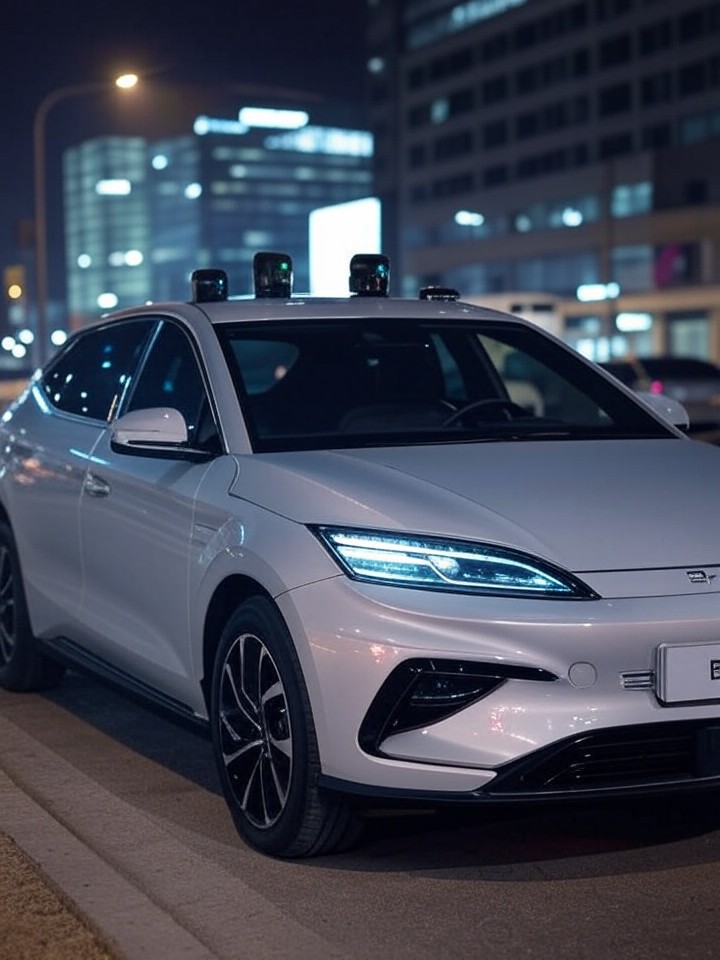
In the rapidly evolving world of electric vehicles, Chinese automaker BYD is making waves by equipping its most budget-friendly models with advanced LiDAR technology, a move that could redefine accessibility to self-driving features. According to recent regulatory filings in China, BYD’s entry-level hatchbacks, including the popular Seagull and Dolphin, are set to incorporate LiDAR sensors, enabling enhanced autonomous driving capabilities. This development, reported by The Driven, signals a strategic push to integrate high-end tech into vehicles priced as low as around $10,000, potentially pressuring competitors like Tesla and traditional carmakers.
The integration of LiDAR—light detection and ranging systems that use laser pulses to map surroundings—marks a significant upgrade for BYD’s affordable lineup. Traditionally reserved for premium models due to cost, LiDAR enhances object detection in various conditions, complementing cameras and radar for safer navigation. Industry analysts note that this could allow features like highway pilot assist and urban autonomous driving, features that BYD has been rolling out across its range under its “God’s Eye” advanced driver-assistance system (ADAS).
BYD’s approach contrasts with rivals who often charge extra for such tech. For instance, Tesla’s Full Self-Driving package requires an additional subscription or upfront fee, while BYD aims to bundle these capabilities standard in even its cheapest cars. This democratization of autonomy aligns with BYD’s broader strategy, as seen in earlier updates where the company extended smart driving features to 21 models, including those in its Dynasty and Ocean lineups, per reports from CnEVPost.
BYD’s Technological Leap Forward
The specifics of the LiDAR implementation in models like the Seagull are intriguing for engineers and executives tracking sensor fusion in autonomous systems. Regulatory documents reveal that these hatchbacks will feature roof-mounted LiDAR units, likely from suppliers like Hesai or Robosense, which have partnered with BYD in the past. This setup promises improved perception in low-visibility scenarios, such as fog or heavy rain, where camera-only systems can falter.
Posts on X, formerly Twitter, from industry observers highlight the buzz around this rollout. Users have noted that BYD’s multi-sensor approach, combining LiDAR with radar and ultrasonics, could offer a more robust alternative to vision-based systems, potentially at lower costs due to economies of scale. One post emphasized how this positions BYD to challenge Tesla’s camera-centric Full Self-Driving, especially in markets where regulatory approval for advanced autonomy is accelerating.
Moreover, BYD’s decision comes amid its surge in global sales. The company overtook Tesla as the world’s top electric vehicle seller in 2025, with deliveries exceeding 3 million units, driven by affordable models like the Seagull. Integrating LiDAR could further boost appeal in competitive arenas like Europe and Southeast Asia, where safety regulations are tightening.
Competitive Pressures and Market Shifts
Rivals are already feeling the heat. Toyota’s recent bZ3 electric sedan, priced around $15,700 and equipped with LiDAR, was positioned as a “shock” to the market, according to coverage in Gulf News. Yet BYD’s move to include similar tech in sub-$10,000 vehicles undercuts that pricing, potentially forcing adjustments from legacy players like Volkswagen and General Motors, who have struggled with EV transitions.
In China, where BYD dominates, this LiDAR push accelerates the adoption of intelligent driving. The company’s “God’s Eye” system, detailed in a WIRED article, offers levels from basic highway navigation to advanced urban piloting, with LiDAR enabling features like automatic lane changes and obstacle avoidance. Critics, however, question the naming—suggesting it might overpromise capabilities compared to established systems from Waymo or Baidu.
BYD’s engineering scale plays a crucial role here. With massive data from its fleet and in-house battery expertise, the company can iterate quickly. A December 2025 investor update, as reported by CarNewsChina, reaffirmed plans to leverage this data for full-line ADAS deployment, including in budget segments.
Engineering Challenges and Innovations
Delving deeper into the tech, BYD’s LiDAR integration involves sophisticated sensor fusion algorithms. Engineers familiar with the system describe how LiDAR data merges with high-definition maps and AI models to predict road scenarios, reducing reliance on constant human intervention. This is particularly vital for affordable EVs, where cost constraints might otherwise limit sensor quality.
However, challenges remain. LiDAR units add weight and power draw, which could impact the range of compact models like the Dolphin, already praised for its 300-400 km efficiency. BYD mitigates this through optimized battery packs and software updates, as seen in the 2025 Han EV’s 701 km range variant with intelligent driving, detailed on Made-in-China.com.
Industry insiders point to BYD’s supply chain advantages. By vertically integrating components, from batteries to sensors, the company keeps costs down— a factor that allowed the Seagull to sell over 44,000 units in December 2025 alone, per CnEVPost data referenced earlier.
Global Implications for Autonomy
Expanding beyond China, BYD’s LiDAR-equipped affordable EVs could disrupt international markets. In India, where EV adoption is growing, models like the updated Seal with space-age self-driving tech are slated for refresh, as noted in Drive. This includes facelifts with enhanced interiors and autonomy, appealing to cost-conscious buyers seeking premium features.
Sentiment on X reflects optimism mixed with skepticism. Posts discuss how BYD’s “God’s Eye” might outpace Tesla’s offerings in sensor diversity, with one user highlighting its inclusion in cars under $15,000, bundling features for free unlike subscription models. Yet, concerns about software reliability persist, especially in unregulated markets.
For automakers, this signals a shift toward commoditizing autonomy. BYD’s strategy echoes its past successes in battery tech, where it undercut competitors by scaling production. As electric vehicles become mainstream, integrating LiDAR in entry-level cars could set new standards for safety and convenience.
Regulatory and Ethical Considerations
Navigating regulations is key. In China, filings with the Ministry of Industry and Information Technology pave the way for these LiDAR models, ensuring compliance with autonomous driving standards. Globally, however, varying rules—such as Europe’s stringent data privacy laws—could slow exports.
Ethically, making self-driving tech ubiquitous raises questions about liability in accidents. BYD’s multi-sensor approach might reduce errors, but as WIRED pointed out, marketing terms like “God’s Eye” could mislead consumers about true autonomy levels, which are still far from full independence.
Looking ahead, BYD’s moves could inspire partnerships. Rumors on X suggest collaborations with tech firms for AI enhancements, building on its existing ecosystem.
Strategic Positioning in a Crowded Field
BYD’s broader portfolio benefits from this tech infusion. Updates to models like the Song Pro DM-i, with 1,600 km combined range and DiPilot support, showcase hybrid integration with autonomy, as per recent X posts from analysts.
Competitors like Tesla are responding with unsupervised FSD rollouts planned for 2025, but BYD’s affordability edge persists. The company’s reaffirmation of full-line ADAS, leveraging engineering scale, positions it as a leader in accessible innovation.
Insiders predict this could accelerate EV adoption in developing regions, where cost barriers have hindered progress. By embedding LiDAR in cheap cars, BYD not only boosts sales but also collects vast driving data for future refinements.
Future Trajectories and Industry Impact
As 2026 unfolds, watch for real-world testing of these LiDAR systems. Pilot programs in Chinese cities could provide data on performance, influencing global standards.
The ripple effects extend to suppliers. Increased demand for affordable LiDAR might drive down costs industry-wide, benefiting smaller players.
Ultimately, BYD’s initiative underscores a pivotal moment: when cutting-edge autonomy meets mass-market pricing, reshaping mobility for millions. This blend of innovation and accessibility could define the next era of electric transportation, challenging established norms and inviting closer scrutiny from regulators and rivals alike.


 WebProNews is an iEntry Publication