
Broadcom’s Bold Leap: Wi-Fi 8 Chips Usher in AI-Powered Home Networking Era
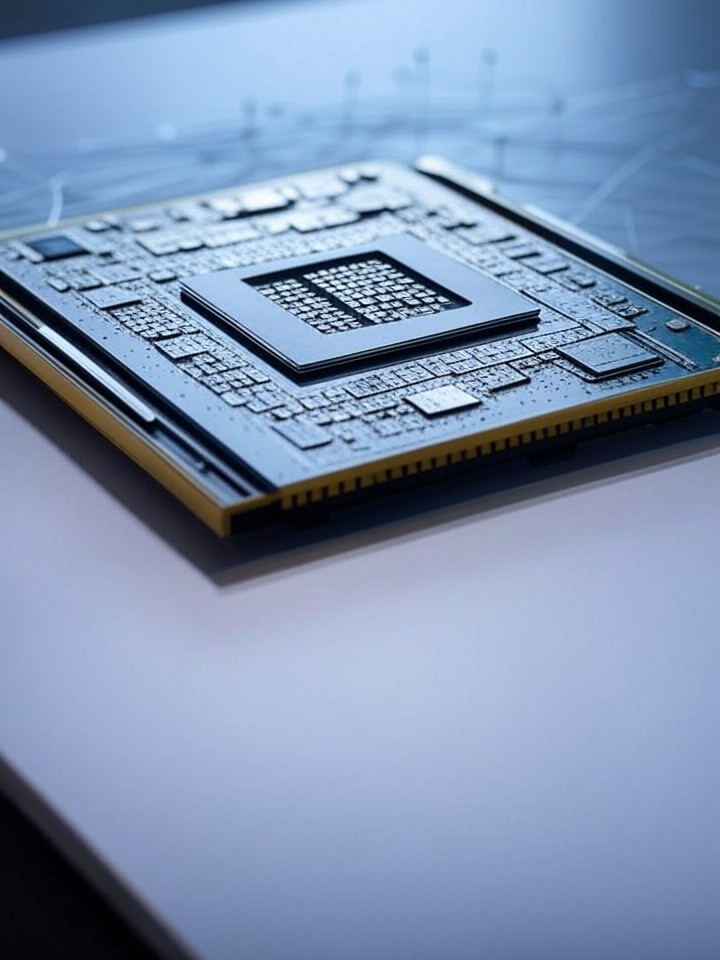
In the rapidly evolving world of wireless technology, Broadcom Inc. has made a significant move by introducing its latest Wi-Fi 8 chipset, reimagining the role of access point processors. The company’s BCM4918, dubbed an Accelerated Processing Unit (APU), borrows terminology from AMD but shifts the focus away from graphics to integrated computing, networking, and AI capabilities. This launch, announced at CES 2026, positions Broadcom at the forefront of transforming home routers into intelligent hubs capable of handling edge AI tasks independently.
Unlike traditional APUs that emphasize GPU integration for visual processing, Broadcom’s version prioritizes high-speed connectivity and on-device intelligence. The BCM4918 incorporates 10GbE connectivity, enabling seamless integration with multi-gigabit Ethernet networks, which is crucial for supporting the data-intensive demands of modern smart homes. This chip doesn’t just facilitate faster wireless speeds; it embeds AI acceleration to process tasks locally, reducing reliance on cloud services and enhancing responsiveness for applications like smart home automation and security monitoring.
Broadcom’s strategy here reflects a broader industry shift toward decentralizing computing power. By equipping access points with robust processing units, the company aims to create networks that are not only faster but also smarter. The inclusion of AI engines allows for real-time data analysis at the edge, which could revolutionize how devices interact within a home environment, from optimizing bandwidth allocation to detecting anomalies in network traffic.
Integrating AI at the Network’s Core
Details from TechRadar highlight that while the BCM4918 boasts impressive features like integrated multi-gigabit Ethernet PHYs and support for 10GbE, specifics on AI performance—such as inference speeds or supported models—remain sparse. This lack of granular data leaves industry observers pondering the real-world impact of these on-device AI capabilities. Nonetheless, the chip’s design suggests a push toward autonomous network management, where routers can handle complex tasks without constant cloud intervention.
Complementing the APU are two new dual-band Wi-Fi 8 radios: the BCM6714 and BCM6719. These components are engineered to deliver enhanced wireless performance, maintaining the high-speed benchmarks set by Wi-Fi 7 while emphasizing reliability and efficiency. According to reports from CNX Software, these chips are tailored for access points and mesh routers, promising to bring Wi-Fi 8 to consumer devices as early as 2026.
The announcement aligns with Broadcom’s long-standing dominance in wireless chipsets, building on its history of innovation in connectivity solutions. Industry insiders note that this move could accelerate the adoption of Wi-Fi 8, especially as homes become increasingly saturated with AI-enabled devices. From smart thermostats to voice assistants, the need for low-latency, high-bandwidth networks is paramount, and Broadcom’s offerings seem poised to meet that demand.
Financial Maneuvers Bolster Tech Ambitions
Broadcom’s recent financial activities underscore its commitment to this technological push. The company raised approximately $4.49 billion through fixed-rate senior unsecured notes, as detailed in coverage from Simply Wall St News. This capital infusion provides the flexibility needed to scale production and invest in AI-related research, potentially reshaping investor perceptions of Broadcom’s role in the AI ecosystem.
Posts on X, formerly Twitter, reflect growing excitement around these developments. Users have highlighted the BCM4918’s potential to drift Wi-Fi hardware toward edge computing, with discussions emphasizing its integration of AI without traditional GPU elements. Such sentiment indicates a positive reception among tech enthusiasts, who see this as a step toward more intelligent home networks.
Further insights from Electronics Weekly confirm the launch details, noting the BCM4918’s role in updating Broadcom’s Wi-Fi 8 portfolio. The chip’s design integrates acceleration engines that support advanced networking features, making it ideal for service provider gateways and residential routers.
Edge Computing Takes Center Stage
The broader implications of Broadcom’s Wi-Fi 8 platform extend to how AI experiences are delivered in everyday settings. As outlined in a press release on Broadcom’s investor site, the unified platform aims for seamless AI integration, enabling operators to deploy next-generation applications with improved performance and uptime. This could mean faster response times for AI-driven features like virtual assistants or automated home security.
Comparisons to previous generations reveal Wi-Fi 8’s focus on optimization rather than raw speed increases. While Wi-Fi 7 emphasized peak throughput, Wi-Fi 8 prioritizes better efficiency in multi-device environments, as noted in various X posts discussing the standard’s evolution. Broadcom’s chips embody this by incorporating features like Multi-Link Operation (MLO) and enhanced MU-MIMO, which help manage congestion in dense networks.
Industry analysts point out that the BCM4918’s lack of a GPU is a deliberate choice, aligning with the needs of networking hardware where graphical processing is secondary to data handling and AI inference. This redefinition of the APU concept, as explored in TechRadar’s analysis, signals a quiet reshaping of access point processors, turning them into multifaceted computing units.
Market Positioning and Competitive Dynamics
Broadcom’s timing is strategic, coinciding with rising demand for AI-ready infrastructure. Reports from Investing.com describe the unveiling as a step toward AI-ready connectivity, with the chipsets designed to support energy-efficient wireless links. This positions Broadcom favorably against competitors like Qualcomm and MediaTek, who are also advancing in Wi-Fi and AI integration.
An additional debt raise of about $6.75 billion, as mentioned in updates from Yahoo Finance, further strengthens Broadcom’s financial position. This move, combined with the Wi-Fi 8 launch, suggests a concerted effort to capitalize on the AI boom, potentially expanding its market share in semiconductors.
X discussions also touch on broader trends, such as partnerships in AI accelerators, though not directly tied to Wi-Fi, they underscore the interconnectedness of Broadcom’s portfolio. For instance, collaborations with entities like OpenAI for custom chips highlight the company’s versatility in AI hardware.
Challenges and Future Prospects
Despite the promise, challenges remain. The absence of detailed AI performance metrics, as critiqued in multiple sources, could hinder adoption if developers lack clarity on capabilities. Industry insiders will be watching for forthcoming benchmarks and real-world implementations to gauge the BCM4918’s effectiveness.
Moreover, the transition to Wi-Fi 8 requires ecosystem-wide support, from device manufacturers to service providers. Broadcom’s partnerships, evident in prototypes showcased at CES with companies like Asus, could accelerate this process. Coverage from Tom’s Hardware notes the continuation of performance bifurcation from Wi-Fi 7, where different chip variants cater to varying market segments.
Looking ahead, Broadcom’s innovations could redefine home networking, making AI a staple rather than an add-on. By embedding intelligence directly into connectivity hardware, the company is paving the way for more autonomous, efficient systems that cater to the growing array of connected devices.
Pushing Boundaries in Wireless Innovation
The BCM4918’s 10GbE integration is particularly noteworthy for high-bandwidth applications. In environments with multiple 4K streams or large file transfers, this feature ensures wired backhaul matches wireless speeds, minimizing bottlenecks. Insights from TechRadar emphasize how this connectivity supports the chip’s edge computing aspirations.
Broader industry trends, including the push toward 10G broadband networks as seen in global deployments, align with Broadcom’s vision. X posts about Huawei’s 10G initiatives illustrate the global race for faster infrastructure, where Broadcom’s chips could play a pivotal role.
Ultimately, Broadcom’s Wi-Fi 8 launch represents a fusion of connectivity and computation, potentially setting new standards for residential and enterprise networks. As more details emerge, the true extent of this shift will become clearer, but early indications point to a transformative impact on how we experience wireless technology.
Strategic Implications for Stakeholders
For investors, Broadcom’s moves signal strong growth potential in AI and networking. The debt issuances provide ammunition for expansion, while the chip launches bolster its technological edge. Analysts from Simply Wall St News have speculated on how these developments might reshape the company’s narrative in AI-driven markets.
Service providers stand to benefit from enhanced gateways that support AI applications without straining central infrastructure. This could lead to new service models, where AI-enhanced routers offer value-added features like predictive maintenance or advanced security.
In the consumer space, the arrival of Wi-Fi 8 routers in 2026, as predicted in CNX Software, promises a leap in home connectivity. With Broadcom leading the charge, users can anticipate networks that are not only faster but inherently smarter, adapting to needs in real time.
Vision for an AI-Infused Future
Broadcom’s reimagining of the APU for Wi-Fi applications underscores a pivotal evolution in semiconductor design. By prioritizing AI and high-speed networking over graphics, the BCM4918 caters specifically to the demands of modern access points.
Echoing sentiments from Electronics Weekly, this update to the Wi-Fi 8 lineup at CES 2026 marks a milestone in Broadcom’s innovation trajectory. The dual-band radios ensure compatibility and performance across various devices, maintaining the company’s reputation for reliable silicon.
As the industry absorbs these advancements, Broadcom’s platform could catalyze widespread adoption of edge AI, fundamentally altering how data is processed and managed in connected environments. This launch not only reinforces Broadcom’s position but also hints at the exciting possibilities ahead for wireless technology.


 WebProNews is an iEntry Publication