
Brisk It’s Bold Leap: AI Enters the Kitchen with the Neoma Oven at CES 2026
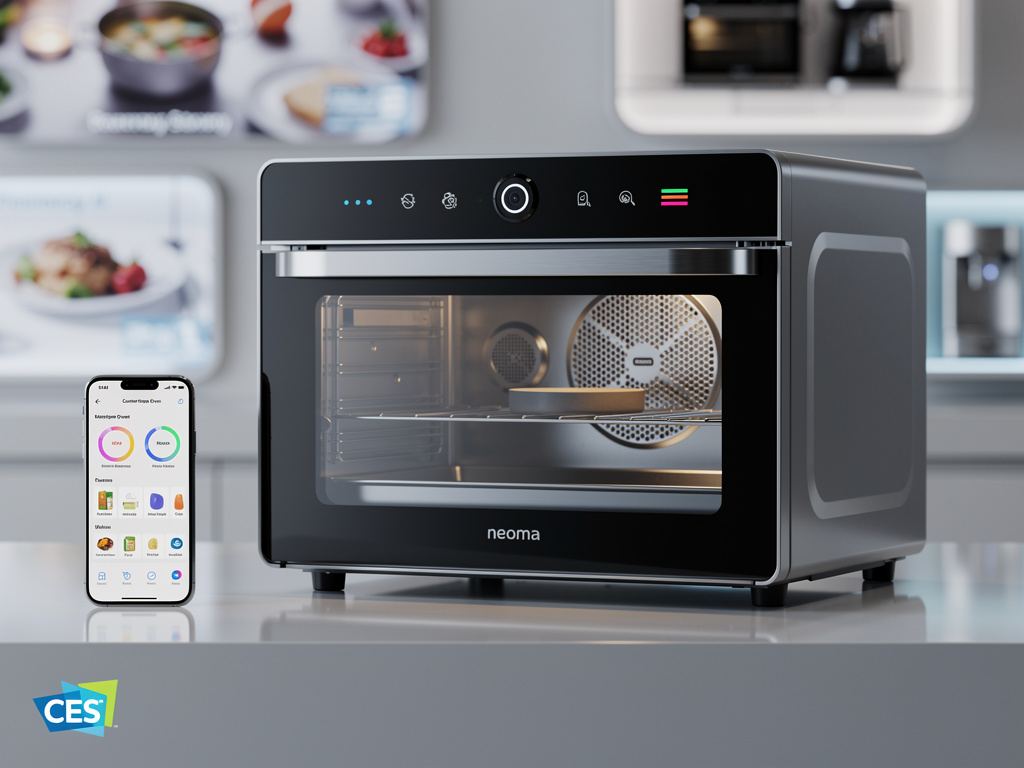
In the bustling halls of CES 2026, where tech giants vie for attention with futuristic gadgets, a barbecue specialist is making waves by bringing artificial intelligence indoors. Brisk It, known for its smart grills that leverage AI to perfect outdoor cooking, unveiled its first indoor appliance: the Neoma AI Countertop Oven. This move signals a broader push in the consumer electronics sector toward intelligent home devices that promise to revolutionize everyday tasks. Drawing from the company’s expertise in generative AI for grilling, the Neoma aims to simplify meal preparation for busy households, integrating features like automated recipe suggestions and even grocery list generation.
The announcement, detailed in an article from Engadget, highlights how Brisk It is expanding its Vera AI platform—previously confined to outdoor grills—into a compact, countertop format. Priced at $500 and slated for a spring 2026 release, the oven combines convection heating with AI-driven controls, allowing users to input simple commands like “bake a cake” and receive step-by-step guidance. This isn’t just about convenience; it’s a strategic pivot for Brisk It, a startup founded in 2018, which has built its reputation on tech-infused barbecues that use sensors and machine learning to monitor cooking in real time.
Industry observers note that this launch comes amid a surge in AI-integrated kitchen appliances at CES. For instance, recent coverage from Tom’s Guide describes the Neoma as a “game-changer for busy homes,” emphasizing its ability to scan pantry items via a companion app and suggest meals based on available ingredients. The oven’s AI can even interface with smart home ecosystems, potentially ordering groceries through integrated services, though details on partnerships remain under wraps.
AI’s Evolution from Grill to Oven: Brisk It’s Technological Backbone
At the core of the Neoma is Brisk It’s proprietary Vera AI, which employs generative models similar to those powering chatbots like ChatGPT. Users can converse with the system naturally, asking for recipe adaptations or troubleshooting mid-cook. This builds on the company’s earlier innovations, such as the Origin series grills unveiled at CES 2025, which used AI to automate smoking and searing processes. According to insights from Tomorrow’s World Today, that grill’s success—boasting features like predictive temperature adjustments—paved the way for indoor applications, addressing consumer demands for year-round smart cooking without the need for outdoor space.
The Neoma’s design is sleek and versatile, measuring about the size of a large microwave with a 1.2 cubic foot capacity, suitable for roasting chickens or baking pizzas. It incorporates multiple heating elements, including infrared for even browning, and built-in cameras that allow the AI to visually assess food doneness. This visual recognition tech, as reported in broader CES coverage by The Verge, represents an advancement over traditional smart ovens, which often rely solely on timers and probes. Brisk It claims the system learns from user preferences over time, refining suggestions to match dietary needs or flavor profiles.
Comparisons to competitors are inevitable. Samsung, a CES mainstay, has been pushing AI in kitchens since at least 2024, with devices like the Bespoke AI refrigerator that integrates with Google Gemini for inventory management. Posts on X (formerly Twitter) from tech enthusiasts, such as those discussing Samsung’s upcoming reveals at CES 2026, underscore a trend where AI isn’t just assistive but predictive, potentially reshaping how consumers interact with appliances. Brisk It’s entry differentiates itself by focusing on cooking precision rather than broad home connectivity, targeting grill aficionados who want indoor alternatives.
Market Dynamics and Consumer Adoption Challenges
The push for AI in kitchens isn’t new—CES 2024 featured robotic arms and automated chefs—but 2026 marks a maturation point. An article in WIRED argues that integrated AI must prioritize user experience to stand out, a lesson Brisk It seems to have heeded with the Neoma’s intuitive app interface. Priced accessibly, it aims to democratize high-tech cooking, but questions linger about data privacy, as the AI processes images and user inputs that could reveal eating habits.
Industry insiders point to potential hurdles in adoption. While the oven’s AI can generate shopping lists and integrate with delivery services, as noted in Tom’s Guide’s coverage, not all users may embrace such automation. Recent X posts from users like those hyping Nosh Robotics’ robo-chef at CES highlight excitement for hands-free cooking, but also skepticism about reliability in diverse cuisines. Brisk It addresses this by emphasizing the Neoma’s versatility across baking, roasting, and air frying, with over 500 pre-programmed recipes expandable via user uploads.
Moreover, the competitive environment is heating up. Bosch’s CES 2026 showcase, as shared in posts on X from tech accounts, includes personalized AI for kitchens, signaling that established players are investing heavily. Brisk It, as a relative newcomer, must navigate this by leveraging its niche in AI-driven precision, potentially partnering with recipe platforms or smart home giants like Amazon or Google to enhance interoperability.
Innovation Meets Practicality: Features and Future Implications
Diving deeper into the Neoma’s capabilities, the oven’s AI doesn’t stop at recipes; it offers real-time adjustments based on environmental factors like humidity or altitude, a feature borrowed from Brisk It’s outdoor tech. Engadget’s report details how this could prevent common baking mishaps, such as undercooked centers or burnt edges, by modulating heat dynamically. The companion app, available for iOS and Android, includes voice control compatibility with assistants like Alexa, making it a seamless addition to connected homes.
For industry professionals, the Neoma represents a case study in scaling AI from niche to mainstream. Brisk It’s journey, from smart grills to indoor ovens, mirrors broader shifts in consumer tech, where startups like it challenge incumbents by focusing on specialized use cases. Coverage from ZDNET on CES 2026 trends notes an emphasis on AI robots and autonomous systems, with Brisk It’s offering fitting into a narrative of kitchens becoming more intelligent and less labor-intensive.
Looking ahead, the implications extend beyond convenience. As AI handles more culinary decisions, it could influence food trends, promoting healthier or sustainable options through algorithmic nudges. X posts from influencers discussing robotic kitchen aids, such as DENSO’s wok station or Nosh’s multi-cuisine chef, reflect growing sentiment that automation will redefine home cooking, reducing waste and time while enhancing creativity.
Strategic Positioning and Broader Industry Shifts
Brisk It’s timing at CES 2026 is strategic, capitalizing on the show’s focus on AI ubiquity. An Euronews preview anticipates chip wars and AI integrations across devices, positioning the Neoma as part of a wave where processors enable smarter appliances. The company’s CEO, in statements echoed across media, envisions a future where AI anticipates user needs, perhaps preheating based on daily routines.
Challenges remain, including regulatory scrutiny over AI in food prep. While not directly addressed in current reports, parallels to data-handling in smart fridges suggest Brisk It will need robust privacy measures. Industry analysts, drawing from WIRED’s insights, stress that success hinges on seamless integration rather than gimmicks, a bar the Neoma appears poised to clear with its user-centric design.
In conversations on X, excitement builds around similar innovations, like GE’s smart fridge with AI assistants, indicating a market ripe for disruption. Brisk It could carve out a loyal following by blending its grilling heritage with indoor versatility, potentially expanding to full oven ranges if the Neoma succeeds.
Pushing Boundaries: What Lies Ahead for Smart Kitchens
The Neoma’s launch also sparks discussions on energy efficiency. With AI optimizing cooking cycles, it promises lower power consumption compared to traditional ovens, aligning with sustainability goals prominent at CES. ZDNET’s live updates capture this ethos, showcasing how tech firms are embedding eco-friendly features amid climate concerns.
For insiders, Brisk It’s move underscores a pivot toward holistic smart home ecosystems. By indoor-izing its AI, the company bridges outdoor and indoor cooking, appealing to urban dwellers without backyards. This could inspire hybrids, like combo grill-ovens, further blurring appliance categories.
Ultimately, as CES 2026 unfolds, the Neoma stands as a testament to AI’s maturing role in daily life. Engadget’s coverage paints it as an accessible entry point, but its true test will be in kitchens worldwide, where it must prove that smart tech enhances, rather than complicates, the joy of cooking. With ongoing innovations from rivals, Brisk It’s indoor foray might just ignite the next phase of kitchen evolution.


 WebProNews is an iEntry Publication