
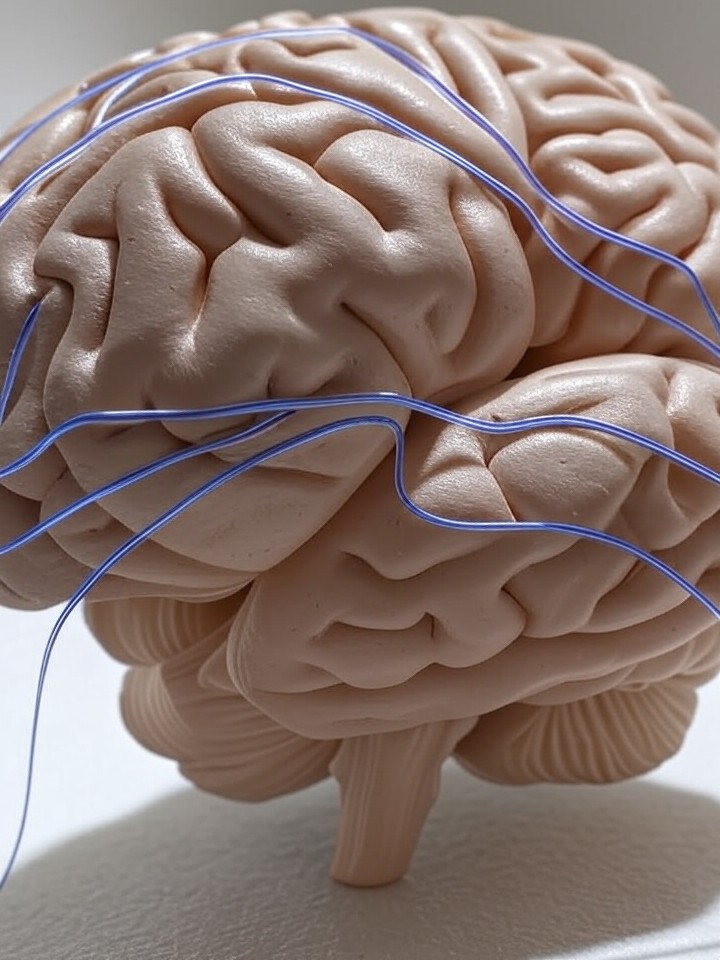
In the fast-paced world of modern work, where deadlines loom and to-do lists multiply, procrastination remains one of the most perplexing human behaviors. It’s not merely a matter of poor time management or lack of willpower; recent neuroscience research suggests it’s wired into our brains. A groundbreaking study published just days ago has identified a specific neural circuit that acts like a “motivation brake,” preventing us from tackling tasks perceived as unpleasant or effortful. This discovery, emerging from experiments with macaque monkeys, offers fresh insights into why we scroll through social media instead of starting that report—and it could pave the way for targeted interventions.
The research, detailed in a Wired article, involved scientists at Kyoto University who observed brain activity in monkeys faced with choices between immediate, effortful tasks and delayed rewards. By monitoring neural signals, they pinpointed a connection between the anterior cingulate cortex (ACC) and the dorsal anterior cingulate sulcus (dorsal ACS). This circuit essentially evaluates the cost of effort against potential benefits, hitting the brakes when the perceived hassle outweighs the payoff. When researchers disrupted this pathway using a drug, the monkeys became more willing to engage in demanding tasks, suggesting that procrastination might stem from an overactive protective mechanism in the brain.
This isn’t the first time neuroscience has probed procrastination, but it’s among the most precise. Earlier studies, such as one from 2022 in Nature Communications, used fMRI scans on humans to model procrastination as a series of delayed decisions. Participants who procrastinated showed heightened activity in regions linked to temporal discounting—valuing immediate ease over future rewards. The Kyoto team’s work builds on this by isolating a tangible circuit, one that could explain why even high-achievers put off chores like filing taxes until the last minute.
The Neural Brake: A Protective Instinct Gone Awry
At its core, this motivation brake seems evolutionary. Our ancestors likely benefited from conserving energy for threats rather than expending it on non-essential tasks. In today’s context, however, it misfires. The ACC, often called the brain’s error-detection hub, flags tasks as potential stressors, while the dorsal ACS amplifies avoidance signals. When activated, this duo creates a feedback loop: the brain anticipates discomfort, releases stress hormones like cortisol, and opts for distraction.
Insights from related research underscore this. A 2025 post on X by neuroscientist Lorwen C. Nagle, PhD, highlighted how procrastination ties to the brain’s default mode network, which simulates worst-case scenarios like failure or judgment. This aligns with findings from CogniFit Blog, where executive dysfunction is described as emotional roadblocks in planning systems, not laziness. Procrastinators aren’t unmotivated; their brains are in overdrive, prioritizing short-term emotional relief.
Moreover, the Kyoto study echoes sentiments in a recent BBC Science Focus piece, which dubbed this circuit a “pesky motivation brake.” Monkeys in the experiment hesitated on high-effort tasks, mirroring human behavior during crunch time. Disrupting the circuit pharmacologically increased task initiation, hinting at future treatments—perhaps drugs that fine-tune this pathway without broad side effects.
From Monkeys to Humans: Bridging the Gap
Translating animal findings to humans is tricky, but the parallels are striking. Human neuroimaging, as explored in a 2022 PMC article mirroring the Nature study, shows similar patterns: procrastinators delay tasks due to exaggerated effort costs processed in the ACC. Recent web searches reveal a surge in discussions, with a ScienceBlog.com report noting that this brake explains why we freeze before starting hard work, attributing it to neural cost-benefit analyses gone haywire.
Industry insiders in tech and productivity sectors are buzzing. Posts on X from accounts like Neuroscience News emphasize how the brain shifts between external attention and internal rumination, a process that falters in procrastinators. This ties into broader executive function research, where low dopamine baselines— as discussed in another X thread by Nagle—make motivation physically elusive. Without enough dopamine, the prefrontal cortex struggles to override limbic impulses, leading to avoidance.
Real-world applications are emerging. Therapists are incorporating these insights into cognitive behavioral strategies, teaching clients to reframe tasks to bypass the brake. For instance, breaking a project into micro-steps reduces perceived effort, tricking the ACC into green-lighting action. A 2025 Insights Psychology article on the science of procrastination suggests creatives use therapy to dismantle mental roadblocks, aligning with the neural model.
Disrupting the Circuit: Pharmacological Promises and Pitfalls
The Kyoto team’s drug intervention is provocative. By injecting a GABA antagonist into the circuit, they effectively “unbraked” motivation in monkeys. This raises questions for human medicine: Could similar compounds treat chronic procrastination linked to ADHD or depression? Experts caution against over-enthusiasm. As noted in an Ultimas Noticias piece, interfering with natural protective processes might lead to burnout or reckless decision-making.
Historical context enriches this. A 2022 Nature Communications model predicted procrastination via computational simulations, factoring in reward discounting and effort aversion. Individuals with high procrastination scores delayed administrative tasks, much like the monkeys postponing effort for rewards. Recent X posts, including one from WIRED’s official account, amplify the buzz, with users sharing personal anecdotes of “threat response” overriding goals.
Ethical considerations loom large. If procrastination is a brain mechanism, is medicating it akin to enhancing cognition? Bioethicists, drawing from sources like The Conversation’s 2025 article on rigid thinking, argue it’s trainable through mindfulness, not just pills. Flexibility in handling stress can unlearn avoidance patterns, offering a non-invasive path.
Evolutionary Roots and Modern Mismatches
Delving deeper, procrastination’s neural basis may trace to survival instincts. The limbic system, as Ani Shashua noted in a 2026 X post, treats boring or failure-prone tasks as threats, hijacking the prefrontal cortex. This “ancient survival hack” worked in hunter-gatherer eras but clashes with desk jobs demanding sustained focus.
Comparative studies bolster this. Macaques, sharing 93% of our DNA, provide a reliable proxy. The dorsal ACS’s role in effort evaluation, per the Wired findings, mirrors human fMRI data from intertemporal choice tasks. A 2026 Izvestia article reported on the Kyoto discovery, framing it as a universal “motivation brake” across species.
In corporate settings, this science is reshaping productivity tools. Apps now incorporate “dopamine priming” techniques, like gamification, to counteract the brake. Insights from a 2024 Insights Psychology guide stress overcoming procrastination through neuroscience-backed habits, such as timed work bursts to build momentum.
Broader Implications for Mental Health
Procrastination intersects with mental health disorders. Executive dysfunction, detailed in CogniFit’s coverage, links to ADHD, where the motivation brake is perpetually engaged. Recent studies suggest genetic factors amplify this, with neuroticism correlating to active procrastination, as per a 2020 X post citing older research.
Therapeutic innovations are accelerating. Neurofeedback training, which visualizes brain activity, could recalibrate the ACC-dorsal ACS circuit. Combined with insights from Nature’s 2022 model, this might predict and preempt procrastination in high-stakes fields like finance or tech.
Public sentiment on X reflects optimism mixed with skepticism. Posts from influencers like S.M. Brain Coach describe a “procrastination-stress loop,” where avoidance reinforces neural threats. This echoes the Wired study’s core message: understanding the mechanism demystifies the behavior.
Pushing Boundaries: Future Research Directions
As neuroscience advances, expect more targeted probes. Optogenetics, used in rodent studies, could illuminate human analogs, though ethical hurdles remain. The Kyoto team’s work, lauded in ScienceBlog.com, sets a benchmark for integrating animal models with computational predictions.
Industry applications extend to AI. Productivity software might simulate neural brakes to coach users, drawing from default mode network research in Neuroscience News posts. This could revolutionize remote work, where self-motivation is paramount.
Ultimately, this discovery reframes procrastination as a brain feature, not a flaw. By crediting evolutionary wiring while offering modern fixes, science is equipping us to override our inner delays. Whether through drugs, therapy, or habits, the path forward involves respecting the brake while learning to release it strategically.


 WebProNews is an iEntry Publication