
Keith Thomas lay in a hospital bed in 2020, his body immobile from the chest down after a diving accident shattered his neck. The next day, he could not move. Doctors delivered the news: complete tetraplegia. Sensation and voluntary control below the injury had vanished.
Three years later, Thomas sat in a lab at Northwell Health’s Feinstein Institutes for Medical Research. Electrodes implanted in his brain picked up signals as he thought about moving his arm. Artificial intelligence translated those signals into commands. Stimulators on his skin and near his spinal cord fired in precise patterns. His hand closed around a cup. He lifted it to his lips and drank. For the first time in years, he felt the pressure against his palm.
That moment marked more than a technical success. It signaled the potential for electronic bridges to do something deeper than bypass damage. They can encourage the nervous system to rebuild connections on its own. Results from the three-year clinical trial, published in Nature Medicine, show Thomas regained functional movement and touch that persisted more than two years after researchers turned the stimulation off. The findings landed on the journal’s cover and drew fresh attention across the scientific community.
Chad Bouton led the effort. A professor in the Institute of Bioelectronic Medicine at the Feinstein Institutes and vice president of advanced engineering at Northwell Health, he had spent years refining interfaces that link minds to machines. “This is the first time the brain, body and spinal cord have been linked together electronically in a paralyzed human to restore lasting movement and sensation,” Bouton said in a statement to Feinstein Institutes.
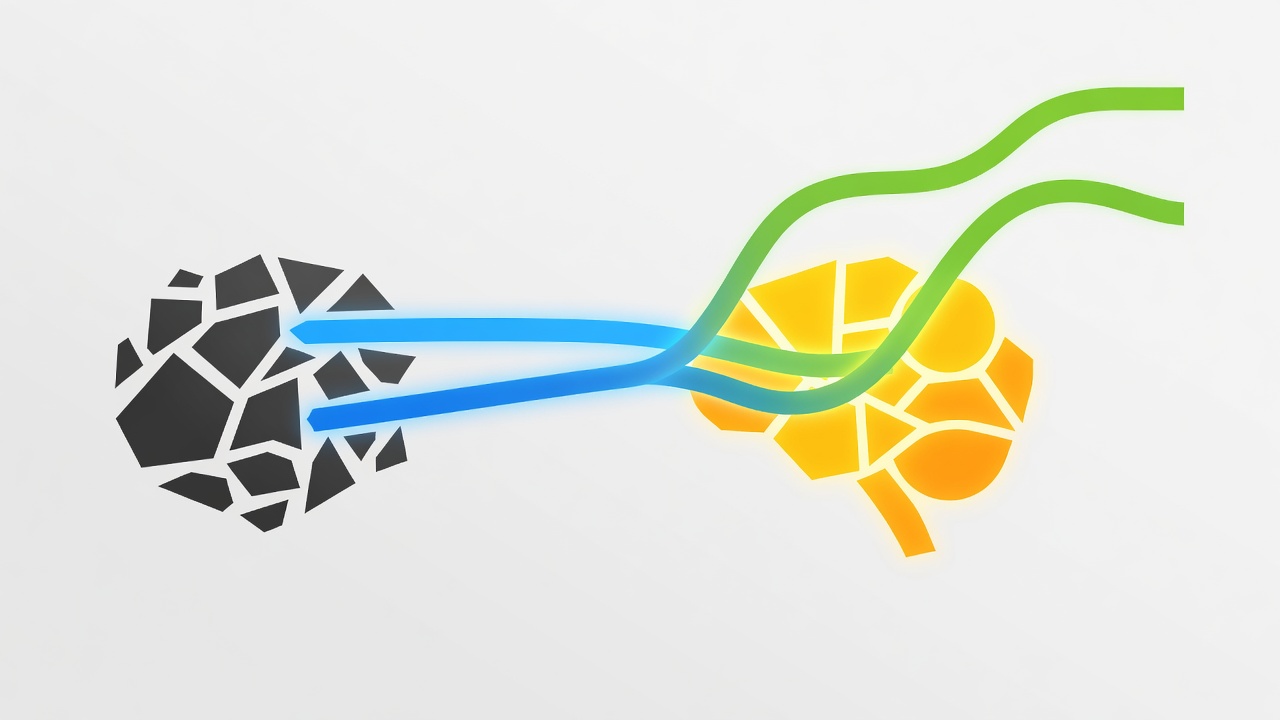
The system carries a simple name with complex engineering behind it. The double neural bypass operates in two directions. One pathway reads motor intentions from the brain, decodes them with custom AI algorithms, and sends targeted electrical pulses to muscles in the forearm. The other pathway captures touch and pressure data from sensors on the hand, then stimulates the sensory region of the brain to generate the perception of contact. Five microelectrode arrays went into Thomas’s cortex during a 15-hour surgery performed by neurosurgeon Ashesh Mehta.
Training followed. Thomas spent months imagining movements while the system stimulated his spinal cord and muscles. The approach, sometimes described as supercharging dormant pathways, appeared to promote plasticity. Over 35 weeks, strength in his right arm increased by 86 percent and in his left by 62 percent. He learned to scratch his nose, wipe his mouth, and handle fragile objects. In one test, he lifted empty eggshells without crushing them 87 percent of the time, even while carrying on a conversation. The decoder maintained 84.6 percent accuracy across five months without retraining.
Touch returned more gradually. Researchers developed a technique called cortical mirroring. They recorded patterns of brain activity when Thomas imagined feeling a touch, then replayed similar patterns through the implants while pairing them with peripheral stimulation. After about 25 weeks, sensation returned to his right wrist, an area that had remained numb since the injury. He felt his sister’s hand. He stroked his dog’s fur and perceived its texture. “Being able to feel my sister’s hand, to pet my dog and feel her fur, these experiences that the injury took away have been restored,” Thomas told The Next Web.
But the most striking observation came later. Many of the gains endured long after the hardware stopped delivering pulses. Follow-up assessments more than two years after the formal training ended showed Thomas could still feed himself and drink from a cup. He retained improved arm and wrist control. The persistence suggests the technology did not simply route signals around the injury. It helped rewire the nervous system.
“We’re not just bypassing the injury; we’re actually rewiring the nervous system,” Bouton explained to The Guardian. For years researchers had sought both movement restoration and sensory feedback in one platform while aiming for effects that outlasted the device. “I think we’re going to continue to see progress and I think it’ll be applicable to the millions of folks around the world who really need this technology.”
The work arrives at a busy time for brain-computer interfaces. Companies such as Neuralink have demonstrated thought-controlled cursors and device operation in multiple patients. Other teams explore speech decoding or non-invasive headsets. Yet the Feinstein trial stands out for its focus on both motor output and sensory input, combined with evidence of lasting biological change. Popular Science reported the updated findings this week, noting that Thomas continues to perform daily tasks independently.
Experts watching the field offered measured praise. The results represent a clear advance in restoring function for severe spinal cord injury. Questions remain about how widely the benefits will apply. Patient selection, injury level, time since injury, and individual differences in plasticity all influence outcomes. Larger trials will need to test the approach across more participants and refine the technology for home use. Bouton’s team has already begun enrolling a second participant and plans studies in stroke recovery.
Thomas, now several years removed from his accident, describes the change in practical terms. He can eat without assistance. He interacts with family and pets through restored touch. The hours of lab training twice a week produced effects that carry into ordinary life. Still, the system requires careful calibration and medical oversight. Portability and reliability outside controlled settings present ongoing engineering challenges.
The trial’s publication in Nature Medicine coincides with renewed discussion about the pace of neurotechnology development. Recent coverage in STAT News highlighted both the excitement and the caution. Clinicians applaud the functional gains but stress the need for data on long-term safety, scalability, and equitable access. About 15 million people worldwide live with spinal cord injury. Most with tetraplegia identify hand function and sensation as top priorities.
From a technical standpoint, the double neural bypass integrates several existing tools in a novel configuration. Intracortical arrays capture rich neural signals. Machine learning models decode intent with high fidelity. Noninvasive muscle and spinal stimulators avoid additional brain surgery while delivering targeted activation. The closed-loop sensory feedback completes the circuit. AI serves as the translator and adapter, adjusting stimulation patterns in real time based on performance.
Thomas’s case illustrates the human stakes. A former ordinary life interrupted in an instant. Then, through determination and scientific persistence, partial return of agency. He no longer depends entirely on caregivers for simple acts. That shift carries emotional weight as much as physical.
Researchers emphasize that the technology does not cure paralysis. It augments recovery and creates new pathways. The rewiring observed here may stem from repeated pairing of intent, stimulation, and feedback, a form of Hebbian learning at the circuit level. Exactly how much rewiring occurs, in which tracts, and in whom, requires further study with advanced imaging and larger cohorts.
Even so, the persistence of benefit two years later sets a new marker. Previous brain-computer interface demonstrations often showed strong performance only while the device remained active. Here, the electronic bridge appears to have helped the biological system resume some duties. If confirmed in additional patients, the implication could shift how doctors and engineers think about recovery timelines and therapeutic goals.
Bouton and his colleagues continue to iterate. They explore ways to make the system wireless, reduce the number of implanted arrays, and personalize algorithms faster. Partnerships with device manufacturers and regulatory experts will shape the path toward broader availability. For now, the focus stays on gathering rigorous evidence and improving outcomes for the individuals who entrust their brains to the procedure.
Thomas keeps returning to the lab. Progress continues, sometimes in small increments that accumulate. He lifts his arm because he chooses to. He feels contact with the world around him. And in those actions, a bridge between thought and motion becomes something more permanent. A connection rebuilt, one signal at a time.


 WebProNews is an iEntry Publication