
Aaron Levie wants agents running Box’s finance close. He wants them handling legal intake. And he wants engineers who can make that happen without breaking compliance or security.
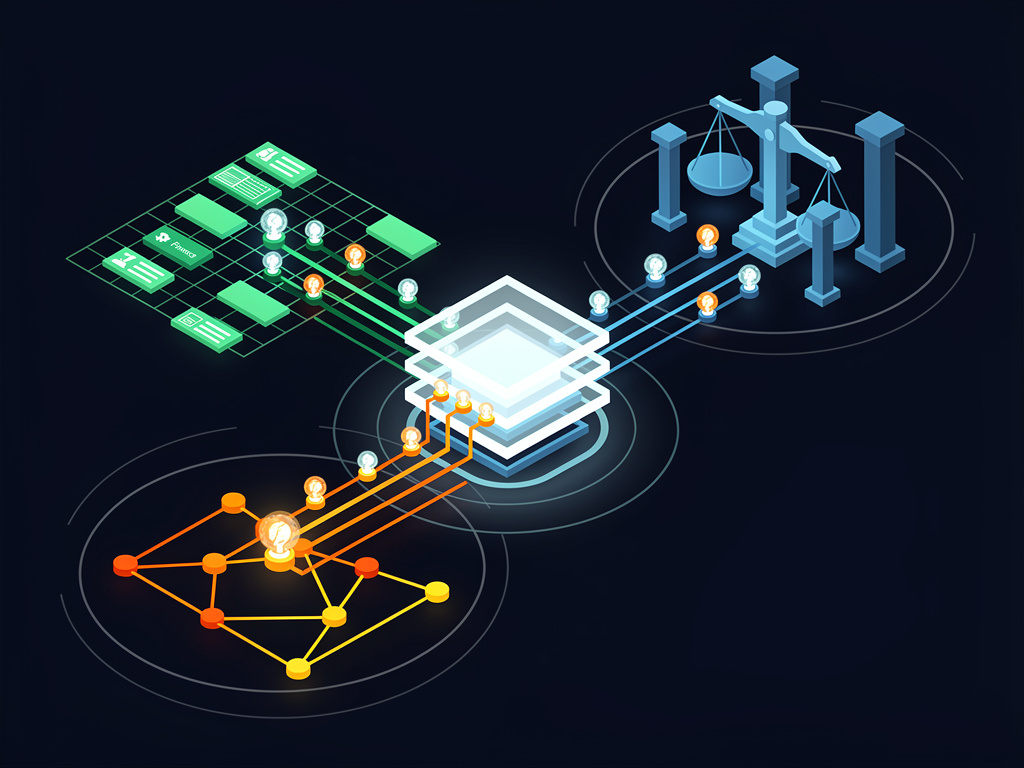
Box posted a job for an AI Business Automation Engineer last week. The salary runs from $146,500 to $183,000. The role sits inside IT. Yet it embeds directly with subject matter experts across finance, legal, people, go-to-market teams, and customer success. One week the engineer might wire an agent into a monthly close process. The next, redesign a workflow as an agentic system.
This isn’t experimentation. Box demands production-grade work. The job listing stresses infrastructure standards, data pipelines, integration rules, and information security from day one. Box’s own careers page makes the expectation clear: build agents that materially change how work gets done. No demos. Real systems that operate with monitoring, runbooks, and incident response.
Levie described the position in blunt terms on X. “This isn’t a side project or something you can just do on nights and weekends,” he wrote. “You need to design and develop robust agents that will be used in mission critical workflows.” He added that advanced agents moving into knowledge work require real work and know-how. Agents need proper context, secure system connections, and governance.
The post drew quick attention. Business Insider reported the listing on May 11, 2026, framing it as the latest sign of new roles taking shape in the AI era. Levie himself called the job “highly technical” and “very much akin to a forward deployed engineer for internal functions.”
That comparison points straight to Palantir. The data analytics firm built its reputation on forward-deployed engineers who embed with customers. They translate complex missions into working software and AI systems on the ground. Palantir’s careers site describes Deltas as those who ensure solutions actually work, delivering scalable infrastructure and practical AI systems. Echos focus on identifying true problems and aligning stakeholders from executives to frontline users.
Box now adapts that model inward. Instead of deploying talent at client sites, the company plants technical experts inside its own departments. The goal stays the same. Close the gap between business needs and technical delivery. Make AI deliver measurable change rather than slide-deck promises.
Requirements reflect the hybrid demand. Candidates need two to three years of hands-on engineering experience shipping production code. They must know Python or similar languages. Yet the listing also calls for deep experience with agentic coding platforms such as Claude Code, Cursor, and Codex. Applicants should build custom agents using MCP servers and CLIs. Familiarity with frameworks like LangGraph, OpenAI Agent SDK, or Claude Agent SDK counts as an advantage.
Data skills matter too. The engineer owns pipelines, models, and access patterns so AI outputs stay trustworthy. Integrations span Box itself, Workday, Salesforce, NetSuite, Atlassian, and BigQuery. Security cannot be an afterthought. The role demands attention to data classification, least-privilege access, auditability, and responsible AI practices. Cloud knowledge, preferably GCP, rounds out the profile.
Levie has spoken repeatedly about AI’s effect on productivity. In a recent Yahoo Finance article, he argued each engineer becomes two times or five times more capable. That capacity, he said, drives hiring growth instead of cuts. Agents won’t replace people. They need people to direct them, evaluate outputs, and handle exceptions.
A MindStudio analysis published May 5, 2026 captured Levie’s thinking in more detail. He sees agent engineering as extremely technical work that builds secure, governed agents for internal workflows. Engineers must collaborate shoulder-to-shoulder with business teams. They translate processes, handle edge cases across systems like Salesforce and Workday, and maintain judgment when agents make decisions.
The piece notes a key difference from traditional automation. Older approaches solved bounded problems with scripts or RPA. Agent engineers tackle open-ended, multi-team workflows where systems must decide and act with limited oversight. That raises the cognitive load. Humans spend time reviewing outputs, debugging failures, and refining context. Four or five intense hours might represent a full productive day.
Box already offers AI-powered automation features to customers. Its Automate product lets teams build custom agents using large language models. Those agents extract information from contracts, invoices, and other unstructured content. They adapt workflows to real inputs. Legal teams gain auditable processes. HR groups automate onboarding document checks.
Now Box applies similar thinking internally. The new hire will prototype with LLM APIs, retrieval-augmented generation, and orchestration tools. Then move those prototypes into production environments that respect enterprise controls. The listing emphasizes evangelizing possibilities so business partners become co-owners of the transformed processes.
Industry watchers see this as an early signal. On X, users noted that six months ago the title barely existed. Six months from now, they predicted, every serious company will employ similar specialists. One post observed that the role combines founding-engineer skills with deep process knowledge and cross-functional translation ability.
Predictions extend beyond a single position. New supporting roles may emerge. Some organizations could hire agent operations engineers to monitor uptime and token costs. Others might need context librarians who curate knowledge and permissions for agents. Eval engineers could focus on building quality gates that catch errors before they reach compliance teams.
The bottleneck, several analysts argue, has shifted. Technology itself no longer limits progress. Human infrastructure does. Companies must decide which processes to agentify, how to govern them, and who holds accountability when agents act autonomously. Those choices require new organizational muscle.
Levie himself expects the pattern to spread. “This is just one example of the kind of role that AI will start to open up in the future,” he posted. “I expect most companies will have many flavors of this going forward.”
Box’s move arrives at a moment when enterprise AI adoption feels both urgent and messy. Vendors promise autonomous agents. CIOs worry about data leakage, audit trails, and unexpected decisions. The AI Business Automation Engineer exists to bridge that tension. Technical enough to build. Business-aware enough to identify the right targets. Disciplined enough to ship safely.
Whether one role scales into a full function remains to be seen. Yet the listing already reveals priorities. Production over prototypes. Integration over isolation. Governance woven into the architecture rather than bolted on later. And a willingness to treat internal operations with the same rigor once reserved for customer-facing products.
That attitude may define the next wave of AI hiring. Not flashy research positions. Not generic prompt engineers. Instead, engineers who can sit with finance teams on Monday, map their close process, and return with an agent that knows the difference between routine variances and red flags. Who understand that legal intake involves risk tiers, approval matrices, and document classification rules that no generic model grasps without guidance.
Box is betting such specialists will multiply the effectiveness of its existing staff. Levie has said AI agents need humans. This role exists to make that partnership concrete, secure, and scalable. The salary reflects the stakes. The responsibilities show the ambition. The inspiration from Palantir’s model suggests a proven path for embedding advanced technology where it matters most.
Other companies will watch closely. Some may copy the title directly. Others will invent their own variants. But the underlying need stays consistent. As agents move from coding assistants to participants in knowledge workflows, organizations require translators who speak both business and machine. Box just gave that role a name, a budget, and a mandate.


 WebProNews is an iEntry Publication