
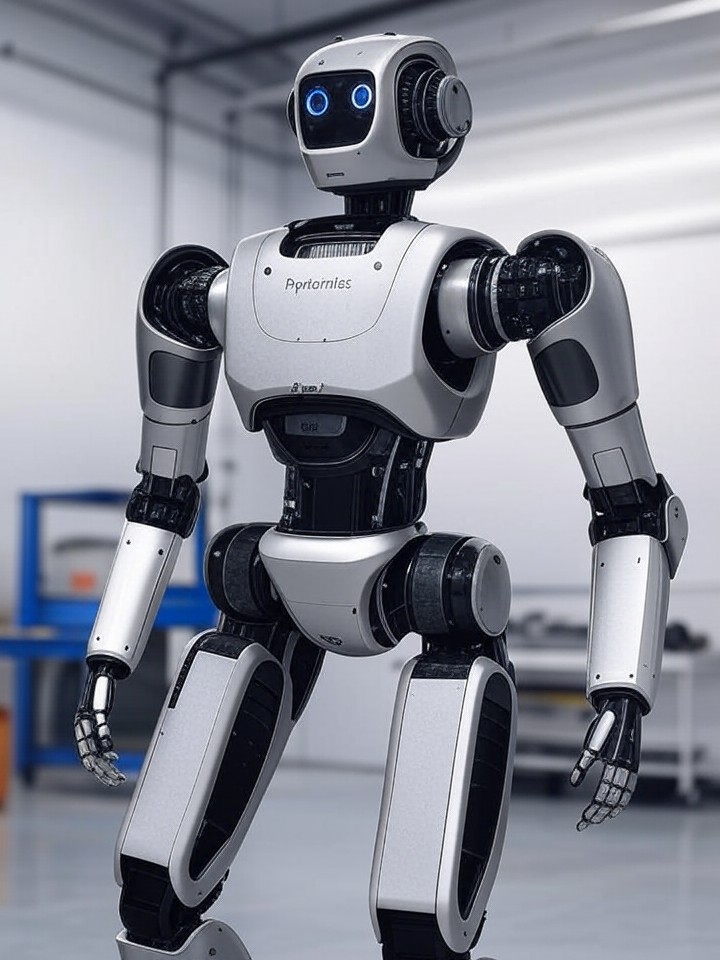
Atlas Awakens: Boston Dynamics’ Bold Stride into Humanoid Robotics at CES 2026
In the bustling halls of the Las Vegas Convention Center, where the future of technology unfolds each year, Boston Dynamics stole the spotlight at CES 2026 with the public debut of its revamped Atlas humanoid robot. This isn’t just another prototype tease; it’s a production-ready machine poised to transform manufacturing floors and beyond. Owned by Hyundai Motor Group, Boston Dynamics has shifted gears from viral videos of acrobatic robots to deploying practical, AI-infused workers that could redefine labor in heavy industries.
The new Atlas, fully electric and designed for real-world tasks, marks a pivotal evolution from its hydraulic predecessors. Engineers have equipped it with 56 degrees of freedom, allowing movements that surpass human capabilities in flexibility and precision. During the CES demonstration, Atlas showcased its ability to navigate uneven terrain, manipulate heavy objects with tactile-sensing hands, and even perform self-battery swaps to ensure uninterrupted operation—features that address longstanding challenges in robotics deployment.
This unveiling comes amid intensifying competition in the humanoid robotics sector, with players like Tesla pushing their own bots into the fray. Yet Boston Dynamics’ approach emphasizes integration with existing industrial ecosystems, starting with Hyundai’s factories. The robot’s debut wasn’t merely a show; it signaled immediate production plans, with initial units slated for deployment at Hyundai’s electric vehicle plant near Savannah, Georgia, by 2028.
Unveiling the Mechanical Marvel
At the heart of Atlas’s appeal is its electric powertrain, ditching the noisy, maintenance-heavy hydraulics of older models for a sleeker, more efficient system. According to details shared in a Boston Dynamics blog post, the robot stands at 6 feet 2 inches, weighs 198 pounds, and can lift up to 110 pounds—making it a formidable assistant in automotive assembly lines. Its 360-degree rotating joints enable superhuman dexterity, such as twisting its torso in ways that would be impossible for a person, enhancing its utility in confined spaces.
Partnerships are key to this rollout. Boston Dynamics has teamed up with Google DeepMind to infuse Atlas with advanced AI, enabling it to perceive and interact with complex environments. A press release from Hyundai Motor Group highlights how this collaboration aims to create “human-centered robotics,” focusing on safe, efficient interactions between machines and workers. During the CES demo, Atlas demonstrated object recognition using a combination of 2D and 3D perception systems, picking up and sorting components with eerie precision.
Industry observers note that this isn’t hype; it’s a calculated step toward scalability. Posts on X from robotics enthusiasts, including accounts like The Humanoid Hub, have buzzed about the robot’s potential since teasers emerged last year. One such post described Atlas’s agile perception system, which allows it to understand both the shape and context of objects, a critical advancement for dynamic work settings.
From Lab to Factory Floor
The path to CES 2026 has been years in the making. Boston Dynamics first introduced an electric Atlas prototype in 2024, as reported in various tech outlets, but the 2026 version represents a maturation into a commercial product. An article from Engadget details how initial deployments will target Hyundai and Google DeepMind, with broader availability potentially following. This phased approach mitigates risks, allowing real-world testing in controlled environments.
Hyundai’s involvement is particularly strategic. The automaker plans to integrate Atlas into its manufacturing processes, starting with car assembly tasks that require strength and repetition. A report from NBC News mentions that the robot will help assemble electric vehicles at the Savannah facility, which notably faced an immigration raid in 2025—highlighting the complex socio-economic factors at play in automating labor.
Moreover, the partnership with Google DeepMind isn’t just about software; it’s about foundational intelligence. A dedicated announcement on Boston Dynamics’ site explains how they’re utilizing models like Gemini to enhance the robot’s decision-making. This could lead to Atlas learning on the job, adapting to new tasks without constant reprogramming, a game-changer for industries facing skilled labor shortages.
Technological Edge and Challenges Ahead
Diving deeper into Atlas’s capabilities, the robot’s four-hour battery life, combined with self-swapping functionality, addresses a major hurdle in continuous operation. As noted in X posts from sources like DriveGreenLiveGreen, this feature ensures minimal downtime, crucial for 24/7 factory settings. The tactile-sensing hands, capable of delicate manipulations, draw from years of R&D, evolving from the grippers seen in earlier prototypes.
However, integrating such advanced robotics isn’t without obstacles. Safety remains paramount; Atlas must coexist with human workers without posing risks. Hyundai’s AI Robotics Strategy, outlined in their CES presentation, emphasizes “human-robot collaboration,” incorporating sensors to detect and avoid collisions. An analysis from KED Global describes a CES stage demo where Atlas moved with “deliberate calm,” underscoring the focus on controlled, predictable behaviors.
Competition adds another layer. Tesla’s Optimus and other humanoids from startups are vying for similar markets. Yet Boston Dynamics differentiates through proven hardware, like the mobility seen in its Spot robot, now integrated with AI enhancements. A piece from The Verge points out Atlas’s increased degrees of freedom, positioning it as a rival ready for factory work by 2028.
Economic Implications and Broader Impact
The economic ripple effects could be profound. By automating repetitive, dangerous tasks, Atlas might boost productivity in sectors like automotive and logistics. A BBC article from BBC News discusses Hyundai’s plans to deploy the technology at plants, potentially reducing reliance on human labor in high-risk areas. This shift, however, raises questions about job displacement, especially in regions like Georgia where manufacturing jobs are vital.
On the innovation front, the Google DeepMind collaboration could accelerate AI advancements in embodied systems. As detailed in an Automate.org insight, this partnership aims to improve how humanoids learn from physical interactions, paving the way for more intuitive robots across industries.
Public sentiment, gauged from X, reflects excitement mixed with caution. Posts highlight Atlas’s commercial appeal, with one noting its strength over hydraulic models, but there’s underlying wariness about robots in daily life. Boston Dynamics addresses this by focusing on transparency, releasing videos that show Atlas in action, from perception tasks to industrial simulations.
Future Trajectories in Robotics
Looking ahead, Atlas’s CES debut sets a benchmark for the field. With production underway, as confirmed in multiple sources, the robot could expand beyond Hyundai to other partners. An Interesting Engineering roundup lists Atlas among nine standout humanoids at CES, signaling a maturing market where practical deployment trumps spectacle.
Challenges like regulatory hurdles and ethical considerations loom. Ensuring AI-driven robots operate fairly and safely will require ongoing oversight. Hyundai’s strategy includes showcasing integrated systems at their booth, featuring Atlas alongside Spot and other bots, demonstrating a holistic approach to robotics.
Ultimately, this moment at CES 2026 encapsulates a turning point. Boston Dynamics, once known for entertaining demos, is now delivering on the promise of humanoid robots as viable workforce additions. As industries adapt, Atlas may well become synonymous with the next era of automated efficiency, blending human-like agility with machine reliability in ways that reshape production paradigms.
Industry Voices and Expert Perspectives
Industry insiders have weighed in enthusiastically. Analysts predict that partnerships like this could lower barriers to entry for humanoid adoption. A post on X from MarcoDotIO summarized the specs and hailed it as a transformative step, echoing sentiments in tech circles.
Experts emphasize the role of AI in scaling these technologies. By leveraging DeepMind’s expertise, Atlas gains an edge in adaptive learning, potentially handling unstructured tasks that stump less sophisticated bots.
As the dust settles from CES, the focus shifts to execution. With deployments on the horizon, the true test will be in real factories, where Atlas must prove its mettle against human counterparts in speed, cost, and reliability.
Pioneering a New Robotic Era
Reflecting on the broader context, Atlas’s evolution traces back to Boston Dynamics’ roots in dynamic mobility. Early videos from 2024, shared widely on platforms like X by users such as Rowan Cheung, showcased the electric model’s flexibility, building anticipation for this production version.
The CES 2026 showcase, detailed in a Digital Trends article, featured live demos that impressed attendees, from fluid movements to AI-driven interactions. This hands-on reveal underscores Boston Dynamics’ commitment to transparency and progress.
In the end, Atlas represents more than machinery; it’s a harbinger of integrated human-robot futures, where technology augments rather than replaces, driving innovation across global industries. As production ramps up, the world watches to see how this humanoid will redefine what’s possible on the factory floor and beyond.


 WebProNews is an iEntry Publication