
Unlocking the Factory Floor: Boston Dynamics’ Bold Timeline for Humanoid Robot Deployment
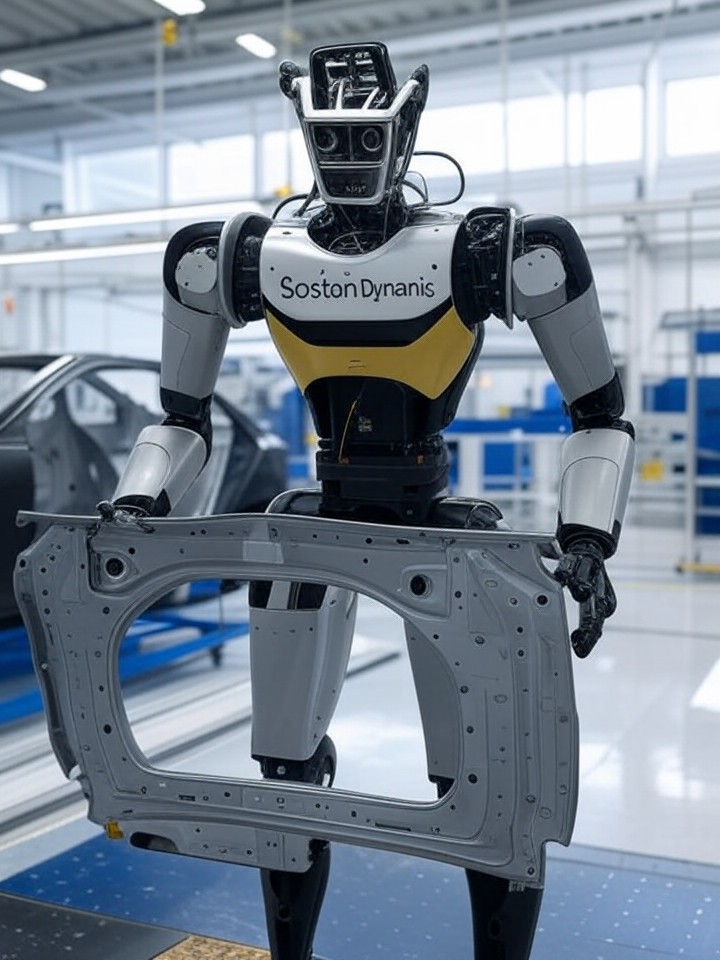
Boston Dynamics, the robotics pioneer known for its agile machines, is gearing up for a significant leap in industrial automation. In a recent interview, CEO Robert Playter outlined ambitious milestones for the company’s humanoid robot, Atlas, which is slated for deployment in Hyundai’s factories by 2028. Playter emphasized that before these robots hit the production lines, they must master the ability to learn new tasks within just 48 hours—a critical benchmark for practical use in dynamic manufacturing environments. This push reflects broader industry shifts toward integrating advanced AI with physical robotics, aiming to tackle labor shortages and repetitive tasks.
The interview, detailed in a Business Insider piece, reveals Playter’s vision for Atlas as more than a novelty. He described how the robot needs to adapt quickly to varying factory conditions, from handling tools to navigating cluttered spaces. This rapid learning capability is powered by sophisticated AI models that allow Atlas to observe, imitate, and refine actions based on real-time feedback. Playter noted that current prototypes are already demonstrating impressive dexterity, but scaling this to reliable, round-the-clock operation remains a hurdle.
Hyundai Motor Group’s involvement adds a layer of real-world testing to the equation. As reported by Reuters, the South Korean automaker plans to introduce these robots into its U.S. facilities starting in 2028, focusing on high-risk and monotonous jobs. This collaboration builds on Boston Dynamics’ acquisition by Hyundai in 2021, blending automotive manufacturing expertise with cutting-edge robotics. Playter highlighted that initial deployments will target simple assembly line tasks, gradually expanding to more complex operations as the technology matures.
Rapid Adaptation as the Key Milestone
Achieving the 48-hour learning threshold isn’t just a technical goal; it’s a make-or-break factor for widespread adoption. Playter explained that factories can’t afford lengthy retraining periods for robots, especially in industries where production demands fluctuate. This requirement draws from advancements in machine learning, where AI systems like those developed by Google DeepMind—another potential partner mentioned in social media discussions—could enhance Atlas’s cognitive abilities. Posts on X have buzzed with speculation about these timelines, with users noting that Boston Dynamics has already reserved all 2026 deployments for key clients like Hyundai and DeepMind.
Beyond learning speed, cost and scalability are pivotal. A Forbes analysis from late 2025 estimated that humanoid robots could drop in price to under $50,000 per unit by the end of the decade, making them viable for small and medium-sized manufacturers. Playter echoed this optimism, suggesting that economies of scale from mass production will drive down costs, potentially revolutionizing sectors plagued by workforce shortages. However, he cautioned that regulatory approvals and safety certifications could delay full rollout.
The competitive field is heating up, with rivals like Tesla and Chinese firms accelerating their own humanoid projects. Elon Musk’s announcement, referenced in older X posts, aimed for Tesla’s Optimus robots to enter low-volume production by 2025, with high-volume output targeted for 2026. In contrast, Playter’s timeline for Atlas focuses on quality over quantity, prioritizing reliability in industrial settings. Recent news from CES 2026, covered by Interesting Engineering, showcased nine humanoid models transitioning from prototypes to deployable units, underscoring the industry’s momentum.
From Prototypes to Production Lines
Boston Dynamics’ journey with Atlas has evolved dramatically since its early acrobatic demos. Playter recounted how the robot’s design has shifted toward practical applications, incorporating reinforced joints for heavy lifting and AI-driven vision systems for object recognition. A video interview on Bloomberg captured Playter discussing these features, emphasizing Atlas’s ability to operate in extreme temperatures and 24/7 shifts—advantages over human workers in harsh environments.
Hyundai’s factories provide an ideal testing ground, where robots will initially assist in tasks like welding or parts assembly. The Reuters report detailed how this deployment aims to automate higher-risk jobs, reducing workplace injuries. Playter stressed the importance of human-robot collaboration, where Atlas won’t replace workers but augment them, handling the dull and dangerous while humans focus on oversight and innovation.
Industry analysts see this as part of a larger trend. A Bain & Company insight from 2025 urged companies to assess humanoid integration now, predicting disruptions in logistics and manufacturing. Playter aligned with this view, noting that Boston Dynamics is already ramping up production, with serial manufacturing starting in Boston and plans for a facility capable of producing 30,000 units annually, as hinted in X posts from industry observers.
Challenges in AI Integration and Workforce Impact
Integrating AI into humanoid robots brings its own set of challenges. Playter admitted that while Atlas can learn tasks quickly in controlled settings, real factories introduce variables like unexpected obstacles or varying lighting. Overcoming these requires robust simulation training, where virtual environments mimic physical ones to accelerate learning. The Business Insider interview delved into this, with Playter pointing to milestones like seamless tool handling and autonomous navigation as prerequisites for 2028 deployment.
Workforce implications are equally profound. As robots like Atlas enter factories, questions arise about job displacement. However, Playter argued that the technology addresses labor gaps, particularly in aging populations like those in the U.S. and South Korea. A Automate.org piece from 2025 highlighted how humanoids are evolving to reshape work, potentially creating new roles in robot maintenance and programming.
Competition from Asia adds pressure. X posts have highlighted Chinese companies shipping thousands of units already, contrasting with Boston Dynamics’ more measured approach. For instance, XPeng’s announcement of mass production starting in April 2026, as shared on the platform, signals faster timelines in that market. Playter countered that Boston Dynamics prioritizes advanced capabilities over sheer volume, aiming for robots that can generalize across tasks rather than specialize narrowly.
Future Visions and Industry Shifts
Looking ahead, Playter envisions Atlas expanding beyond manufacturing into warehouses and even healthcare. The robot’s bipedal design allows it to navigate human-centric spaces, a key advantage over wheeled alternatives. Recent CES coverage from CNBC described physical AI as dominating the show, with companies touting gadgets that blend intelligence with mobility.
Cost projections remain a focal point. The Standard Bots blog, in a 2026 update, outlined types and prices of current models, suggesting that affordable humanoids could democratize automation. Playter agreed, forecasting that by 2030, Atlas could handle complex assembly, thanks to iterative improvements in AI.
Social media sentiment on X reflects growing excitement, with predictions of hundreds of thousands of humanoids by 2026 escalating to billions by 2029. While optimistic, these align with Playter’s emphasis on rapid iteration. A post from a robotics hub announced Atlas’s debut at CES 2026, building hype for its commercial readiness.
Navigating Regulatory and Ethical Hurdles
Regulatory landscapes pose another layer of complexity. Deploying humanoids in factories requires compliance with safety standards, which Playter said Boston Dynamics is actively pursuing. The Forbes analysis touched on this, noting that U.S. regulations could slow adoption compared to more agile markets abroad.
Ethically, the rise of intelligent robots raises questions about data privacy and AI decision-making. Playter addressed this by stressing transparent AI systems that log actions for review. Insights from Bain & Company reinforced the need for ethical frameworks as humanoids move from demos to deployment.
Ultimately, Boston Dynamics’ timeline hinges on collaboration. Partnerships with Hyundai and potential ties to DeepMind, as speculated on X, could accelerate progress. Playter’s 48-hour learning goal symbolizes the bridge between current capabilities and future potential, setting a high bar for the industry.
Boston Dynamics’ Strategic Edge
What sets Boston Dynamics apart is its history of innovation. From viral videos of robots dancing to now focusing on industrial utility, the company has built a reputation for pushing boundaries. The Bloomberg video interview showcased Playter demonstrating Atlas’s new features, including enhanced grip strength for precise manipulation.
Manufacturing ramp-up is already underway, with immediate production for 2026 slots filled, according to X updates. This positions Atlas as a frontrunner in the shift toward AI-driven automation.
As other firms like Figure plan to triple their output, as noted in X conversations, the race intensifies. Playter remains confident, citing Atlas’s superior adaptability as the differentiator.
The Broader Implications for Global Manufacturing
Globally, humanoid deployment could transform supply chains. In the U.S., where labor costs are high, robots offer efficiency gains. The Reuters report on Hyundai’s plans underscores this, with deployments aimed at U.S. factories to bolster competitiveness.
Chinese advancements, as highlighted in X posts, suggest a bifurcated market: rapid scaling in Asia versus refined tech in the West. Playter’s timeline for 2028 simple tasks and 2030 complex ones provides a roadmap amid this competition.
Industry watchers predict that by integrating humanoids, manufacturers could see productivity boosts of up to 30%, per Automate.org insights. This evolution promises not just automation but a reimagining of work itself.
Innovators Leading the Charge
Innovators like Playter are at the forefront, blending engineering prowess with visionary goals. The Business Insider piece captured his pragmatic optimism, balancing hype with realistic milestones.
CES 2026 accolades, such as Atlas being named ‘best robot’ by CNET as reported in Mathrubhumi, validate this direction.
With production starting and deployments on the horizon, the era of factory humanoids is dawning, driven by leaders who dare to set aggressive timelines.


 WebProNews is an iEntry Publication