
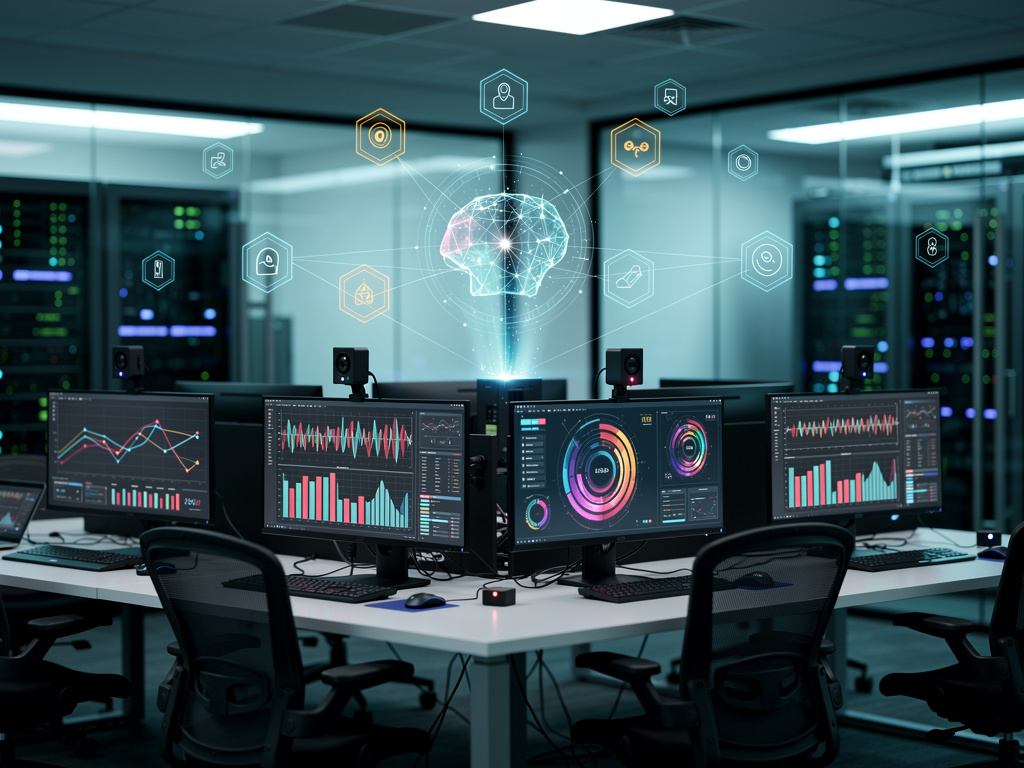
Picture this. Your keystrokes. Your email tone. The pauses in your Slack messages. All feeding into an algorithm that flags depression risk weeks ahead. Employers gain a window into your mind. And you? None the wiser.
TechRadar spotlights the surge in these systems (TechRadar). Tools scan behavioral data—typing speed, meeting participation, even biometric signals—to predict burnout or anxiety. Developers pitch early intervention. Save lives, they say. Boost productivity, too. But experts recoil. ‘It bothers me that this could be deployed by employers,’ one researcher admits.
These aren’t hypotheticals. Machine-learning models already parse speech patterns, text sentiment, and claims data for red flags, as WTW outlines. Erin Young, managing director at WTW, describes screening that spots issues before self-reports kick in. Chatbots then deliver CBT exercises or nudge users toward therapy. Anonymized aggregates reveal team-wide stressors—say, workload spikes in sales.
Scale thrills vendors. Twenty-four-seven access. No waitlists. Lower costs. Employees open up more to bots than bosses, dodging stigma. AllOne Health predicts (AllOne Health) AI chatbots dishing wellness tips, machine learning sifting data for initiative ideas. Spring Health warns (Spring Health) of off-label LLM use: 48.7% of U.S. adults tapped general AI for psych support last year. Only 18.5% stuck to purpose-built tools. Gijo Mathew, Spring’s chief product officer, flags privacy black holes and misuse.
But here’s the rub. Emotion AI escalates it. The Atlantic exposes (The Atlantic) how firms like MorphCast track Zoom excitement levels, attention spans. Aware scans Slack for toxicity. HireVue judges interview scowls—misreading focus as fury 65% of the time, per neuroscientist Lisa Feldman Barrett. Cultural mismatches? Worse. Trucking outfits zap brain waves for fatigue. Burger King’s Patty bot rates headset friendliness. MetLife tunes call-center pitch.
Employees trade autonomy for paychecks. U.S. law greenlights it—scan emails, video, audio. EU bars emotion AI at work, save safety niches. Consent? Often a footnote in onboarding. Workarounds emerge: mouse jigglers. Trust erodes. Karen Levy at Cornell calls it dignity’s thief, probing bodies and spaces granularly.
Risks pile up. Bias in training data skews flags—missing non-Western cues. False positives breed paranoia. Data breaches expose innermost thoughts. WTW’s Young urges opt-ins, bias audits, human backups. ‘AI changes workplace mental health with accessibility and early intervention,’ she writes. ‘But demands privacy, bias checks, human care.’ Spring’s Kelsey Witmer nails AI anxiety itself: 72% fret economic hits, 47% job loss. By 2026, it rivals burnout as top stressor.
Proponents counter with wins. Early flags cut absenteeism—stress costs $300 billion yearly, per market reports. Johns Hopkins screened 56,000; 53% flagged moderate risk. Headspace pivots to therapy. Yet surveillance chills candor. Why vent if Big Brother logs it?
And regulation lags. No federal caps on bossware. Firms self-police. Vendors promise de-identification. Reality? Aggregates fingerprint individuals. X buzzes with outrage—posts decry NeuroSpot CCTV overlays, Palantir sickness trackers. One user: ‘Efficiency or dystopia?’
Forward-thinkers pair AI with culture shifts. Balanced loads. Manager training. Opt-out paths. But power imbalances persist. Consent under duress isn’t consent. Employees game systems or burn out quietly.
So where next? Prediction accuracy climbs—multimodal data like heart rate, sleep via wearables. Therabot’s trial slashed depression symptoms. Yet Barrett warns: emotions defy universals. Scowls signal effort, not ire.
Employers chase edges. A flagged worker gets resources—or a pink slip. Productivity soars. Trust? Craters. The oracle serves bosses first. Workers sense the gaze. Productivity’s promise masks control’s reality.


 WebProNews is an iEntry Publication