
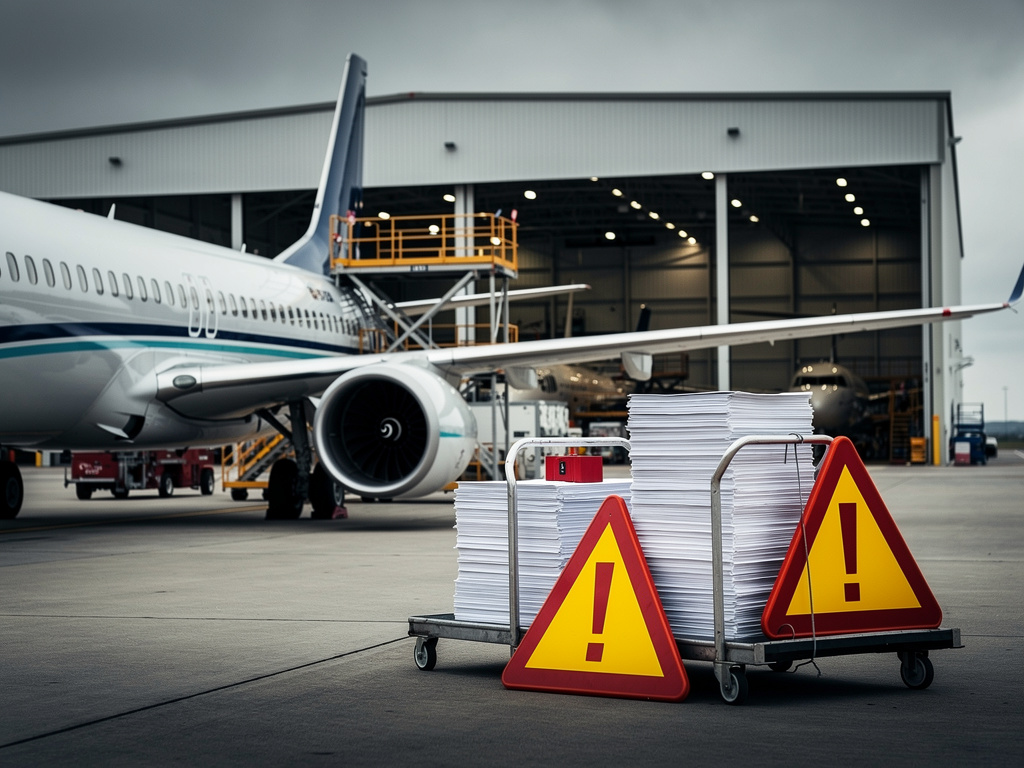
Boeing’s chief executive has indicated that the company anticipates a substantial fine from federal regulators as it works to resolve outstanding safety and quality issues stemming from the 737 MAX crisis and subsequent production problems. In comments that highlight the ongoing tensions between the aerospace giant and the Federal Aviation Administration, CEO Kelly Ortberg suggested the penalty could reach into the hundreds of millions of dollars while expressing confidence that the company can meet the demands necessary to regain full trust from both regulators and customers.
The remarks, reported by Yahoo Finance, come at a critical moment for Boeing as it attempts to stabilize operations following years of scrutiny. Ortberg, who took over as chief executive in August 2024, has made repairing the company’s relationship with the FAA a top priority. His acknowledgment of a likely large financial penalty reflects a shift toward greater transparency after previous leadership faced criticism for appearing defensive in public statements about safety lapses.
Boeing has operated under a deferred prosecution agreement with the Department of Justice since early 2021, following the two fatal 737 MAX crashes in 2018 and 2019 that claimed 346 lives. That agreement required the company to strengthen its compliance programs and improve its safety culture. When a door plug blew off an Alaska Airlines 737 MAX 9 during flight in January 2024, investigators discovered that Boeing had failed to fully meet the terms of the agreement. The incident triggered fresh investigations and renewed calls for accountability from lawmakers, unions, and families of crash victims.
Since then, the FAA has imposed strict limits on Boeing’s 737 production rates, capping output at 38 aircraft per month while requiring the company to demonstrate significant improvements in manufacturing quality and safety oversight. Production has frequently fallen below even that reduced target, creating a backlog of more than 4,000 unfilled orders and putting pressure on the company’s cash flow and delivery schedule. Airlines around the world have had to adjust their fleet plans, with some carriers reporting revenue losses tied directly to delayed aircraft deliveries.
Ortberg has taken a different public tone than his predecessor Dave Calhoun, who stepped down amid mounting pressure. In recent town hall meetings with employees and interviews with analysts, the new CEO has repeatedly emphasized personal accountability and the need for cultural change across Boeing’s factories. He has visited multiple production sites, including the Renton, Washington facility where the 737 is assembled, to speak directly with workers about the importance of stopping the line when quality concerns arise. This approach stands in contrast to earlier years when employees reported feeling pressured to maintain output targets even when they spotted problems.
The expected FAA fine would add to a series of financial hits Boeing has already absorbed. The company took a $2.7 billion charge in 2024 related to the Alaska Airlines incident and subsequent production slowdowns. It also faces potential civil penalties from the Department of Justice, which has signaled it may pursue further action beyond the original deferred prosecution agreement. Boeing’s commercial airplane division reported operating losses throughout much of 2024, though defense and services segments have provided some offset.
Despite these challenges, Ortberg expressed optimism that Boeing can satisfy the FAA’s requirements and eventually increase production rates. The company has hired thousands of new employees in recent years to address labor shortages and quality control gaps. It has also invested heavily in training programs focused on manufacturing discipline and has brought in outside experts to review its quality management systems. Progress reports submitted to the FAA show incremental improvements in metrics such as first-time quality rates and the frequency of manufacturing defects.
Industry analysts have mixed views on how quickly Boeing can recover. Some point to the company’s strong order book and dominant position in the widebody market with the 777 and 787 programs as reasons for long-term confidence. Others worry that persistent quality problems could erode customer trust and open opportunities for Airbus to capture additional market share. The European manufacturer has increased its own production rates and has a robust backlog, though it too faces supply chain constraints and skilled labor shortages.
The relationship between Boeing and the FAA has evolved considerably since the MAX crashes. Once criticized for being too cozy with the company it was supposed to regulate, the FAA has adopted a more assertive oversight role. It now requires detailed evidence of systemic improvements rather than accepting assurances at face value. This shift has forced Boeing to document thousands of process changes and submit them for regulatory review, slowing down decision-making but potentially creating more sustainable safety practices.
Labor unions have played an important role in the conversation about Boeing’s future. The International Association of Machinists and Aerospace Workers, which represents many factory workers, has pushed for stronger quality controls and better training. Union leaders argue that years of cost-cutting and outsourcing eroded institutional knowledge that must now be rebuilt. Recent contract negotiations have included provisions aimed at giving workers more authority to raise safety concerns without fear of retaliation.
For suppliers throughout the aerospace industry, Boeing’s production problems have created both challenges and opportunities. Companies that provide fuselages, engines, avionics, and interior components have seen their own output curtailed by the slower assembly rates. At the same time, the focus on quality has led to more rigorous inspection standards that some suppliers say will ultimately strengthen the entire supply chain.
Looking ahead, Boeing faces several key milestones. The company must demonstrate to the FAA that it has addressed root causes of recent quality escapes, particularly those involving supplier Spirit AeroSystems, which was reintegrated as a Boeing subsidiary in 2024. Regulators want evidence that the company can consistently produce aircraft that meet all design specifications without requiring extensive rework after they leave the factory floor.
The financial penalty itself, while significant, may ultimately serve as a punctuation mark rather than a turning point. What matters more to long-term success is whether Boeing can translate its public commitments into consistent performance on the factory floor. Ortberg has set a goal of reaching a monthly production rate of 50 737s by early 2026, though many observers consider that target ambitious given current constraints.
Passenger confidence also remains a consideration, even if surveys show that most travelers have returned to flying on Boeing aircraft. The company continues to run safety advertising campaigns and works with airlines to provide information about the improvements made to both the 737 MAX flight control system and broader manufacturing processes. Airlines themselves have invested in additional pilot training and maintenance procedures to address lingering public concerns.
The situation at Boeing reflects broader challenges facing the aerospace industry as it emerges from the pandemic. Demand for air travel has rebounded strongly, but the specialized workforce needed to design and build complex aircraft has proven difficult to rebuild quickly. Global supply chains for titanium, specialized electronics, and other critical materials remain vulnerable to geopolitical tensions and economic pressures.
As Boeing works through its regulatory commitments, the eyes of the industry remain fixed on its progress. Success would mean not only avoiding further penalties but also restoring the engineering excellence that defined the company for decades. Failure to make meaningful changes could lead to additional restrictions, more financial losses, and potentially a smaller role in future commercial aviation markets.
Ortberg’s willingness to publicly discuss the likelihood of a substantial fine represents a departure from past practice and may signal a new chapter in Boeing’s relationship with regulators. By setting clear expectations about the financial consequences, the CEO appears to be preparing investors, employees, and customers for the costs associated with restoring the company’s reputation. Whether that approach will prove effective depends on the concrete steps the company takes in the months ahead to demonstrate that safety and quality have once again become its highest priorities.
The coming quarters will reveal whether Boeing can translate its stated intentions into measurable results that satisfy the FAA and convince a skeptical public that the lessons of recent years have been truly learned. For an company that once symbolized American industrial might, the path forward requires sustained focus on fundamentals that were once taken for granted but now must be deliberately reinforced at every level of the organization.


 WebProNews is an iEntry Publication