
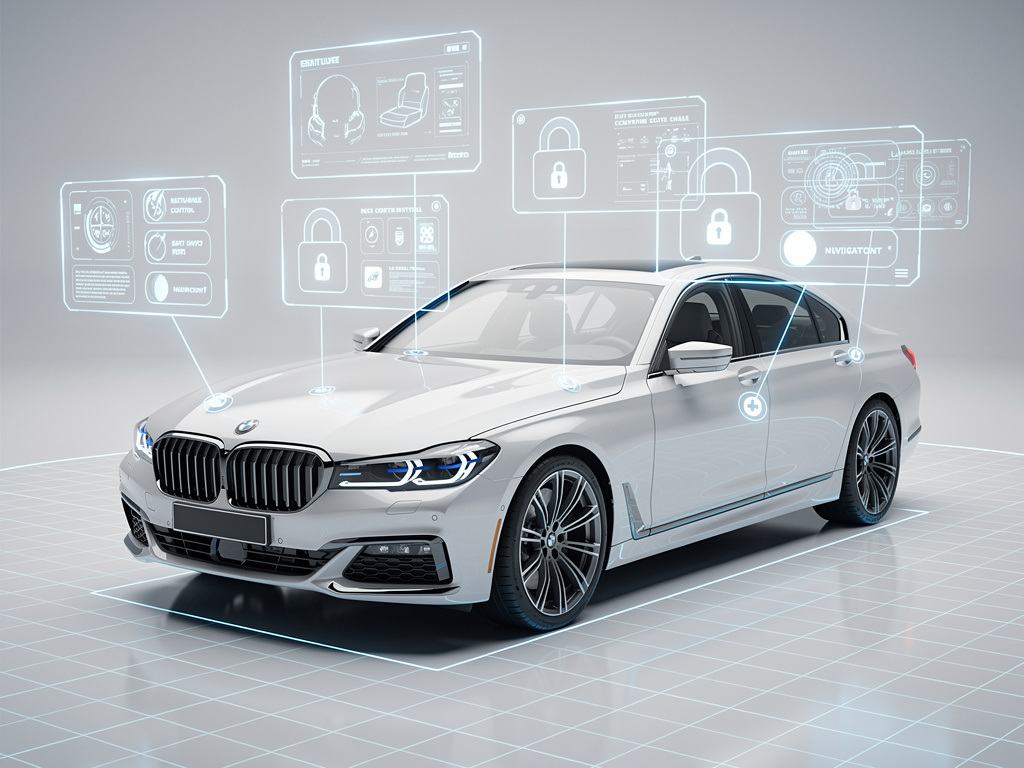
The automotive industry stands at a crossroads where traditional manufacturing meets software-driven revenue models, and BMW is leading a controversial charge that has divided consumers and industry observers alike. Despite significant backlash over its attempt to charge monthly fees for heated seats, the German automaker is doubling down on subscription-based services, signaling a fundamental shift in how premium car manufacturers plan to extract value from vehicles long after they leave the showroom floor.
According to Slashdot, BMW remains committed to its subscription strategy even after facing intense criticism for attempting to monetize heated seats through monthly payments. The heated seat controversy, which erupted in 2022, became a flashpoint in the broader debate about hardware-as-a-service models in the automotive sector. The backlash was so severe that BMW eventually reversed course on that specific feature in certain markets, yet the company’s leadership continues to view subscriptions as a cornerstone of its future business model.
The economics driving this transformation are compelling from an automaker’s perspective. Traditional car sales represent a one-time transaction, with manufacturers capturing value only at the point of purchase and through subsequent service appointments. Subscription models, by contrast, create recurring revenue streams that can extend throughout a vehicle’s lifetime, potentially adding thousands of dollars in additional income per vehicle. For BMW, which has invested heavily in connected car technology and software development, subscriptions represent a way to monetize these investments continuously rather than absorbing them as sunk costs.
The Architecture of Automotive Subscriptions
BMW’s approach relies on installing hardware capabilities in vehicles during manufacturing, then using software locks to restrict access unless customers pay ongoing fees. This strategy differs fundamentally from traditional options packages, where buyers pay once for features they want. Instead, the physical capability sits dormant in the vehicle, waiting for a digital key that requires monthly payments to unlock. The heated seat debacle illustrated this model’s potential pitfalls: customers discovered they were driving around with fully functional heated seats that were artificially disabled, creating a perception of being nickel-and-dimed for features already present in their expensive vehicles.
The technical infrastructure enabling these subscriptions represents a significant investment in connected vehicle technology. Modern BMWs feature sophisticated telematics systems that maintain constant communication with company servers, allowing remote activation and deactivation of features. This connectivity also enables over-the-air software updates, remote diagnostics, and the collection of detailed usage data. While these capabilities offer genuine benefits—such as the ability to fix software bugs without dealership visits—they also create the technical foundation for ongoing monetization strategies that many consumers find objectionable.
Industry analysts note that BMW is far from alone in exploring subscription models, though the company has been among the most aggressive in implementing them. Mercedes-Benz has experimented with subscriptions for enhanced acceleration performance, while Tesla has offered various software-unlocked features, including extended battery range and “Full Self-Driving” capabilities. The difference lies in execution and communication: Tesla’s approach has generally been framed as optional upgrades to baseline functionality, while BMW’s heated seat subscription was perceived as withholding standard features behind a paywall.
Consumer Resistance and Market Realities
The backlash against automotive subscriptions reflects deeper consumer anxieties about ownership in the digital age. When buyers spend $50,000 or more on a vehicle, they expect to own it completely, including all the hardware installed within it. Subscription models challenge this expectation, introducing an ongoing relationship with the manufacturer that feels more like leasing than ownership. Social media erupted with criticism when BMW’s heated seat subscription became widely known, with commentators comparing it unfavorably to printer ink cartridge restrictions and other controversial digital rights management schemes.
Consumer advocacy groups have raised concerns about the long-term implications of these models. If subscriptions become standard across the industry, buyers might find themselves paying thousands of dollars in additional fees over a vehicle’s lifetime for features that were once included in the purchase price. There are also questions about what happens when a manufacturer discontinues a subscription service or when a vehicle is resold—does the new owner need to restart subscriptions, or do they transfer with the vehicle? These unresolved issues create uncertainty in the used car market, potentially affecting vehicle values.
Despite the controversy, BMW’s financial incentives to pursue subscriptions remain strong. The automotive industry faces enormous capital requirements for the transition to electric vehicles, autonomous driving technology, and connected services. Recurring revenue streams offer a way to fund these investments while smoothing out the cyclical nature of car sales. For a company like BMW, which prides itself on technological innovation and premium positioning, subscriptions represent an opportunity to differentiate based on software and services rather than competing solely on hardware specifications.
The Regulatory and Competitive Response
Regulators in various jurisdictions are beginning to scrutinize automotive subscription models, though comprehensive frameworks remain elusive. The European Union has been particularly active in examining digital services and consumer rights, and automotive subscriptions could fall under existing consumer protection laws. Questions arise about whether manufacturers must disclose all installed-but-locked features at the point of sale, and whether there are limits on what can be restricted through software locks. Some legal experts argue that once hardware is installed in a vehicle, restricting its use through software could constitute an unfair business practice.
The competitive dynamics within the automotive industry will likely determine whether subscription models become universal or remain a niche approach. If consumers consistently reject vehicles with extensive subscription requirements, market pressure could force manufacturers to reconsider. However, if one or two major manufacturers successfully implement subscription models and generate significant additional revenue, competitive pressure could push others to follow suit despite consumer resistance. The industry appears to be in a testing phase, with different manufacturers trying various approaches to gauge market acceptance.
BMW’s commitment to subscriptions despite the heated seat controversy suggests the company believes it can refine its approach to overcome consumer objections. This might involve focusing subscriptions on genuinely new services—such as advanced driver assistance features that require ongoing development and server infrastructure—rather than basic comfort features like heated seats. The key distinction may lie in whether subscriptions provide ongoing value through continuous improvements and updates, or whether they simply unlock static hardware capabilities that could have been sold traditionally.
The Software-Defined Vehicle Revolution
Underlying the subscription debate is a fundamental transformation in automotive architecture. Modern vehicles increasingly resemble computers on wheels, with software determining much of their functionality. This shift enables capabilities that were impossible in purely mechanical vehicles, such as improving performance through software updates or adding entirely new features after purchase. However, it also creates opportunities for manufacturers to exert ongoing control over vehicles in ways that challenge traditional notions of ownership.
The software-defined vehicle concept offers genuine advantages that extend beyond manufacturer revenue. Owners can potentially add features years after purchase without physical modifications, vehicles can improve over time rather than becoming obsolete, and safety updates can be deployed fleet-wide in response to newly discovered issues. These benefits represent real value that traditional automotive business models struggled to capture. The challenge for manufacturers is distinguishing between legitimate ongoing services that justify subscription fees and attempts to extract additional payment for capabilities that should be included in the purchase price.
BMW’s experience may serve as a cautionary tale for the industry about the importance of customer perception and communication. The heated seat subscription failed not because the technology didn’t work, but because it violated customer expectations about what they were purchasing. Successful implementation of automotive subscriptions will likely require transparency about what’s included in the base vehicle price, clear value propositions for optional subscriptions, and careful consideration of which features are appropriate for ongoing payment models versus one-time purchases.
Looking Ahead: The Future of Automotive Business Models
The next few years will prove critical in determining whether automotive subscriptions become standard practice or a failed experiment. BMW’s continued commitment despite early setbacks suggests the company sees subscriptions as essential to its long-term strategy, not merely an opportunistic revenue grab. Other manufacturers are watching closely, ready to expand or contract their own subscription offerings based on market response and BMW’s success or failure.
The resolution of this debate will have implications extending far beyond heated seats. As vehicles become more sophisticated and connected, the line between hardware and software blurs, creating new questions about ownership, value, and the relationship between manufacturers and customers. The automotive industry has historically been product-focused, with customer relationships largely mediated through dealers. Subscription models require a fundamental shift toward ongoing customer engagement and service delivery, capabilities that traditional automakers are still developing.
For consumers, the subscription era presents both opportunities and challenges. On one hand, the ability to add features after purchase or pay only for capabilities used occasionally offers flexibility that fixed option packages cannot match. On the other hand, the proliferation of subscriptions across multiple aspects of vehicle functionality could lead to “subscription fatigue” and significantly higher total ownership costs. The market will ultimately determine which features consumers are willing to pay for on an ongoing basis and which they expect to be included in the purchase price.
BMW’s subscription strategy represents more than a pricing experiment—it’s a fundamental reimagining of the automotive business model for the digital age. Whether this vision succeeds or fails will depend on the company’s ability to balance its desire for recurring revenue with customer expectations about ownership and value. The heated seat controversy demonstrated the risks of moving too aggressively, but BMW’s continued commitment suggests it believes the long-term potential justifies short-term criticism. As the automotive industry continues its transformation, the subscription debate will likely intensify, forcing both manufacturers and consumers to reconsider what it means to own a car in the 21st century.


 WebProNews is an iEntry Publication