
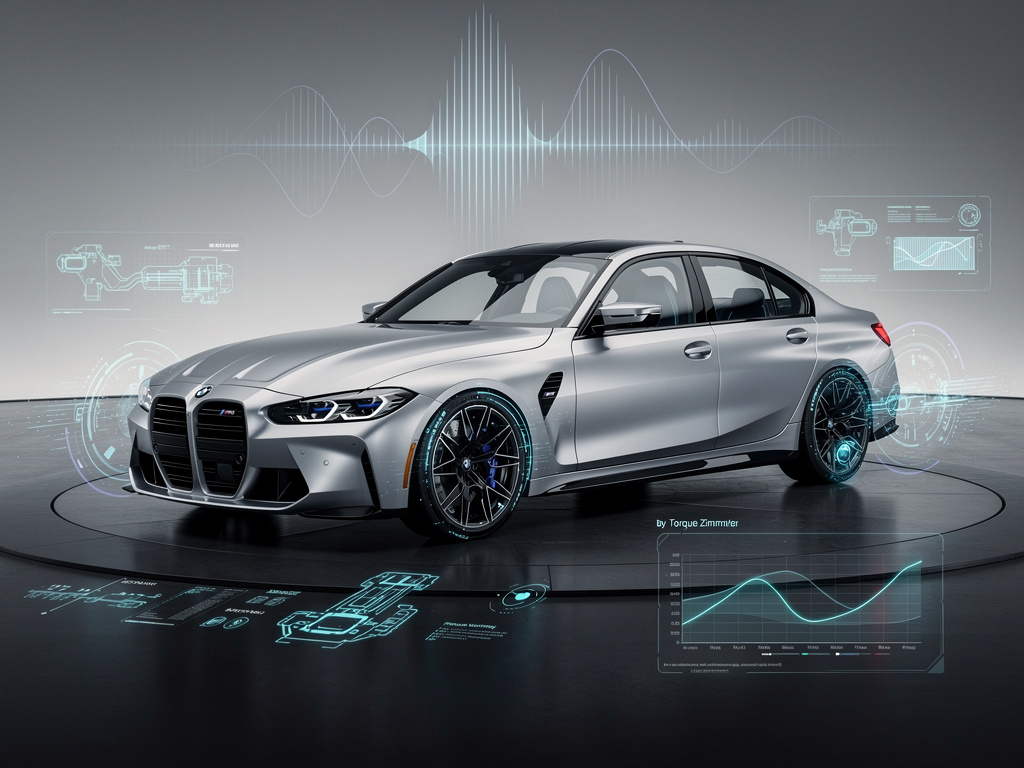
MUNICH – For decades, the soul of a BMW M car was forged in fire and noise, its character defined by the mechanical crescendo of a high-revving inline-six or the guttural roar of a V8. But as the automotive world pivots toward a silent, electric future, BMW’s revered M division faces its most profound challenge: electrifying its icon, the M3. The central question reverberating from the engineering halls in Garching to the boardrooms in Munich is not whether an electric M3 can be fast—that is a foregone conclusion—but whether it can possess the visceral, untamed spirit that made its predecessors legendary.
The task falls to a team acutely aware of the heritage they are charged with preserving. They are not merely building a new car; they are attempting to translate a mechanical language into a digital one without losing the poetry. The future of the M brand hinges on their success. At the heart of this transformation is BMW’s forthcoming Neue Klasse architecture, a dedicated electric vehicle platform set to debut in 2025 that represents a ground-up rethinking of the automobile. This isn’t a conventional chassis with batteries squeezed in; it is a digital-first platform designed to leverage the unique possibilities of electric propulsion.
The Megawatt Drivetrain: Reimagining M Power Beyond Cylinders
The most dramatic departure from tradition lies in the powertrain. The electric M3 successor is being engineered around a quad-motor setup, with an individual electric motor powering each wheel. This configuration unlocks a level of performance and control that is simply unattainable with a mechanical drivetrain. BMW has been testing a prototype based on the current i4 M50, featuring a widened body to accommodate the new axles, that is rumored to be a testbed for a “megawatt” powertrain, capable of producing approximately 1,341 horsepower. This staggering output, managed by a highly sophisticated central control unit, enables a form of torque vectoring so precise it can adjust power to each wheel in milliseconds.
This is where software becomes the new soul of the machine. The system, which BMW has dubbed the “Heart of Joy,” will act as the car’s central nervous system, integrating all aspects of driving dynamics. According to a report by Car and Driver, this integrated controller will allow the electric M car to deliver everything from supremely stable, high-grip cornering to the lurid, rear-wheel-drive-biased slides that have long been an M3 hallmark. The character of the car will no longer be defined solely by its hardware, but by the lines of code that dictate how that hardware behaves.
Composing a Digital Symphony: The High-Stakes Bet on Synthetic Sound
While the performance metrics are set to shatter records, the M division’s leadership understands that the M3 experience is an emotional one, deeply intertwined with auditory feedback. In a world of silent acceleration, creating a compelling soundscape is a critical and controversial frontier. Frank van Meel, the CEO of BMW M, has made it clear that the electric M3 will not be silent, nor will it simply mimic the sound of a combustion engine. To do so, he argues, would be inauthentic. “We want to bring a sound that is not a copy of a combustion engine,” van Meel stated in an interview with Digital Trends, emphasizing the need for a new acoustic identity.
The company’s strategy involves creating a synthesized sound that provides the driver with genuine feedback about what the car is doing—reflecting speed, torque, and load on the electric motors. BMW has famously collaborated with Academy Award-winning composer Hans Zimmer on its “IconicSounds Electric” project for its current EV lineup. For the M car, this concept will be pushed further, aiming to create a sound that is both futuristic and emotionally resonant, akin to a film score that enhances the on-screen action. The goal is a sound that feels integral to the driving experience, not a gimmick layered on top. The success of this digital symphony will be a major test of whether drivers can form the same bond with a computer-generated soundtrack as they did with the induction and exhaust notes of a combustion engine.
Navigating a Divided Market: The Coexistence Strategy
Recognizing the deep-seated loyalty of its current customer base, BMW is pursuing a pragmatic and cautious transition. The company has confirmed that the gas-powered M3, based on the current CLAR platform, will be sold alongside the new electric performance sedan for a period of time. This dual-platform strategy allows the brand to cater to its traditionalist buyers while simultaneously ushering in a new generation of M enthusiasts. It’s a costly but necessary approach to de-risk the most significant product evolution in the brand’s history.
This strategy appears to have been informed by the market’s reaction to competitors’ moves. Mercedes-AMG, for instance, faced a significant backlash from purists over its latest C63 S E Performance, which swapped a beloved V8 for a complex and heavy four-cylinder plug-in hybrid system. As noted by publications like Road & Track, the market’s lukewarm reception and reports of sluggish sales have underscored the risks of alienating a core audience. By allowing for coexistence, BMW can prove the merits of its electric M car on the road, rather than forcing a change upon its most discerning customers before they are ready.
The Uphill Battle for Authenticity in an Electric Era
Ultimately, the challenge for BMW M is one of authenticity. For decades, the brand’s appeal was rooted in a tangible, mechanical connection between driver, car, and road. The vibrations through the chassis, the feedback through the steering wheel, and the roar from the tailpipes were all part of an analog dialogue. The electric M3 must now replicate that dialogue using a new vocabulary of haptic feedback, digital soundscapes, and software-defined handling characteristics. The M division is betting that its “Heart of Joy” control unit can process data fast enough to make the car feel intuitive and alive, not artificial and simulated.
The project represents a pivotal moment for all legacy performance brands. The electric M3, expected around 2027, will be a litmus test for whether a storied performance marque can carry its soul across the chasm from internal combustion to electric propulsion. It is a technological and philosophical challenge that requires engineers to think like artists and software developers to act as driving instructors. The weight of expectation from enthusiasts, investors, and the industry at large is immense. The roar of the old M3 is fading, and the world is listening intently to hear what sound will replace it.


 WebProNews is an iEntry Publication